Holding the Door for Multiple People
إمساك الباب مفتوحًا لعدة أشخاص
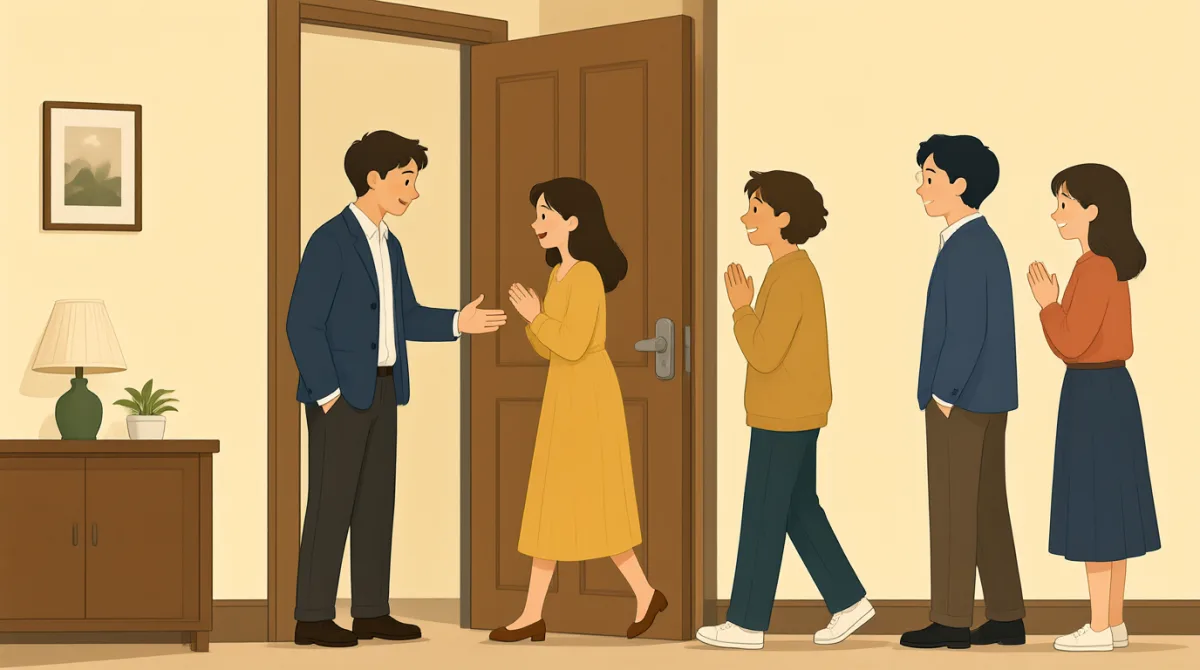
Someone holds a door open for several people, and you are one of the last to pass through, expressing thanks.
يمسك شخص الباب مفتوحًا لعدة أشخاص، وأنت من آخر من يعبرون، فتشكره.
حوار5

Thanks so much for holding the door!
شكرًا جزيلًا لأنك أبقيت الباب مفتوحًا!

No problem at all!
لا مشكلة على الإطلاق!
You've been holding it for quite a while.
لقد أبقيت الباب مفتوحًا منذ مدة طويلة.
Just happy to help. Have a good day!
يسرّني أن أساعد. أتمنى لك يومًا سعيدًا!
You too!
وأنت أيضًا!
المفردات6
- holdingإبقاء الشيء في موضعه
Holding means keeping something in position, like keeping a door open for others to pass through. It's a common polite action in public places.
تعني "holding" إبقاء شيء في موضعه، مثل إبقاء الباب مفتوحًا ليمر الآخرون. وهذا تصرف مهذب شائع في الأماكن العامة.
- thanks so muchشكرًا جزيلًا
This is a way to say 'thank you' with emphasis, showing strong appreciation. Use it when someone does something extra helpful for you.
تُقال عبارة "thanks so much" للتعبير عن الشكر والتقدير البالغ. استخدمها عندما يقدم لك شخص مساعدة إضافية.
- no problemلا مشكلة
This phrase means 'it's not difficult' or 'you're welcome.' It's a casual response to thanks, showing the help was easy to give.
تعني عبارة "no problem" أن الأمر ليس صعبًا، أو أنها ردّ بمعنى العفو. وهي إجابة ودية وغير رسمية على الشكر، وتُظهر أن تقديم المساعدة كان سهلًا.
- quite a whileمدة طويلة
This means 'for a long time' or 'for some time.' Use it to describe something that has been happening for a noticeable duration.
تعني عبارة "quite a while" مدة طويلة أو بعض الوقت. استخدمها لوصف أمر استمر مدة ملحوظة.
- happy to helpيسرّني أن أساعد
This expresses pleasure in assisting someone. It's a polite way to respond to thanks, emphasizing that helping was enjoyable.
تُعبّر عبارة "happy to help" عن السرور بمساعدة شخص ما. وهي طريقة مهذبة للرد على الشكر، وتؤكد أن تقديم المساعدة كان أمرًا ممتعًا.
- have a good dayأتمنى لك يومًا سعيدًا
A friendly goodbye wish meaning 'enjoy your day.' It's commonly used at the end of short interactions to be polite.
عبارة "have a good day" هي أمنية ودية عند الوداع، بمعنى استمتع بيومك. وتُستخدم عادةً في ختام التفاعلات القصيرة للتعبير عن اللباقة.
الجمل الأساسية5
- 1
Thanks so much for holding the door!
شكرًا جزيلًا لأنك أبقيت الباب مفتوحًا!
This sentence shows strong gratitude for a specific helpful action. It's useful in everyday situations like entering buildings. The phrase 'thanks so much' adds emphasis, and it's a complete polite expression.
تُظهر هذه الجملة امتنانًا كبيرًا على مساعدة محددة، وهي مفيدة في مواقف الحياة اليومية، مثل دخول المباني. تضيف عبارة "thanks so much" تأكيدًا، والجملة تعبير مهذب وكامل.
- 2
No problem at all!
لا مشكلة على الإطلاق!
This is a casual way to say 'you're welcome.' Use it after someone thanks you for small favors. 'At all' strengthens the meaning, making it sound even more reassuring. It's very common in informal English.
هذه طريقة ودية وغير رسمية للقول إن الأمر لا يستدعي الشكر. استخدمها بعد أن يشكرك شخص على خدمة بسيطة. تزيد عبارة "at all" المعنى تأكيدًا وتجعل الرد أكثر طمأنة. وهي شائعة جدًا في الإنجليزية غير الرسمية.
- 3
You've been holding it for quite a while.
لقد أبقيت الباب مفتوحًا منذ مدة طويلة.
This uses present perfect continuous tense ('have been holding') to describe an action that started in the past and continues now. It's useful to acknowledge someone's effort over time, showing appreciation for their patience.
تستخدم هذه الجملة زمن المضارع التام المستمر في عبارة "have been holding" لوصف فعل بدأ في الماضي وما زال مستمرًا الآن. يفيد هذا الزمن في تقدير جهد شخص بذله على مدى فترة، وإظهار الامتنان لصبره.
- 4
Just happy to help. Have a good day!
يسرّني أن أساعد. أتمنى لك يومًا سعيدًا!
This combines a response to thanks with a farewell. 'Just happy to help' means simply glad to assist, downplaying the effort. 'Have a good day' is a standard polite ending. Use in quick interactions to wrap up positively.
تجمع هذه العبارة بين الرد على الشكر والوداع. تعني عبارة "Just happy to help" أن المتحدث مسرور فحسب بتقديم المساعدة، وهي تقلل من شأن الجهد المبذول. أما "Have a good day" فهي عبارة مهذبة شائعة لإنهاء الحديث. استخدمهما لإنهاء تفاعل سريع بطريقة إيجابية.
- 5
You too!
وأنت أيضًا!
This is a short, reciprocal response meaning 'you as well.' It's useful when someone wishes you well, like 'have a good day.' It's simple and mirrors the original wish, common in friendly conversations.
هذا رد قصير بالمثل، بمعنى «وأنت كذلك». يفيد عندما يتمنى لك شخص أمنية طيبة، مثل "have a good day". وهو رد بسيط يكرر الأمنية نفسها، وشائع في المحادثات الودية.