Inquiring About Dosage and Instructions
खुराक और निर्देशों के बारे में पूछताछ
After receiving medicine, the customer asks the pharmacist for clear instructions on how and when to take it, or if there are any food/drug interactions.
दवा लेने के बाद, ग्राहक फार्मासिस्ट से पूछता है कि दवा कैसे और कब लेनी है, और क्या खाने-पीने की चीज़ों या दूसरी दवाओं के साथ इसकी कोई प्रतिक्रिया हो सकती है।
संवाद10
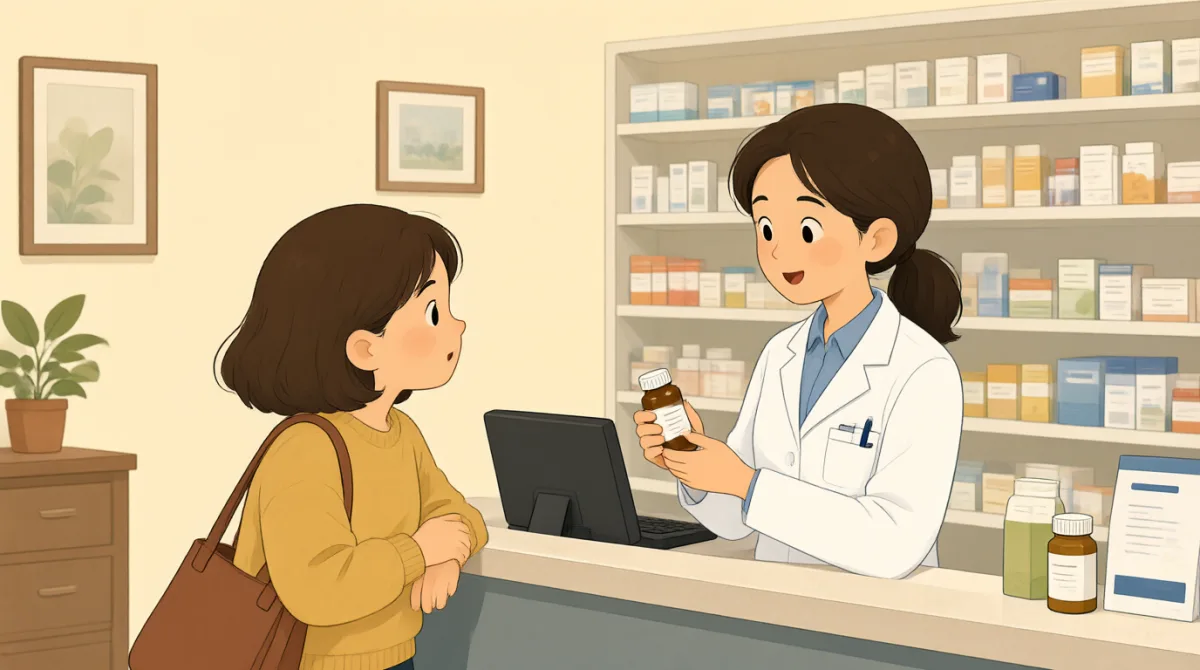

Hi, I just picked up this prescription. Can you go over the dosage instructions with me?
नमस्ते, मैंने अभी यह डॉक्टर का पर्चा दिखाकर दवा ली है। क्या आप मुझे इसे लेने की खुराक और निर्देश समझा सकते हैं?

Certainly. This is for your allergies, right? You should take one tablet, once a day, preferably in the evening.
ज़रूर। यह आपकी एलर्जी के लिए है, है न? आपको रोज़ एक गोली लेनी चाहिए, बेहतर होगा कि शाम को लें।
Okay, one tablet in the evening. Should I take it with food or on an empty stomach?
ठीक है, शाम को एक गोली। क्या मुझे इसे खाने के साथ लेना चाहिए या खाली पेट?
It can be taken with or without food, but taking it with a meal might help if it upsets your stomach.
इसे खाने के साथ या बिना खाए, दोनों तरह से लिया जा सकता है। लेकिन अगर इससे आपका पेट खराब होता है, तो खाने के साथ लेने से मदद मिल सकती है।
Got it. Are there any specific food or drug interactions I should be aware of?
समझ गई। क्या खाने की चीज़ों या दूसरी दवाओं के साथ इसकी कोई खास प्रतिक्रिया है, जिसके बारे में मुझे पता होना चाहिए?
This medication can cause drowsiness, so I would advise against consuming alcohol while taking it. Also, avoid driving or operating heavy machinery until you know how it affects you.
इस दवा से उनींदापन हो सकता है, इसलिए इसे लेते समय शराब न पीने की सलाह दूँगा। साथ ही, जब तक आपको यह पता न चल जाए कि इसका आप पर क्या असर होता है, गाड़ी चलाने या भारी मशीनें चलाने से बचें।
That's good to know. And how long should I take it for?
यह जानना अच्छा रहा। और मुझे इसे कितने समय तक लेना चाहिए?
Continue taking it daily as needed for your allergy symptoms, or as directed by your doctor. If symptoms persist or worsen, please consult your doctor again.
एलर्जी के लक्षण होने पर ज़रूरत के मुताबिक इसे रोज़ लेते रहें, या अपने डॉक्टर के निर्देशानुसार लें। अगर लक्षण बने रहें या बिगड़ जाएँ, तो कृपया दोबारा अपने डॉक्टर से सलाह लें।
Alright, thank you so much for the clear explanation.
ठीक है, इतनी साफ़-साफ़ समझाने के लिए आपका बहुत-बहुत धन्यवाद।
You're welcome! Feel free to call us if you have any more questions.
कोई बात नहीं! अगर आपके कोई और सवाल हों, तो बेझिझक हमें फ़ोन कीजिए।
शब्दावली8
- prescriptionदवा का पर्चा
A doctor's written order for medicine that you take to a pharmacy to get the drug. It's important when buying medicine from a doctor.
डॉक्टर का लिखा हुआ वह आदेश जिसके आधार पर आप फार्मेसी से दवा लेते हैं। डॉक्टर से दवा लेते समय इसकी ज़रूरत होती है।
- dosageखुराक
The amount of medicine you should take and how often. For example, 'one tablet per day' is the dosage.
दवा की वह मात्रा जो आपको लेनी चाहिए और उसे कितनी बार लेना चाहिए। उदाहरण के लिए, 'रोज़ एक गोली' खुराक बताता है।
- tabletगोली
A small, solid pill you swallow for medicine. It's a common form of medication, like aspirin tablets.
दवा की छोटी, ठोस गोली जिसे निगलकर लिया जाता है। एस्पिरिन की गोलियों की तरह, यह दवा का एक आम रूप है।
- preferablyबेहतर होगा
Means 'if possible' or 'it's better to.' Use it to suggest the best way, like 'take it preferably in the evening.'
इसका मतलब है 'अगर हो सके' या 'ऐसा करना बेहतर है'। इसका इस्तेमाल सबसे अच्छे तरीके का सुझाव देने के लिए करें, जैसे 'इसे बेहतर होगा कि शाम को लें।'
- drowsinessउनींदापन
A feeling of sleepiness or tiredness. Some medicines cause this, so be careful with activities like driving.
नींद या थकान महसूस होना। कुछ दवाओं से ऐसा हो सकता है, इसलिए गाड़ी चलाने जैसी गतिविधियों में सावधानी बरतें।
- interactionsपरस्पर प्रतिक्रिया
When one drug or food affects how another works. For example, alcohol might interact badly with medicine.
जब कोई दवा या खाने-पीने की चीज़ दूसरी दवा के असर को प्रभावित करे। उदाहरण के लिए, शराब दवा के साथ हानिकारक प्रतिक्रिया कर सकती है।
- persistबने रहना
To continue without stopping. If symptoms persist, it means they don't go away and you need more help.
बिना रुके जारी रहना। अगर लक्षण बने रहते हैं, तो इसका मतलब है कि वे ठीक नहीं हो रहे और आपको और मदद की ज़रूरत है।
- consultसलाह लेना
To ask for advice from a professional, like a doctor. Use it when you need expert help, such as 'consult your doctor.'
किसी विशेषज्ञ, जैसे डॉक्टर, से सलाह माँगना। विशेषज्ञ की मदद चाहिए हो, तो इसका इस्तेमाल करें, जैसे 'अपने डॉक्टर से सलाह लें'।
मुख्य वाक्य8
- 1
Can you go over the dosage instructions with me?
क्या आप मुझे दवा लेने की खुराक और निर्देश समझा सकते हैं?
This is a polite request for explanation. 'Go over' means to review or explain in detail. Use it in pharmacies or when needing clarification on instructions. It's useful for intermediate learners to ask for help clearly.
यह समझाने का एक विनम्र अनुरोध है। 'Go over' का मतलब है किसी बात को दोहराकर देखना या विस्तार से समझाना। फार्मेसी में या निर्देशों के बारे में और स्पष्ट जानकारी चाहिए हो, तो इसका इस्तेमाल करें। इससे आप अपनी बात साफ़ तौर पर रख सकते हैं।
- 2
You should take one tablet, once a day, preferably in the evening.
आपको रोज़ एक गोली लेनी चाहिए, बेहतर होगा कि शाम को लें।
This gives advice using 'should' for recommendations. 'Preferably' suggests the best option. It's a common pattern for dosage instructions; practice it to sound natural when giving or receiving medical advice.
'Should' का इस्तेमाल सलाह देने के लिए किया गया है। 'Preferably' सबसे अच्छे विकल्प का सुझाव देता है। खुराक के निर्देशों में इस तरह की बात आम है; इसे बोलने का अभ्यास करें ताकि दवा के बारे में सलाह देते या लेते समय आपकी भाषा स्वाभाविक लगे।
- 3
Should I take it with food or on an empty stomach?
क्या मुझे इसे खाने के साथ लेना चाहिए या खाली पेट?
A yes/no question using 'should' to ask for advice. 'With food' means during a meal, 'on an empty stomach' means without eating. This is practical for checking how to take medicine safely.
यह सलाह माँगने के लिए 'should' से पूछा गया हाँ-या-नहीं वाला सवाल है। 'With food' का मतलब है खाना खाते समय, और 'on an empty stomach' का मतलब है बिना कुछ खाए। दवा सुरक्षित तरीके से कैसे लेनी है, यह जानने के लिए यह सवाल काम आता है।
- 4
It can be taken with or without food, but taking it with a meal might help if it upsets your stomach.
इसे खाने के साथ या बिना खाए, दोनों तरह से लिया जा सकता है। लेकिन अगर इससे आपका पेट खराब होता है, तो खाने के साथ लेने से मदद मिल सकती है।
This uses 'can be' for possibilities and 'might' for suggestions. It explains options and conditions. Useful for pharmacists or anyone explaining medicine effects; highlights conditional advice.
इसमें संभावनाएँ बताने के लिए 'can be' और सुझाव देने के लिए 'might' का इस्तेमाल हुआ है। यह अलग-अलग विकल्प और उनसे जुड़ी स्थितियाँ समझाता है। दवा के असर के बारे में बताने वाले फार्मासिस्ट या किसी भी व्यक्ति के लिए यह उपयोगी है; इसमें शर्त के आधार पर दी गई सलाह पर ध्यान दें।
- 5
Are there any specific food or drug interactions I should be aware of?
क्या खाने की चीज़ों या दूसरी दवाओं के साथ इसकी कोई खास प्रतिक्रिया है, जिसके बारे में मुझे पता होना चाहिए?
This is a question using 'be aware of' to mean 'know about.' It's important for safety in healthcare. The structure asks about warnings; learners can use it to inquire about risks.
इस सवाल में 'be aware of' का मतलब है 'जानकारी होना'। स्वास्थ्य से जुड़ी बातचीत में सुरक्षा के लिए यह जानना ज़रूरी है। इस वाक्य से आप संभावित जोखिमों के बारे में पूछ सकते हैं।
- 6
This medication can cause drowsiness, so I would advise against consuming alcohol while taking it.
इस दवा से उनींदापन हो सकता है, इसलिए इसे लेते समय शराब न पीने की सलाह दूँगा।
Uses 'can cause' for possible side effects and 'advise against' to recommend not doing something. 'While taking it' shows duration. This pattern warns about dangers; essential for medical conversations.
संभावित दुष्प्रभाव बताने के लिए 'can cause' और किसी काम को न करने की सलाह देने के लिए 'advise against' का इस्तेमाल होता है। 'While taking it' बताता है कि यह सलाह दवा लेते रहने की अवधि के दौरान लागू है। यह ढाँचा खतरों के बारे में चेतावनी देने के लिए उपयोगी है और दवा से जुड़ी बातचीत में बहुत काम आता है।
- 7
Continue taking it daily as needed for your allergy symptoms, or as directed by your doctor.
एलर्जी के लक्षण होने पर ज़रूरत के मुताबिक इसे रोज़ लेते रहें, या अपने डॉक्टर के निर्देशानुसार लें।
'As needed' means when symptoms appear, 'as directed' means follow instructions. This imperative sentence gives ongoing advice. Useful for understanding flexible medication routines.
'As needed' का मतलब है लक्षण होने पर, और 'as directed' का मतलब है निर्देशों का पालन करते हुए। यह आदेशात्मक वाक्य आगे भी दवा लेने के बारे में सलाह देता है। दवा लेने के लचीले नियम समझने के लिए यह उपयोगी है।
- 8
Thank you so much for the clear explanation.
इतनी साफ़-साफ़ समझाने के लिए आपका बहुत-बहुत धन्यवाद।
'So much' emphasizes gratitude. This polite closing is common after receiving help. It reinforces positive interactions; practice to end conversations politely in service situations.
'So much' से आभार पर ज़ोर दिया जाता है। मदद मिलने के बाद बातचीत को विनम्रता से खत्म करने का यह आम तरीका है। इससे बातचीत सकारात्मक रहती है; सेवा से जुड़ी स्थितियों में विनम्रता से बात खत्म करने के लिए इसका अभ्यास करें।