Baggage Claim and Customs
सामान प्राप्ति और सीमा शुल्क
Upon arrival at the destination, passengers proceed to the baggage claim area to collect their checked luggage and then go through customs and immigration procedures.
गंतव्य पर पहुँचने के बाद यात्री अपना चेक किया हुआ सामान लेने के लिए सामान प्राप्ति क्षेत्र में जाते हैं। इसके बाद वे सीमा शुल्क और आव्रजन की औपचारिकताएँ पूरी करते हैं।
संवाद10
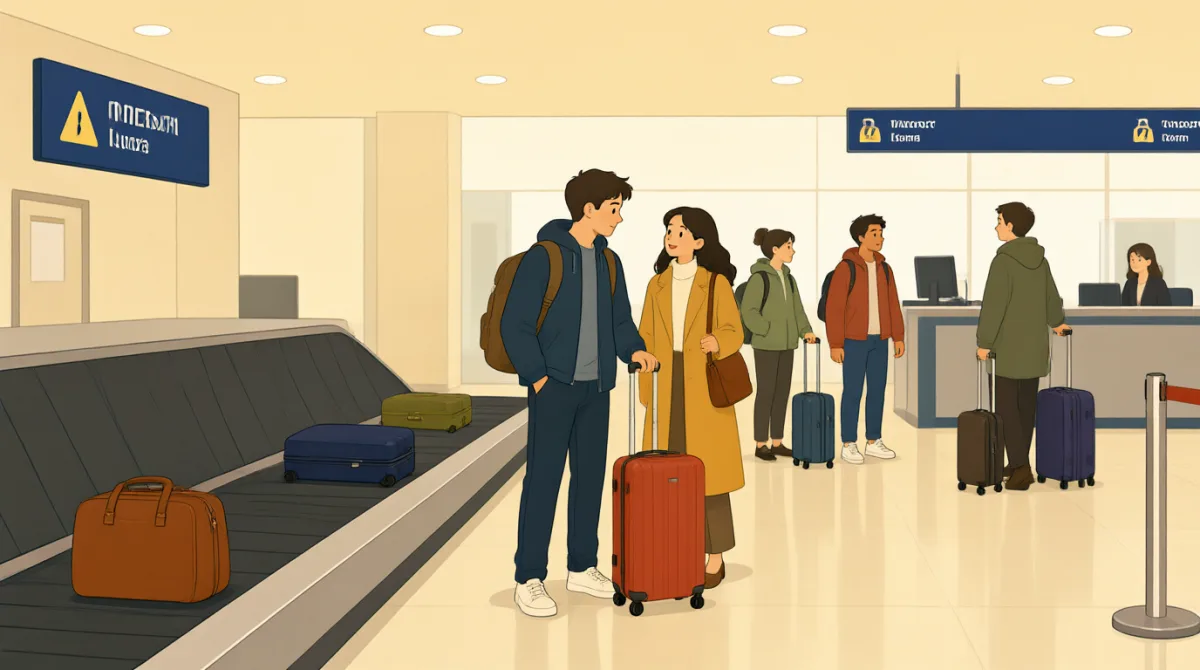

Alright, we've made it! Now, where's the baggage claim for flight BA286?
अच्छा, हम पहुँच गए! अब BA286 फ़्लाइट का सामान कहाँ मिलेगा?

It should be clearly marked. Let's follow the signs. Look for 'Baggage Claim' or 'Luggage Reclaim'.
वहाँ साफ़-साफ़ संकेत लगे होने चाहिए। चलो, संकेतों के पीछे चलते हैं। 'Baggage Claim' या 'Luggage Reclaim' ढूँढ़ो।
Ah, there it is! Carousel 7. I hope our bags made it. Did you check our bag tags earlier?
अरे, वो रहा! कैरोसेल 7। उम्मीद है हमारे बैग पहुँच गए होंगे। तुमने पहले हमारे बैग के टैग देखे थे?
Yes, I did. They were both tagged correctly for this destination. Looks like a few bags are already coming out.
हाँ, देखे थे। दोनों पर इस गंतव्य के सही टैग लगे थे। लगता है कुछ बैग अभी बाहर आ रहे हैं।
Great. Once we grab them, we head straight to customs, right? Do you have your declaration form ready?
बढ़िया। बैग लेते ही हम सीधे सीमा शुल्क की जाँच के लिए जाएँगे, है न? तुम्हारा घोषणा-पत्र तैयार है?
Yep, it's right here. Just remember, we have nothing to declare, so it should be a quick process.
हाँ, यहीं है। बस याद रखना, हमें कुछ भी घोषित नहीं करना है, इसलिए काम जल्दी हो जाना चाहिए।

Next passenger, please. Do you have anything to declare?
अगले यात्री, कृपया। क्या आपके पास घोषित करने के लिए कुछ है?
No, officer, we do not. Here are our passports and the completed declaration form.
नहीं, अधिकारी महोदय, हमारे पास ऐसा कुछ नहीं है। ये रहे हमारे पासपोर्ट और भरा हुआ घोषणा-पत्र।
Thank you. Welcome to [Destination Country]. You may proceed.
धन्यवाद। [Destination Country] में आपका स्वागत है। आप आगे जा सकते हैं।
Excellent! That was smoother than I expected. Let's find a taxi stand.
बहुत बढ़िया! यह मेरी उम्मीद से कहीं आसानी से हो गया। चलो, टैक्सी स्टैंड ढूँढ़ते हैं।
शब्दावली8
- baggage claimसामान प्राप्ति क्षेत्र
The area in an airport where passengers pick up their checked luggage after arriving. It's essential for travelers to know this to collect their bags.
हवाई अड्डे का वह हिस्सा जहाँ यात्री पहुँचने के बाद अपना चेक किया हुआ सामान लेते हैं। यात्रियों के लिए यह जानना ज़रूरी है, ताकि वे अपने बैग ले सकें।
- carouselकैरोसेल (सामान की घूमती पट्टी)
A moving belt or conveyor where luggage appears for passengers to grab. Use this word when asking about the specific spot for your flight's bags.
चलती हुई पट्टी जिस पर यात्रियों के लेने के लिए सामान आता है। अपनी फ़्लाइट के बैग किस जगह मिलेंगे, यह पूछते समय इस शब्द का इस्तेमाल करें।
- bag tagsबैग के टैग
Labels attached to luggage showing the flight and destination. Check them to ensure your bags are correctly identified and routed.
सामान पर लगे वे लेबल जिन पर फ़्लाइट और गंतव्य की जानकारी होती है। यह पक्का करने के लिए इन्हें जाँचें कि आपके बैग की सही पहचान हुई है और उन्हें सही जगह भेजा गया है।
- taggedटैग लगाया हुआ
Past tense of 'tag,' meaning to attach a label. In travel, it means your luggage has been marked for the right place.
'tag' का भूतकाल, जिसका अर्थ है लेबल लगाना। यात्रा के संदर्भ में इसका मतलब है कि आपके सामान पर सही जगह के लिए निशान लगाया गया है।
- customsसीमा शुल्क
The government office at borders where officials check passengers' luggage for illegal items. You go through customs after baggage claim.
सीमा पर सरकारी विभाग जहाँ अधिकारी यात्रियों के सामान में प्रतिबंधित चीज़ों की जाँच करते हैं। सामान लेने के बाद आपको सीमा शुल्क की जाँच से गुजरना होता है।
- declareघोषित करना
To officially report items like money or goods to customs. If you have nothing to declare, it means your luggage is clear and simple.
सीमा शुल्क अधिकारियों को पैसे या सामान जैसी चीज़ों की आधिकारिक जानकारी देना। अगर आपके पास घोषित करने के लिए कुछ नहीं है, तो इसका मतलब है कि आपके सामान के बारे में बताने के लिए कुछ नहीं है।
- declaration formघोषणा-पत्र
A paper or digital form you fill out to list items for customs. Prepare it in advance to speed up the process.
कागज़ी या डिजिटल फ़ॉर्म जिसमें आप सीमा शुल्क के लिए सामान की जानकारी भरते हैं। प्रक्रिया जल्दी पूरी करने के लिए इसे पहले से तैयार रखें।
- proceedआगे बढ़ना
To move forward or continue. In airports, it's used by officials to say you can go to the next area.
आगे जाना या जारी रखना। हवाई अड्डे पर अधिकारी इस शब्द का इस्तेमाल यह बताने के लिए करते हैं कि आप अगले हिस्से में जा सकते हैं।
मुख्य वाक्य7
- 1
Where's the baggage claim for flight BA286?
BA286 फ़्लाइट का सामान कहाँ मिलेगा?
This is a polite question to ask for directions in an airport. Use it right after landing to find your luggage area. Note the specific flight number for clarity.
हवाई अड्डे पर रास्ता पूछने का यह एक विनम्र तरीका है। उतरने के तुरंत बाद सामान लेने की जगह ढूँढ़ने के लिए इसका इस्तेमाल करें। स्पष्टता के लिए फ़्लाइट नंबर बताने पर ध्यान दें।
- 2
Let's follow the signs. Look for 'Baggage Claim' or 'Luggage Reclaim'.
चलो, संकेतों के पीछे चलते हैं। 'Baggage Claim' या 'Luggage Reclaim' ढूँढ़ो।
This suggests navigating by airport signs. It's useful for beginners as it teaches practical phrases for orientation. 'Look for' means to search for something visible.
इस वाक्य में हवाई अड्डे के संकेतों की मदद से रास्ता ढूँढ़ने की बात है। शुरुआती सीखने वालों के लिए यह उपयोगी है, क्योंकि इसमें दिशा पहचानने के काम आने वाले वाक्यांश हैं। 'Look for' का मतलब है किसी दिखाई देने वाली चीज़ को ढूँढ़ना।
- 3
I hope our bags made it. Did you check our bag tags earlier?
उम्मीद है हमारे बैग पहुँच गए होंगे। तुमने पहले हमारे बैग के टैग देखे थे?
Expresses worry about lost luggage and asks about preparation. 'Made it' is informal for 'arrived safely.' Use this to discuss travel concerns with companions.
इससे सामान खो जाने की चिंता ज़ाहिर होती है और तैयारी के बारे में पूछा जाता है। 'Made it' अनौपचारिक ढंग से 'सुरक्षित पहुँच गया' कहने का तरीका है। साथ यात्रा कर रहे लोगों से सफ़र की चिंताओं के बारे में बात करते समय इसका इस्तेमाल करें।
- 4
Do you have anything to declare?
क्या आपके पास घोषित करने के लिए कुछ है?
A standard question from customs officers. It's important to understand for answering honestly. The structure is a yes/no question for official checks.
सीमा शुल्क अधिकारी आम तौर पर यह सवाल पूछते हैं। इसका मतलब समझना ज़रूरी है, ताकि आप ईमानदारी से जवाब दे सकें। यह आधिकारिक जाँच में पूछा जाने वाला हाँ या ना वाला सवाल है।
- 5
No, officer, we do not. Here are our passports and the completed declaration form.
नहीं, अधिकारी महोदय, हमारे पास ऐसा कुछ नहीं है। ये रहे हमारे पासपोर्ट और भरा हुआ घोषणा-पत्र।
A polite response to customs, showing respect with 'officer.' 'We do not' is formal negative. Use this when you have nothing to report, and always offer documents.
सीमा शुल्क अधिकारी को दिया जाने वाला यह एक विनम्र जवाब है, जिसमें 'officer' कहकर सम्मान जताया गया है। 'We do not' औपचारिक ढंग से नकार देने का तरीका है। जब बताने के लिए कुछ न हो, तब इसका इस्तेमाल करें और अपने दस्तावेज़ ज़रूर दें।
- 6
Welcome to [Destination Country]. You may proceed.
[Destination Country] में आपका स्वागत है। आप आगे जा सकते हैं।
Official welcome phrase allowing passage. 'You may' is polite permission. Learners should recognize this as a sign of clearance in immigration or customs.
यह एक आधिकारिक स्वागत-वाक्य है, जो आगे जाने की अनुमति देता है। 'You may' अनुमति देने का विनम्र तरीका है। आव्रजन या सीमा शुल्क की जाँच पूरी होने पर सीखने वालों को इस वाक्य को पहचानना चाहिए।
- 7
That was smoother than I expected. Let's find a taxi stand.
यह मेरी उम्मीद से कहीं आसानी से हो गया। चलो, टैक्सी स्टैंड ढूँढ़ते हैं।
Expresses relief after an easy process. 'Smoother than' compares positively. Use after travel steps to suggest the next action, like getting transport.
आसानी से प्रक्रिया पूरी होने के बाद इससे राहत ज़ाहिर होती है। 'Smoother than' का इस्तेमाल यह बताने के लिए होता है कि कोई चीज़ उम्मीद से बेहतर या आसान रही। यात्रा की ज़रूरी औपचारिकताएँ पूरी होने के बाद अगला कदम सुझाने के लिए इसका इस्तेमाल करें, जैसे सवारी ढूँढ़ना।