Cross-Checking the Evidence
ตรวจสอบหลักฐานไขว้
Emma consults David Chen, a veteran records specialist, to authenticate documents and compare their dates with public inspection logs. David cautions her that inconsistencies may point to clerical errors rather than deliberate tampering.
เอ็มมาปรึกษาเดวิด เฉิน ผู้เชี่ยวชาญด้านเอกสารผู้มีประสบการณ์ เพื่อยืนยันความแท้จริงของเอกสารและเปรียบเทียบวันที่กับบันทึกการตรวจสอบที่เปิดเผยต่อสาธารณะ เดวิดเตือนเธอว่าความไม่สอดคล้องกันอาจเกิดจากข้อผิดพลาดในการบันทึก ไม่ใช่การแก้ไขโดยเจตนา
บทสนทนา12
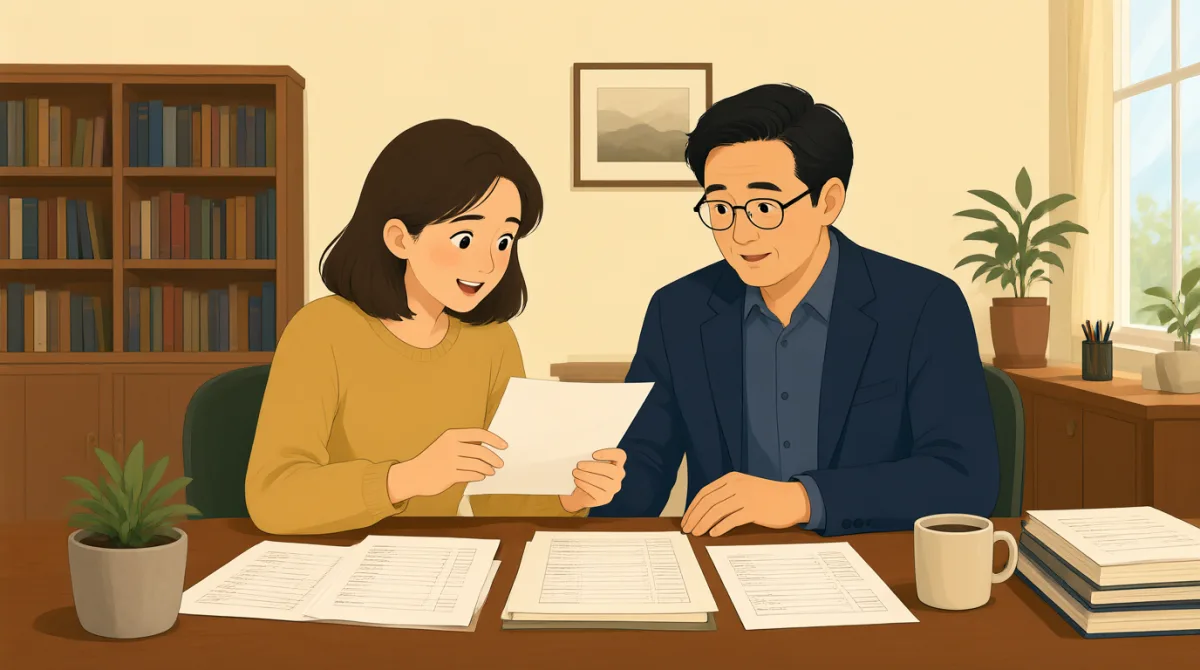

I’ve brought the inspection forms and the public logs. The dates don’t line up, but I don’t want to call that evidence of tampering before we know how these records were created.
ฉันเอาแบบฟอร์มการตรวจสอบกับบันทึกสาธารณะมาด้วย วันที่ไม่ตรงกัน แต่ฉันยังไม่อยากสรุปว่านี่เป็นหลักฐานการแก้ไขเอกสาร จนกว่าเราจะรู้ว่าบันทึกพวกนี้จัดทำขึ้นอย่างไร

Good instinct. A discrepancy is a question, not a conclusion. First, let’s establish whether these are original records, copies, or entries exported from a database that may have been updated later.
คิดรอบคอบดีแล้ว ความคลาดเคลื่อนเป็นแค่ข้อสงสัย ไม่ใช่ข้อสรุป ก่อนอื่นเรามาดูกันว่าพวกนี้เป็นเอกสารต้นฉบับ สำเนา หรือรายการที่ส่งออกมาจากฐานข้อมูลซึ่งอาจมีการปรับปรุงภายหลัง
The forms came from a former employee. They have handwritten dates and initials, but there’s no cover sheet, and I can’t tell whether the pages are complete or in their original order.
แบบฟอร์มได้มาจากอดีตพนักงานคนหนึ่ง มีวันที่กับอักษรย่อเขียนด้วยลายมือ แต่ไม่มีใบปะหน้า แล้วฉันก็ดูไม่ออกว่าหน้าครบไหม หรือเรียงตามลำดับเดิมหรือเปล่า
Then we should treat provenance as unresolved. Do you have the files as they were received, including the email or message that transmitted them? Metadata and transmission history may help establish what changed—and when.
งั้นเราควรถือว่ายังระบุที่มาของเอกสารไม่ได้ คุณมีไฟล์ในสภาพตอนที่ได้รับมาหรือเปล่า รวมถึงอีเมลหรือข้อความที่ส่งไฟล์มาด้วย ข้อมูลเมทาดาทาและประวัติการส่งต่ออาจช่วยให้รู้ว่ามีอะไรเปลี่ยนไปบ้าง และเปลี่ยนเมื่อไร
I saved the original attachment and made a working copy. The attachment’s timestamp is two years later than the handwritten inspection date, though, so it could simply be a scan made after the fact.
ฉันบันทึกไฟล์แนบต้นฉบับไว้ แล้วก็ทำสำเนาสำหรับใช้งาน วันที่เวลาของไฟล์แนบช้ากว่าวันที่ตรวจสอบที่เขียนด้วยมือตั้งสองปี แต่ก็อาจเป็นแค่ไฟล์สแกนที่ทำขึ้นทีหลังก็ได้
Exactly. A file timestamp usually tells you when that digital file was created or modified, not when the underlying inspection occurred. We’ll need to separate what the metadata proves from what it merely suggests.
ใช่เลย โดยทั่วไปวันที่เวลาของไฟล์จะบอกว่าไฟล์ดิจิทัลนั้นถูกสร้างหรือแก้ไขเมื่อไร ไม่ได้บอกว่าการตรวจสอบจริงเกิดขึ้นเมื่อไร เราต้องแยกให้ออกว่าข้อมูลเมทาดาทาพิสูจน์อะไรได้ และแค่ชวนให้คิดถึงอะไรบ้าง
The public log lists an inspection on that date, but it describes a different section of the plant. Could that indicate the form was misdated, or are we comparing records that use different location codes?
บันทึกสาธารณะระบุว่ามีการตรวจสอบในวันนั้น แต่เป็นคนละส่วนของโรงงาน แบบฟอร์มอาจลงวันที่ผิด หรือเราอาจกำลังเทียบบันทึกที่ใช้รหัสสถานที่คนละชุดกันอยู่ก็ได้ไหม
Either is possible. Let’s compare the codes against the agency’s documentation, then check whether its log records the inspection date, the filing date, or the date an entry was entered into the system.
เป็นไปได้ทั้งสองอย่าง เรามาเทียบรหัสกับเอกสารของหน่วยงานก่อน แล้วค่อยตรวจดูว่าบันทึกนั้นระบุวันที่ตรวจสอบ วันที่ยื่นเอกสาร หรือวันที่ป้อนข้อมูลเข้าระบบ
If the log was entered later, a mismatch might be routine. But if the initials on the form match the inspector’s signature elsewhere, would that strengthen the document’s authenticity?
ถ้าป้อนข้อมูลลงบันทึกทีหลัง วันที่ไม่ตรงกันก็อาจเป็นเรื่องปกติ แต่ถ้าอักษรย่อบนแบบฟอร์มตรงกับลายเซ็นของผู้ตรวจสอบในเอกสารอื่น จะช่วยยืนยันความแท้จริงของเอกสารได้ไหม
It would be one useful point of comparison, not proof by itself. We should verify the signature against an independent record and ask the agency how its forms were handled at the time.
มันเป็นจุดหนึ่งที่ช่วยใช้เปรียบเทียบได้ แต่ยังใช้พิสูจน์ไม่ได้ด้วยตัวเอง เราควรตรวจสอบลายเซ็นกับเอกสารอิสระอีกแหล่ง แล้วถามหน่วยงานว่าตอนนั้นจัดการแบบฟอร์มกันอย่างไร
Understood. I’ll preserve the originals, document how I received them, and request the agency’s filing procedures and the relevant log history. I won’t describe the discrepancy as deliberate alteration unless the evidence supports that.
เข้าใจแล้ว ฉันจะเก็บเอกสารต้นฉบับไว้ให้ดี บันทึกว่าได้รับมาอย่างไร แล้วขอข้อมูลขั้นตอนการยื่นเอกสารของหน่วยงานกับประวัติบันทึกที่เกี่ยวข้อง ฉันจะไม่เรียกความคลาดเคลื่อนนี้ว่าการแก้ไขโดยเจตนา เว้นแต่หลักฐานจะสนับสนุนข้อสรุปนั้น
That’s the right standard. And keep a clear distinction in your notes between what the documents show, what someone told you, and what you’re still trying to establish. Readers deserve that precision.
นั่นแหละคือมาตรฐานที่ควรยึด แล้วจดแยกให้ชัดด้วยว่าเอกสารแสดงอะไร มีคนบอกอะไรคุณ และเรื่องไหนที่คุณยังพยายามหาคำตอบอยู่ ผู้อ่านสมควรได้รับข้อมูลที่แม่นยำแบบนั้น
คำศัพท์7
- discrepancyความคลาดเคลื่อน
A difference between two pieces of information that are expected to match. Here, it describes the dates or details that do not line up across records.
ความแตกต่างระหว่างข้อมูลสองชุดที่ควรจะตรงกัน ในที่นี้หมายถึงวันที่หรือรายละเอียดในบันทึกต่าง ๆ ที่ไม่ตรงกัน
- provenanceที่มาและประวัติของเอกสาร
The history of where a document came from and how it has been handled. Journalists use provenance to assess a record’s reliability.
ประวัติว่าเอกสารมาจากไหนและผ่านการจัดการอย่างไร นักข่าวใช้ข้อมูลเรื่องที่มาและประวัติของเอกสารเพื่อประเมินความน่าเชื่อถือของบันทึก
- metadataข้อมูลเมทาดาทา
Information about a digital file, such as when it was created or modified. It may help establish a file’s history, but not necessarily the date of the event described in it.
ข้อมูลเกี่ยวกับไฟล์ดิจิทัล เช่น สร้างหรือแก้ไขเมื่อไร ข้อมูลนี้อาจช่วยบอกประวัติของไฟล์ แต่ไม่ได้ยืนยันเสมอไปว่างานหรือเหตุการณ์ที่กล่าวถึงในไฟล์เกิดขึ้นเมื่อไร
- underlying inspectionการตรวจสอบที่เกิดขึ้นจริง
The actual inspection that a document refers to, as distinct from the later creation of a digital copy. The phrase helps separate an event’s date from a file’s timestamp.
การตรวจสอบที่เกิดขึ้นจริงตามที่เอกสารกล่าวถึง ซึ่งต่างจากการสร้างสำเนาดิจิทัลขึ้นในภายหลัง วลีนี้ช่วยแยกวันที่ของเหตุการณ์ออกจากวันที่เวลาของไฟล์
- independent recordเอกสารอิสระอีกแหล่งหนึ่ง
A separate source that can be used to check a claim. Comparing a signature with an independent record can support authentication, though it does not prove it on its own.
แหล่งข้อมูลแยกต่างหากที่ใช้ตรวจสอบข้อกล่าวอ้างได้ การเปรียบเทียบลายเซ็นกับเอกสารอิสระอาจช่วยยืนยันความแท้จริงได้ แต่ยังพิสูจน์ไม่ได้ด้วยตัวเอง
- filing proceduresขั้นตอนการยื่นเอกสาร
The rules or routine steps an organization follows to submit and store records. Asking about them can help explain why dates or entries differ.
กฎหรือขั้นตอนปกติที่องค์กรใช้ส่งและจัดเก็บบันทึก การสอบถามเรื่องนี้อาจช่วยอธิบายได้ว่าทำไมวันที่หรือรายการจึงแตกต่างกัน
- deliberate alterationการแก้ไขโดยเจตนา
An intentional change made to a document or record. The phrase should be used only when evidence supports the conclusion that the change was intentional.
การเปลี่ยนแปลงเอกสารหรือบันทึกโดยตั้งใจ ควรใช้วลีนี้ก็ต่อเมื่อมีหลักฐานสนับสนุนข้อสรุปว่าการเปลี่ยนแปลงนั้นเกิดขึ้นโดยเจตนา
ประโยคสำคัญ7
- 1
A discrepancy is a question, not a conclusion.
ความคลาดเคลื่อนเป็นข้อสงสัย ไม่ใช่ข้อสรุป
This concise sentence cautions against treating an inconsistency as proof. Use it to emphasize that a finding needs further investigation before it supports a conclusion.
ประโยคสั้น ๆ นี้เตือนว่าอย่ามองความไม่สอดคล้องกันเป็นหลักฐานพิสูจน์ ใช้เพื่อเน้นว่าต้องตรวจสอบเพิ่มเติมก่อนที่ข้อค้นพบจะนำไปสู่ข้อสรุปได้
- 2
Then we should treat provenance as unresolved.
งั้นเราควรถือว่ายังระบุที่มาและประวัติของเอกสารไม่ได้
This is a careful way to say that a document’s origins and handling have not yet been established. Reuse the pattern “treat [issue] as unresolved” when evidence is incomplete.
นี่เป็นวิธีพูดอย่างระมัดระวังว่าเรายังไม่รู้ที่มาและการจัดการเอกสารอย่างแน่ชัด นำรูปแบบ “ถือว่า [ประเด็น] ยังไม่ได้ข้อสรุป” ไปใช้ได้เมื่อหลักฐานยังไม่ครบ
- 3
We’ll need to separate what the metadata proves from what it merely suggests.
เราต้องแยกให้ออกว่าข้อมูลเมทาดาทาพิสูจน์อะไรได้ และแค่ชวนให้คิดถึงอะไรบ้าง
This sentence distinguishes confirmed facts from possible interpretations. It is useful when explaining why digital information should be interpreted cautiously.
ประโยคนี้แยกข้อเท็จจริงที่ยืนยันได้ออกจากการตีความที่เป็นไปได้ ใช้ได้เมื่อต้องอธิบายว่าทำไมจึงควรตีความข้อมูลดิจิทัลอย่างระมัดระวัง
- 4
Either is possible.
เป็นไปได้ทั้งสองอย่าง
This brief response acknowledges multiple plausible explanations without choosing between them prematurely. Use it when the available evidence does not yet settle a question.
คำตอบสั้น ๆ นี้ยอมรับว่ามีคำอธิบายที่เป็นไปได้หลายทาง โดยยังไม่รีบเลือกทางใดทางหนึ่ง ใช้ได้เมื่อหลักฐานที่มีอยู่ยังไม่ช่วยตัดสินคำถาม
- 5
It would be one useful point of comparison, not proof by itself.
มันเป็นจุดหนึ่งที่ช่วยใช้เปรียบเทียบได้ แต่ยังใช้พิสูจน์ไม่ได้ด้วยตัวเอง
This sentence explains that a piece of supporting evidence has limits. Reuse the structure “one useful point of comparison, not proof by itself” to describe evidence that needs corroboration.
ประโยคนี้อธิบายว่าหลักฐานสนับสนุนชิ้นหนึ่งยังมีข้อจำกัด นำโครงสร้าง “เป็นจุดหนึ่งที่ช่วยใช้เปรียบเทียบได้ แต่ยังใช้พิสูจน์ไม่ได้ด้วยตัวเอง” ไปใช้พูดถึงหลักฐานที่ต้องมีข้อมูลอื่นมาสนับสนุน
- 6
I’ll preserve the originals, document how I received them, and request the agency’s filing procedures and the relevant log history.
ฉันจะเก็บเอกสารต้นฉบับไว้ให้ดี บันทึกว่าได้รับมาอย่างไร แล้วขอข้อมูลขั้นตอนการยื่นเอกสารของหน่วยงานกับประวัติบันทึกที่เกี่ยวข้อง
This sentence lays out practical steps for maintaining a clear record of evidence and seeking context. Its parallel verbs make it useful when describing a careful investigation plan.
ประโยคนี้บอกขั้นตอนที่ทำได้จริงเพื่อเก็บหลักฐานและขอข้อมูลแวดล้อมให้ครบ กริยาที่เรียงขนานกันทำให้ประโยคนี้เหมาะสำหรับอธิบายแผนการตรวจสอบอย่างรอบคอบ
- 7
Readers deserve that precision.
ผู้อ่านสมควรได้รับข้อมูลที่แม่นยำแบบนั้น
This short statement connects accurate reporting with responsibility to the audience. Use it to underscore why a journalist should distinguish facts, claims, and unanswered questions.
ข้อความสั้น ๆ นี้เชื่อมโยงการรายงานที่ถูกต้องเข้ากับความรับผิดชอบต่อผู้อ่าน ใช้เน้นว่าทำไมนักข่าวจึงควรแยกข้อเท็จจริง คำกล่าวอ้าง และคำถามที่ยังไม่มีคำตอบออกจากกัน