Having Lunch Together
Almorzando juntos
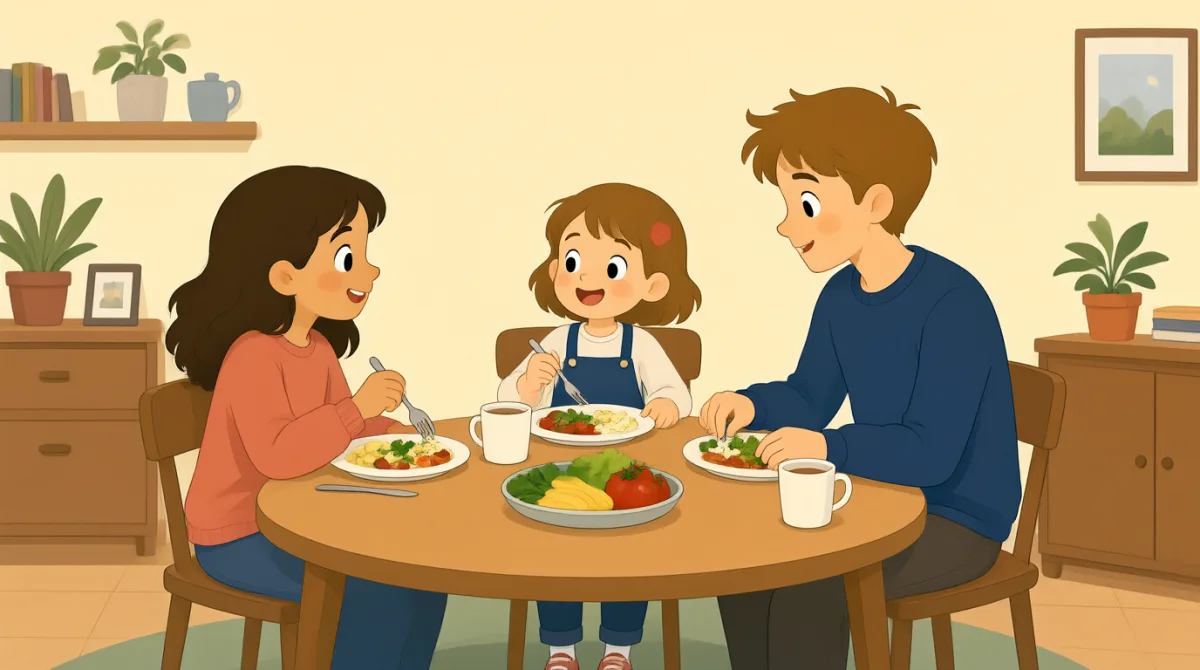
After the clean-up, Emma, Mia, and Jack have lunch together. They talk about the work and plan to help again next time.
Después de la limpieza, Emma, Mia y Jack almuerzan juntos. Hablan del trabajo y hacen planes para volver a ayudar la próxima vez.
Diálogo8

This sandwich tastes great. I’m glad we finished cleaning the park.
Este sándwich está buenísimo. Me alegra que hayamos terminado de limpiar el parque.

Me too. The path looks much better now, and we got a lot done.
A mí también. El sendero se ve mucho mejor ahora y avanzamos un montón.

That heavy bag was tough, but we moved it safely together.
Esa bolsa pesada fue difícil de mover, pero la trasladamos juntos y sin problemas.
I didn’t know there would be so much litter. My arms are tired!
No sabía que habría tanta basura. ¡Me duelen los brazos!
You both worked hard. Let’s sit here and enjoy our lunch.
Los dos trabajaron mucho. Sentémonos aquí y disfrutemos del almuerzo.
I’d be happy to help again next time. We could bring more friends.
Me encantaría volver a ayudar la próxima vez. Podríamos traer a más amigos.
Great idea! I’ll sign up again when they plan another clean-up.
¡Buena idea! Volveré a inscribirme cuando organicen otra jornada de limpieza.
Me too. It feels good to help our neighborhood together.
Yo también. Se siente bien ayudar juntos en nuestro barrio.
Vocabulario7
- tastes greatestá buenísimo
This means the food has a very good flavor. You can use it to say you enjoy something you are eating.
Significa que la comida tiene muy buen sabor. Puedes decirlo para expresar que disfrutas de algo que estás comiendo.
- got a lot doneavanzamos un montón
This means we finished many tasks. Use it to describe good progress on a job or project.
Significa que terminamos muchas tareas. Úsalo para describir el buen progreso en un trabajo o proyecto.
- worked hardtrabajaron mucho
This means someone put a lot of effort into a task. You can use it to praise people after they finish a difficult job.
Significa que alguien se esforzó mucho en una tarea. Puedes usarlo para elogiar a las personas después de que terminen un trabajo difícil.
- help again next timevolver a ayudar la próxima vez
This means you want to help when the activity happens again. Use it to offer help in the future.
Significa que quieres ayudar cuando se vuelva a realizar la actividad. Úsalo para ofrecerte a ayudar en el futuro.
- bring more friendstraer a más amigos
This means invite or take additional friends along. You can use it when suggesting how to get more people involved.
Significa invitar o llevar contigo a más amigos. Puedes usarlo para sugerir cómo lograr que participe más gente.
- sign up againvolver a inscribirse
This means register once more for an activity. You can use it when you want to join a future event.
Significa registrarse una vez más para una actividad. Puedes usarlo cuando quieras participar en un evento futuro.
- clean-upjornada de limpieza
This is an activity where people collect litter and make a place cleaner. You can use it for a community event like cleaning a park.
Es una actividad en la que la gente recoge basura para dejar más limpio un lugar. Puedes usarlo para hablar de un evento comunitario, como una jornada para limpiar un parque.
Frases clave8
- 1
I’m glad we finished cleaning the park.
Me alegra que hayamos terminado de limpiar el parque.
This sentence shares happiness about completing a task. You can reuse “I’m glad we finished…” to talk about other jobs or activities.
Esta oración expresa alegría por haber terminado una tarea. Puedes reutilizar “I’m glad we finished…” (Me alegra que hayamos terminado…) para hablar de otros trabajos o actividades.
- 2
The path looks much better now, and we got a lot done.
El sendero se ve mucho mejor ahora y avanzamos un montón.
This is a useful way to describe a place after work and say that the group made good progress. Replace “the path” with another place or thing.
Esta es una forma útil de describir cómo quedó un lugar después de trabajar y decir que el grupo avanzó mucho. Puedes reemplazar “the path” (el sendero) por otro lugar u objeto.
- 3
That heavy bag was tough, but we moved it safely together.
Esa bolsa pesada fue difícil de mover, pero la trasladamos juntos y sin problemas.
Use this sentence to describe a difficult task that people completed as a team. You can replace “That heavy bag” with another challenge.
Usa esta oración para describir una tarea difícil que varias personas completaron en equipo. Puedes reemplazar “That heavy bag” (Esa bolsa pesada) por otro desafío.
- 4
I didn’t know there would be so much litter.
No sabía que habría tanta basura.
This sentence expresses surprise about how much of something there was. You can use “I didn’t know there would be so much…” in other situations.
Esta oración expresa sorpresa por la cantidad de algo que había. Puedes usar “I didn’t know there would be so much…” (No sabía que habría tanto…) en otras situaciones.
- 5
You both worked hard.
Los dos trabajaron mucho.
This is a simple way to praise two people for their effort. You can change “both” to “all” when speaking to a larger group.
Esta es una forma sencilla de elogiar el esfuerzo de dos personas. Puedes cambiar “both” (los dos) por “all” (todos) cuando hables con un grupo más grande.
- 6
Let’s sit here and enjoy our lunch.
Sentémonos aquí y disfrutemos del almuerzo.
Use “Let’s” to make a friendly suggestion about doing something together. You can replace “sit here and enjoy our lunch” with another activity.
Usa “Let’s” (Hagamos…) para hacer una sugerencia amistosa sobre algo que pueden hacer juntos. Puedes reemplazar “sit here and enjoy our lunch” (sentarnos aquí y disfrutar del almuerzo) por otra actividad.
- 7
I’d be happy to help again next time.
Me encantaría volver a ayudar la próxima vez.
This is a polite way to offer help in the future. You can use it when someone may organize the same activity again.
Esta es una forma amable de ofrecer ayuda para el futuro. Puedes usarla cuando alguien quizá organice la misma actividad otra vez.
- 8
I’ll sign up again when they plan another clean-up.
Volveré a inscribirme cuando organicen otra jornada de limpieza.
This sentence says you plan to register for a future event. You can reuse “I’ll sign up again when they plan another…” for other activities.
Esta oración dice que tienes pensado inscribirte en un evento futuro. Puedes reutilizar “I’ll sign up again when they plan another…” (Volveré a inscribirme cuando organicen otro…) para hablar de otras actividades.