Signing Up
Inscribirse
Emma and Mia meet Grace, who is organizing the clean-up. They sign up and learn when and where to meet.
Emma y Mia conocen a Grace, quien organiza la jornada de limpieza. Se inscriben y averiguan cuándo y dónde reunirse.
Diálogo8
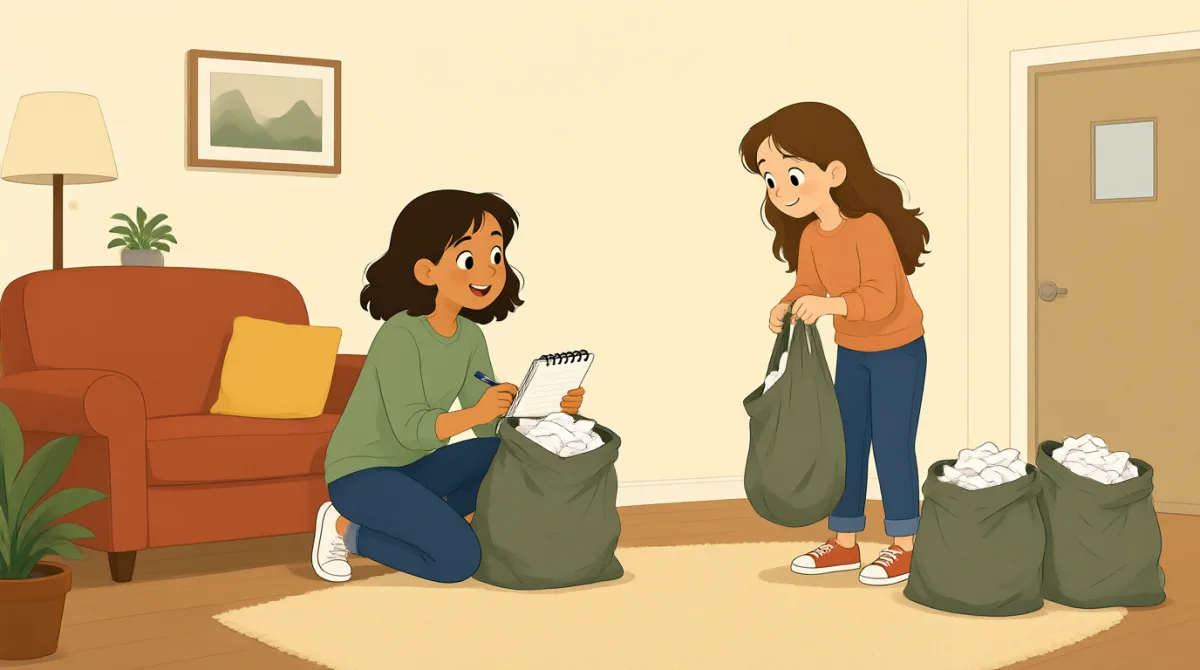

Hi, Grace. Mia and I saw the clean-up poster. Can we sign up?
Hola, Grace. Mia y yo vimos el cartel de la jornada de limpieza. ¿Podemos inscribirnos?

Of course! Please write your names on this sign-up sheet.
¡Claro! Escriban sus nombres en esta hoja de inscripción, por favor.

Do we need to bring anything, like gloves or trash bags?
¿Tenemos que llevar algo, como guantes o bolsas de basura?
No, I have tools for everyone. Just wear comfortable shoes and clothes.
No, tengo herramientas para todos. Solo usen zapatos y ropa cómodos.
Great! What time should we meet, and where in the park?
¡Genial! ¿A qué hora nos reunimos y en qué parte del parque?
Meet at nine on Saturday by the park's main entrance.
Nos vemos el sábado a las nueve, junto a la entrada principal del parque.
Got it. We’ll be there at nine. How long will we work?
Entendido. Estaremos allí a las nueve. ¿Cuánto tiempo trabajaremos?
About two hours. Then we’ll take a short break and have snacks.
Unas dos horas. Después haremos una pausa breve y comeremos algo.
Vocabulario7
- sign upinscribirse
To sign up means to put your name on a list to join an activity. You can use it when you want to take part in an event or class.
“Sign up” significa apuntar tu nombre en una lista para participar en una actividad. Puedes usar esta expresión cuando quieras participar en un evento o una clase.
- sign-up sheethoja de inscripción
A sign-up sheet is a paper where people write their names to join an activity. It helps the organizer know who is coming.
Una “sign-up sheet” es una hoja donde la gente escribe su nombre para participar en una actividad. Le ayuda a la persona organizadora a saber quiénes asistirán.
- bring anythingllevar algo
This asks if you need to take something with you. You can use it before an event or visit.
“Bring anything” pregunta si necesitas llevar algo contigo. Puedes usar esta expresión antes de un evento o una visita.
- comfortable shoes and clotheszapatos y ropa cómodos
These are shoes and clothes that feel good to wear. You can use this phrase when asking what to wear for an activity.
“Comfortable shoes and clothes” son zapatos y ropa que resultan cómodos de llevar. Puedes usar esta expresión para preguntar qué ropa conviene ponerse para una actividad.
- main entranceentrada principal
The main entrance is the most important or usual way into a place. It is useful for giving a clear meeting point.
La “main entrance” es la entrada más importante o habitual de un lugar. Es útil para indicar claramente dónde reunirse.
- be thereestar allí
To be there means to arrive at or be in a place. You can use it to confirm that you will come.
“Be there” significa llegar a un lugar o estar en él. Puedes usar esta expresión para confirmar que asistirás.
- take a short breakhacer una pausa breve
This means to stop working for a little while to rest. You can use it when talking about a pause during an activity.
“Take a short break” significa dejar de trabajar un rato para descansar. Puedes usar esta expresión para hablar de una pausa durante una actividad.
Frases clave8
- 1
Can we sign up?
¿Podemos inscribirnos?
Use this to ask if you can join an activity or event. You can replace “sign up” with another action, such as “come along.”
Usa “Can we sign up?” para preguntar si puedes participar en una actividad o un evento. Puedes cambiar “sign up” por otra acción, como “come along”.
- 2
Do we need to bring anything, like gloves or trash bags?
¿Tenemos que llevar algo, como guantes o bolsas de basura?
This is a useful way to ask what you should take with you. You can name a few examples after “like.”
Esta es una forma práctica de preguntar qué debes llevar contigo. Después de “like” puedes mencionar algunos ejemplos.
- 3
Just wear comfortable shoes and clothes.
Solo usen zapatos y ropa cómodos.
Use this to give simple advice about what to wear. Replace “comfortable shoes and clothes” with other suitable clothing.
Usa “Just wear comfortable shoes and clothes.” para dar un consejo sencillo sobre qué ponerse. Puedes sustituir “comfortable shoes and clothes” por otra ropa adecuada.
- 4
What time should we meet, and where in the park?
¿A qué hora nos reunimos y en qué parte del parque?
This asks for both the meeting time and place. You can use the same question pattern to make plans for other locations.
“What time should we meet, and where in the park?” pregunta tanto la hora como el lugar de encuentro. Puedes usar el mismo patrón de pregunta para hacer planes en otros lugares.
- 5
Meet at nine on Saturday by the park's main entrance.
Nos vemos el sábado a las nueve, junto a la entrada principal del parque.
This gives a clear meeting time, day, and place. You can use this pattern to tell someone where and when to meet.
“Meet at nine on Saturday by the park's main entrance.” indica claramente la hora, el día y el lugar de encuentro. Puedes usar este patrón para decirle a alguien dónde y cuándo reunirse.
- 6
We’ll be there at nine.
Estaremos allí a las nueve.
Use this to confirm that you will arrive at a certain time. Replace “nine” with another time.
Usa “We’ll be there at nine.” para confirmar que llegarás a una hora determinada. Puedes sustituir “nine” por otra hora.
- 7
How long will we work?
¿Cuánto tiempo trabajaremos?
Use this to ask about the length of a future activity. You can replace “work” with another activity, such as “clean” or “wait.”
Usa “How long will we work?” para preguntar cuánto durará una actividad futura. Puedes cambiar “work” por otra actividad, como “clean” o “wait”.
- 8
Then we’ll take a short break and have snacks.
Después haremos una pausa breve y comeremos algo.
This explains what will happen after the main activity. You can use “Then we’ll…” to describe the next steps in a plan.
“Then we’ll take a short break and have snacks.” explica qué pasará después de la actividad principal. Puedes usar “Then we’ll…” para describir los siguientes pasos de un plan.