Taking a Ride-Share Service
রাইড-শেয়ার গাড়িতে যাত্রা
A passenger is waiting for their ride-share car and communicates with the driver about the pick-up location or arrival time.
একজন যাত্রী রাইড-শেয়ার গাড়ির জন্য অপেক্ষা করছেন এবং পিক-আপের স্থান বা গাড়ি পৌঁছানোর সময় নিয়ে চালকের সঙ্গে যোগাযোগ করছেন।
সংলাপ5
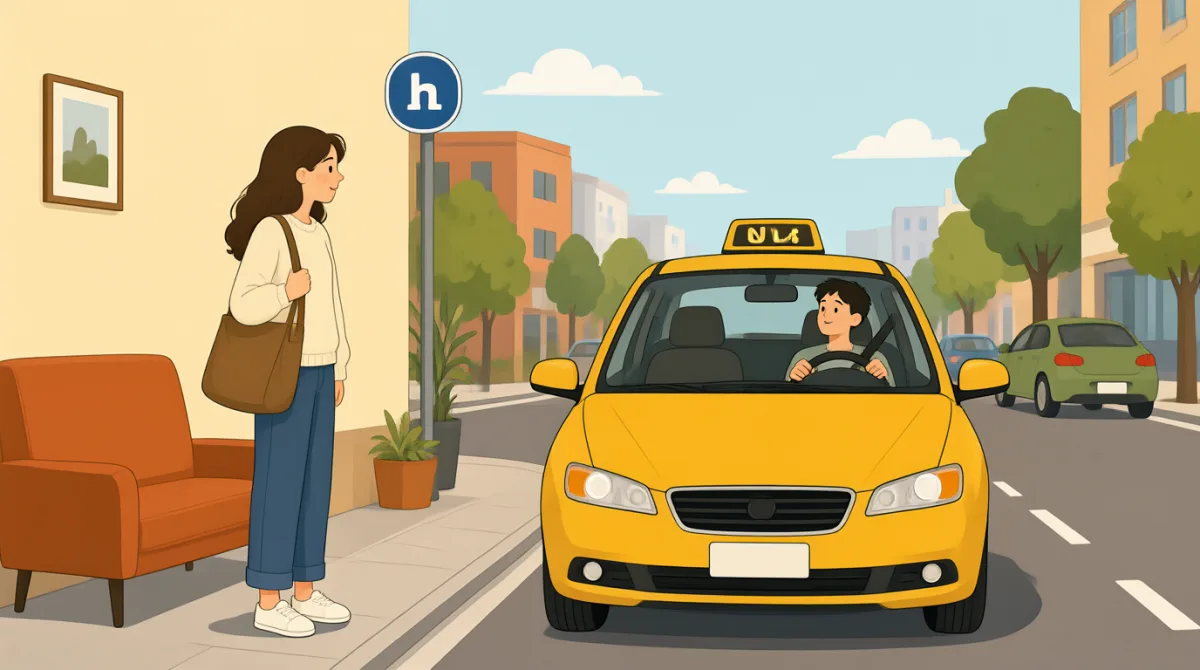

Hi, I just ordered a ride-share. My name is Emma. Are you on your way?
হ্যালো, আমি এইমাত্র একটা রাইড-শেয়ার গাড়ি বুক করেছি। আমার নাম Emma। আপনি কি রওনা হয়েছেন?

Yes, Emma. This is Jack, your driver. I'm just turning onto your street now. What's a good landmark to look out for?
জি, Emma। আমি Jack, আপনার চালক। এই তো এখনই আপনার রাস্তায় ঢুকছি। কাছাকাছি চেনার মতো কোনো জায়গা আছে?
Okay, great! I'm standing right in front of a coffee shop called 'The Daily Bean'. It has a big green awning.
বেশ, দারুণ! আমি ‘The Daily Bean’ নামে একটা কফিশপের ঠিক সামনে দাঁড়িয়ে আছি। দোকানটার সামনে বড় সবুজ ছাউনি আছে।
Got it. I see it now. I'm in a black sedan, license plate number ABC 123.
বুঝেছি। এখন দেখতে পাচ্ছি। আমি কালো রঙের সেডানে আছি, নম্বর প্লেট ABC 123।
Perfect. I see your car approaching. Thanks!
চমৎকার। আপনার গাড়িটা এগিয়ে আসতে দেখছি। ধন্যবাদ!
শব্দভান্ডার6
- ride-shareরাইড-শেয়ার
A service like Uber or Didi where you book a car ride through an app; useful for describing modern transportation options in cities.
Uber বা Didi-এর মতো পরিষেবা, যেখানে অ্যাপের মাধ্যমে গাড়ি বুক করা যায়। শহরে যাতায়াতের আধুনিক উপায় বোঝাতে শব্দটি কাজে লাগে।
- landmarkচেনার মতো জায়গা
A recognizable feature or building that helps identify a location; often used when giving directions to make it easier for others to find you.
সহজে চেনা যায় এমন কোনো স্থাপনা বা জায়গা, যা অবস্থান শনাক্ত করতে সাহায্য করে। কাউকে পথ বুঝিয়ে বলা বা নিজের অবস্থান জানাতে এটি প্রায়ই ব্যবহার করা হয়।
- awningছাউনি
A roof-like cover over a shop entrance to provide shade; common in urban areas and helpful for describing pick-up spots.
দোকানের প্রবেশপথের ওপর থাকা ছাদের মতো আবরণ, যা রোদ থেকে ছায়া দেয়। শহরে এমন ছাউনি প্রায়ই দেখা যায় এবং পিক-আপের জায়গা বর্ণনা করতে কাজে লাগে।
- sedanসেডান
A type of car with four doors and a separate trunk; a standard term for common passenger vehicles in ride-sharing.
চার দরজা ও আলাদা ডিকিসহ এক ধরনের গাড়ি। রাইড-শেয়ারে ব্যবহৃত সাধারণ যাত্রীবাহী গাড়ির ধরন বোঝাতে এই শব্দটি প্রচলিত।
- license plateনম্বর প্লেট
The metal plate on a vehicle showing its official registration number; important for identifying cars safely during pick-ups.
গাড়ির গায়ে লাগানো ধাতব ফলক, যাতে সরকারি নিবন্ধন নম্বর থাকে। পিক-আপের সময় নিরাপদে গাড়ি শনাক্ত করতে এটি গুরুত্বপূর্ণ।
- approachingকাছে আসছে
Coming closer from a distance; used to describe something or someone getting nearer, like a car arriving.
দূর থেকে আরও কাছে আসা। গাড়ি পৌঁছানোর মতো কোনো ব্যক্তি বা বস্তু কাছে আসছে বোঝাতে শব্দটি ব্যবহার করা হয়।
গুরুত্বপূর্ণ বাক্য5
- 1
Hi, I just ordered a ride-share. My name is Emma. Are you on your way?
হ্যালো, আমি এইমাত্র একটা রাইড-শেয়ার গাড়ি বুক করেছি। আমার নাম Emma। আপনি কি রওনা হয়েছেন?
This is a polite greeting and introduction when confirming a ride; useful for starting conversations with drivers. 'Are you on your way?' is a question using present continuous for ongoing action, common in service interactions.
রাইড নিশ্চিত করার সময় ভদ্রভাবে অভিবাদন ও পরিচয় জানাতে এই কথাটি বলা হয়। চালকের সঙ্গে কথোপকথন শুরু করতে এটি কাজে লাগে। 'Are you on your way?' (আপনি কি রওনা হয়েছেন?)—চলমান কাজ সম্পর্কে জানতে present continuous-এ করা একটি প্রশ্ন, যা পরিষেবা-সংক্রান্ত কথাবার্তায় প্রচলিত।
- 2
I'm just turning onto your street now. What's a good landmark to look out for?
এই তো এখনই আপনার রাস্তায় ঢুকছি। কাছাকাছি চেনার মতো কোনো জায়গা আছে?
Describes current location and asks for help spotting the passenger; practical for drivers giving updates. 'Look out for' means to watch for something, an idiomatic expression for identifying landmarks.
চালক নিজের বর্তমান অবস্থান জানিয়ে যাত্রীকে সহজে খুঁজে পাওয়ার জন্য কোনো চেনার মতো জায়গার কথা জিজ্ঞাসা করছেন। 'Look out for' (খেয়াল করে খোঁজা) কোনো কিছু খুঁজে দেখার অর্থে ব্যবহৃত একটি বাগ্ধারা; এখানে এটি চেনার মতো জায়গা খুঁজতে বলা হয়েছে।
- 3
I'm standing right in front of a coffee shop called 'The Daily Bean'. It has a big green awning.
আমি ‘The Daily Bean’ নামে একটা কফিশপের ঠিক সামনে দাঁড়িয়ে আছি। দোকানটার সামনে বড় সবুজ ছাউনি আছে।
Gives precise location using a nearby reference; helpful for passengers to be found easily. 'Right in front of' specifies exact position, and the relative clause 'It has...' adds descriptive details.
কাছের একটি পরিচিত জায়গার উল্লেখ করে যাত্রী নিজের অবস্থান নির্দিষ্ট করে বলছেন, যাতে তাঁকে সহজে খুঁজে পাওয়া যায়। 'Right in front of' (ঠিক সামনে) সুনির্দিষ্ট অবস্থান বোঝায়, আর 'It has...' (এতে ... আছে) দিয়ে জায়গাটির বর্ণনা যোগ করা হয়।
- 4
Got it. I see it now. I'm in a black sedan, license plate number ABC 123.
বুঝেছি। এখন দেখতে পাচ্ছি। আমি কালো রঙের সেডানে আছি, নম্বর প্লেট ABC 123।
Acknowledges information and provides car details; essential for confirming identity. 'Got it' is informal for understanding, and listing specifics like color and plate number ensures safety.
এখানে চালক তথ্য বুঝেছেন বলে জানিয়ে গাড়ির পরিচয় দিচ্ছেন। গাড়ির পরিচয় নিশ্চিত করতে রং ও নম্বর প্লেটের মতো নির্দিষ্ট তথ্য জানানো জরুরি। 'Got it' (বুঝেছি) হলো বোঝার কথা অনানুষ্ঠানিকভাবে জানানোর উপায়।
- 5
Perfect. I see your car approaching. Thanks!
চমৎকার। আপনার গাড়িটা এগিয়ে আসতে দেখছি। ধন্যবাদ!
Shows satisfaction and ends the conversation positively; useful for quick confirmations. 'Approaching' uses present continuous for real-time observation, and 'Thanks!' expresses gratitude simply.
এতে সন্তুষ্টি প্রকাশ করে কথোপকথনটি সুন্দরভাবে শেষ করা হয়। দ্রুত নিশ্চিত করতে কথাটি কাজে লাগে। 'Approaching' (কাছে আসছে) দিয়ে এই মুহূর্তে চোখের সামনে ঘটছে এমন ঘটনা বোঝানো হয়েছে, আর 'Thanks!' (ধন্যবাদ!) সহজভাবে কৃতজ্ঞতা জানায়।