Asking for Transfer Information
বাস বদলানোর তথ্য জানতে চাওয়া
A passenger asks the bus driver or a fellow passenger for information on how to transfer to another bus line to reach their final destination.
গন্তব্যে পৌঁছানোর জন্য অন্য বাসে কীভাবে উঠতে হবে, সে বিষয়ে একজন যাত্রী বাসচালক বা সহযাত্রীর কাছে জানতে চান।
সংলাপ8
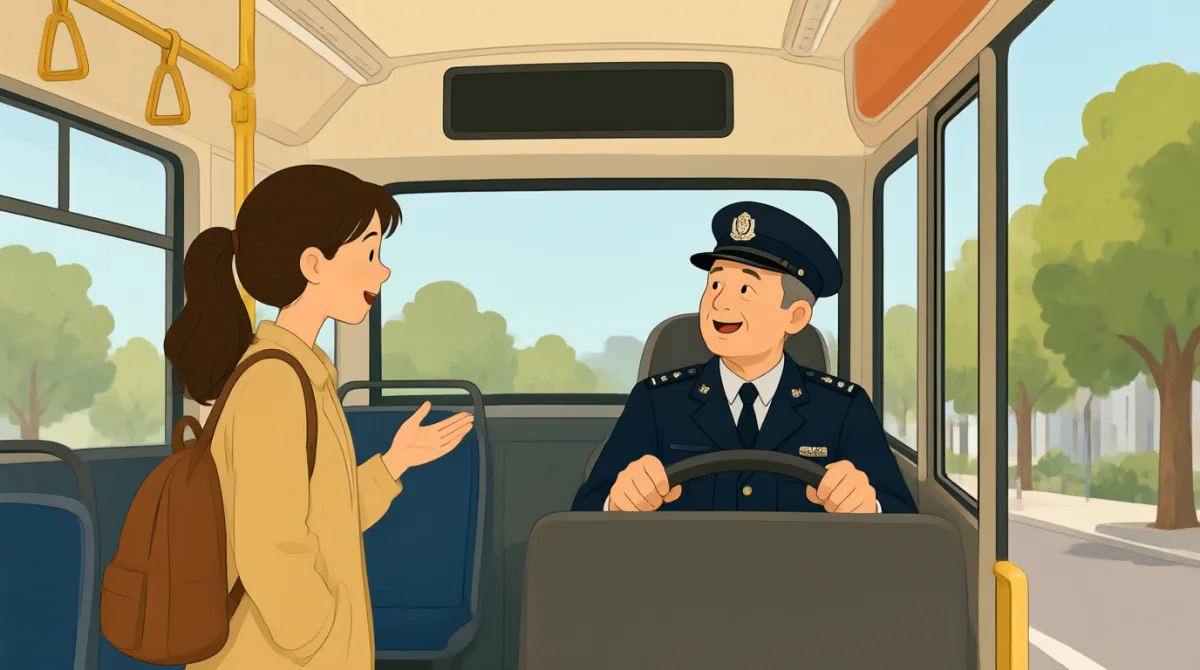

Excuse me, driver. Could you tell me how to get to the City Museum from here?
মাফ করবেন, চালক। এখান থেকে সিটি মিউজিয়ামে কীভাবে যাব, বলবেন?

The City Museum, huh? This bus doesn't go there directly. You'll need to transfer.
সিটি মিউজিয়াম, তাই তো? এই বাস সরাসরি সেখানে যায় না। আপনাকে বাস বদলাতে হবে।
Okay, I see. What's the best way to transfer then? Which bus line should I take?
আচ্ছা, বুঝলাম। তাহলে বাস বদলানোর সবচেয়ে ভালো উপায় কী? কোন বাসে উঠব?
Your best bet is to get off at Central Station, which is about five stops from here. From there, you can catch the Line 12 bus.
আপনার জন্য সবচেয়ে ভালো হবে সেন্ট্রাল স্টেশনে নেমে যাওয়া। এখান থেকে স্টেশনটা প্রায় পাঁচ স্টপ দূরে। সেখান থেকে ১২ নম্বর বাসে উঠতে পারবেন।
Line 12, got it. And how many stops is it from Central Station to the museum on Line 12?
১২ নম্বর বাস, বুঝেছি। আর সেন্ট্রাল স্টেশন থেকে এই বাসে মিউজিয়াম যেতে কয়টা স্টপ?
It's only two stops from Central Station. Just look out for the large glass building. That's the museum.
সেন্ট্রাল স্টেশন থেকে মাত্র দুই স্টপ। বড় কাচের ভবনটা খেয়াল রাখবেন। ওটাই মিউজিয়াম।
Perfect! Thank you so much for your help, driver. I really appreciate it.
চমৎকার! সাহায্য করার জন্য আপনাকে অনেক ধন্যবাদ, চালক। আমি সত্যিই কৃতজ্ঞ।
No problem. Have a good day!
কোনো সমস্যা নেই। আপনার দিনটা ভালো কাটুক!
শব্দভান্ডার7
- transferবাস বদলানো
To change from one bus or vehicle to another to continue your journey; useful when asking about bus routes that require switching lines.
যাত্রা চালিয়ে যাওয়ার জন্য এক বাস বা যানবাহন থেকে নেমে অন্যটিতে ওঠা। বাসের রুটে লাইন বদলাতে হলে এই শব্দটি কাজে লাগে।
- get offনেমে যাওয়া
To leave a bus, train, or similar vehicle at a stop; a common phrase in public transportation contexts.
কোনো স্টপে বাস, ট্রেন বা এ ধরনের যানবাহন থেকে নেমে যাওয়া। গণপরিবহনের প্রসঙ্গে এই কথাটি খুব প্রচলিত।
- catchবাসে ওঠা
To board or take a bus or train in time; often used like 'catch the bus' meaning to get on it.
সময়মতো বাস বা ট্রেনে ওঠা। যেমন, 'catch the bus' বলতে বাসে ওঠা বোঝায়।
- stopsস্টপ
The places where a bus pauses to pick up or drop off passengers; count them to know how far your destination is.
যে জায়গায় বাস যাত্রী ওঠানো বা নামানোর জন্য থামে। গন্তব্য কত দূরে, তা জানতে স্টপ গুনে দেখা হয়।
- lineবাসের রুট
A specific bus route identified by a number, like 'Line 12'; essential for navigating public transport systems.
নম্বর দিয়ে চিহ্নিত নির্দিষ্ট বাসের পথ, যেমন 'Line 12'। গণপরিবহন ব্যবস্থায় পথ খুঁজে পেতে এটি জানা জরুরি।
- got itবুঝেছি
An informal way to say 'I understand' or 'Okay, noted'; helpful in conversations to confirm information quickly.
'I understand' বা 'Okay, noted' বলার অনানুষ্ঠানিক উপায়। কথোপকথনে কোনো তথ্য বুঝেছেন বা মনে রেখেছেন—তা দ্রুত জানাতে এটি কাজে লাগে।
- look out forখেয়াল রাখা
To watch carefully for a landmark or sign; useful for identifying your stop without relying only on names.
কোনো পরিচিত স্থান বা চিহ্নের দিকে সতর্কভাবে নজর রাখা। শুধু নামের ওপর নির্ভর না করে নিজের স্টপ চিনে নিতে এটি কাজে লাগে।
গুরুত্বপূর্ণ বাক্য7
- 1
Excuse me, driver. Could you tell me how to get to the City Museum from here?
মাফ করবেন, চালক। এখান থেকে সিটি মিউজিয়ামে কীভাবে যাব, বলবেন?
This is a polite way to ask for directions on a bus; 'Could you tell me' is a formal request structure using 'could' for politeness, and 'get to' means 'reach or arrive at'. Use it to start inquiries with strangers.
বাসে পথের নির্দেশনা চাইতে এটি ভদ্র উপায়। 'Could you tell me' হলো 'could' ব্যবহার করে ভদ্রভাবে অনুরোধ করার গঠন, আর 'get to' মানে কোনো জায়গায় পৌঁছানো। অপরিচিত কারও কাছে পথ জানতে কথাটি দিয়ে শুরু করতে পারেন।
- 2
This bus doesn't go there directly. You'll need to transfer.
এই বাস সরাসরি সেখানে যায় না। আপনাকে বাস বদলাতে হবে।
Explains that a direct route isn't available and suggests changing buses; 'doesn't go...directly' uses negation for routes, and 'you'll need to' is future necessity with 'will'. Practical for giving or receiving travel advice.
এতে বোঝানো হচ্ছে যে সরাসরি যাওয়ার কোনো রুট নেই, তাই বাস বদলাতে হবে। রুটের ক্ষেত্রে 'doesn't go...directly' দিয়ে সরাসরি না যাওয়ার কথা বলা হয়, আর 'you'll need to' দিয়ে ভবিষ্যতে কিছু করা প্রয়োজন বোঝায়। যাতায়াতের পরামর্শ দিতে বা নিতে এটি কাজে লাগে।
- 3
What's the best way to transfer then? Which bus line should I take?
তাহলে বাস বদলানোর সবচেয়ে ভালো উপায় কী? কোন বাসে উঠব?
Asks for the optimal method and specific details; 'What's the best way' seeks recommendations, and 'should I' asks for advice. This pattern is useful for clarifying options in travel situations.
এখানে সবচেয়ে ভালো উপায় ও নির্দিষ্ট তথ্য জানতে চাওয়া হচ্ছে। 'What's the best way' দিয়ে পরামর্শ চাওয়া হয়, আর 'should I' দিয়ে কী করা উচিত সে বিষয়ে জানতে চাওয়া হয়। যাত্রার বিকল্পগুলো স্পষ্ট করতে এই গঠনটি কাজে লাগে।
- 4
Your best bet is to get off at Central Station, which is about five stops from here.
আপনার জন্য সবচেয়ে ভালো হবে সেন্ট্রাল স্টেশনে নেমে যাওয়া। এখান থেকে স্টেশনটা প্রায় পাঁচ স্টপ দূরে।
Gives practical advice with a landmark stop; 'your best bet' means the most reliable option idiomatically, and 'which is' adds relative clause for details. Helps in explaining routes step by step.
এখানে পরিচিত একটি স্টপের উল্লেখ করে ব্যবহারিক পরামর্শ দেওয়া হয়েছে। 'your best bet' বাগ্ধারাটির অর্থ সবচেয়ে নির্ভরযোগ্য উপায়, আর 'which is' দিয়ে বাড়তি তথ্যসহ একটি সম্পর্কবাচক উপবাক্য যোগ করা হয়েছে। ধাপে ধাপে পথ বোঝাতে এটি কাজে লাগে।
- 5
Line 12, got it. And how many stops is it from Central Station to the museum on Line 12?
১২ নম্বর বাস, বুঝেছি। আর সেন্ট্রাল স্টেশন থেকে এই বাসে মিউজিয়াম যেতে কয়টা স্টপ?
Confirms understanding and asks for distance; 'got it' is casual confirmation, and 'how many stops is it' inquires about journey length. Useful for interactive questioning in directions.
এখানে তথ্যটি বুঝেছেন বলে নিশ্চিত করে দূরত্ব জানতে চাওয়া হচ্ছে। 'got it' হলো অনানুষ্ঠানিকভাবে বুঝেছি বলার উপায়, আর 'how many stops is it' দিয়ে যাত্রায় কয়টি স্টপ লাগবে তা জানতে চাওয়া হয়। পথ জিজ্ঞেস করার সময় কথোপকথন চালিয়ে যেতে এটি কাজে লাগে।
- 6
It's only two stops from Central Station. Just look out for the large glass building.
সেন্ট্রাল স্টেশন থেকে মাত্র দুই স্টপ। বড় কাচের ভবনটা খেয়াল রাখবেন।
Describes short distance and a visual cue; 'it's only' emphasizes brevity, and 'just' suggests simplicity. This helps learners describe easy-to-spot landmarks for better navigation.
এখানে কম দূরত্বের কথা বলা হয়েছে এবং চিনে নেওয়ার জন্য একটি দৃশ্যমান চিহ্ন দেওয়া হয়েছে। 'it's only' দিয়ে দূরত্ব যে অল্প, তা বোঝানো হয়, আর 'just' দিয়ে কাজটি সহজ বলে ইঙ্গিত করা হয়। সহজে চোখে পড়ে এমন স্থানের বর্ণনা দিয়ে পথ খুঁজতে সাহায্য করা যায়।
- 7
Perfect! Thank you so much for your help, driver. I really appreciate it.
চমৎকার! সাহায্য করার জন্য আপনাকে অনেক ধন্যবাদ, চালক। আমি সত্যিই কৃতজ্ঞ।
Expresses gratitude emphatically; 'thank you so much' intensifies thanks, and 'I really appreciate it' shows sincere thanks. Always use polite closings in service interactions like with a bus driver.
এতে আন্তরিকভাবে কৃতজ্ঞতা জানানো হয়েছে। 'thank you so much' ধন্যবাদকে জোরালো করে, আর 'I really appreciate it' দিয়ে আন্তরিক কৃতজ্ঞতা প্রকাশ করা হয়। বাসচালকের মতো সেবা প্রদানকারীর সঙ্গে কথা বলার সময় ভদ্রভাবে কথোপকথন শেষ করুন।