Managing a Minor Industrial Accident
處理輕微工業事故
A minor chemical spill or equipment malfunction occurs in a workplace, posing a limited but immediate hazard. You need to follow safety protocols, contain the incident, ensure no one is injured, and report it to a supervisor.
工作場所發生輕微化學品洩漏或裝置故障,造成有限但即時的危險。你需要遵循安全協議,控制事故,確保無人受傷,並向主管報告。
對話8
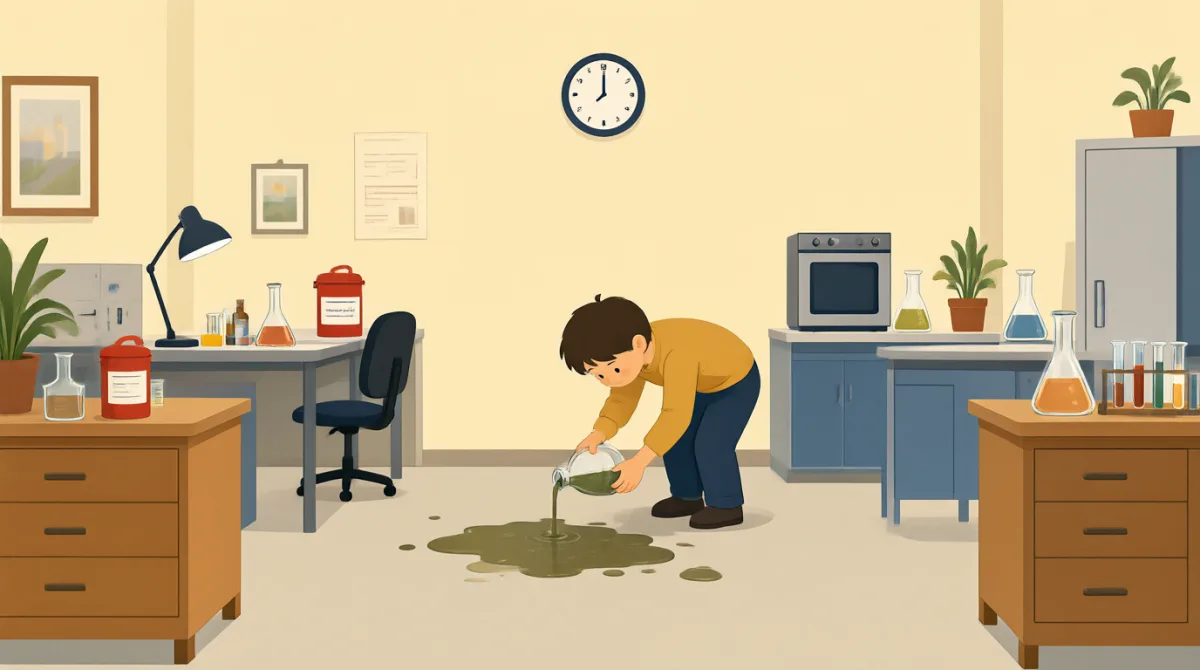

Grace, quick! There's a small chemical spill near the mixing station – looks like a pipe fitting came loose. It's not huge, but it's spreading.
格蕾絲,快!混合站附近有少量化學品洩漏——好像是管道接頭鬆了。範圍不大,但正在蔓延。

Understood, David. Is anyone injured or showing symptoms? And have you cordoned off the area yet?
明白,大衛。有人受傷或出現症狀嗎?你有沒有封鎖那個區域?
No injuries, thankfully. Everyone's been evacuated from the immediate vicinity. I'm putting up the 'Wet Floor' signs right now, but we need more formal barriers.
謝天謝地,沒人受傷。所有人都已從附近區域疏散。我正在放置“小心地滑”的標誌,但我們需要更正式的圍欄。
Good. Don't approach it without proper PPE. Grab the spill kit from the emergency cabinet. I'll call Mark, our supervisor, and then meet you there with the yellow tape.
好的。沒有合適的個人防護裝置,不要靠近。去應急櫃拿灑漏處理包。我先給主管馬克打電話,然後帶著黃膠帶過去找你。
Got it. Spill kit first. Any idea what chemical it is? The label on the pipe is obscured.
知道了。先拿灑漏處理包。你知道那是什麼化學品嗎?管道上的標籤被遮住了。
It's likely just a dilute cleaning solution, but treat it as hazardous until confirmed. We don't take chances. Also, make sure the ventilation system is running at max capacity in that zone.
很可能只是稀釋的清潔劑,但在確認之前,請將其視為危險品。我們不冒任何風險。另外,確保該區域的通風系統以最大容量執行。
Affirmative. Ventilation on max. I'll secure the area and then start carefully containing the spill with the absorbents once you arrive. Stay safe on your way over.
收到。通風開到最大。我會先確保區域安全,等你來了再小心地用吸收劑處理洩漏。你過來的時候注意安全。
Will do. And great job acting quickly, David. That's exactly the protocol. I'm on my way now.
會的。大衛,你反應很迅速,做得很好。這正是我們的安全規程。我這就過來。
詞彙8
- chemical spill化學品洩漏
A chemical spill means an accidental release of liquid or substance from a container, like in a factory, which can be dangerous if not handled quickly.
“chemical spill”指液體或物質意外從容器中洩漏出來,例如工廠裡的化學品洩漏。如果不及時處理,可能會造成危險。
- cordoned off封鎖起來的
To cordon off an area means to surround it with barriers or tape to keep people away, often for safety during emergencies.
“cordoned off”指用障礙物或警戒帶圍住某個區域,不讓人靠近,緊急情況下通常是為了安全。
- evacuated疏散了
Evacuated means to move people away from a dangerous area to a safe place, like during an accident or fire.
“evacuated”指把人從危險區域轉移到安全地點,例如發生事故或火災時的疏散。
- PPE個人防護裝置(PPE)
PPE stands for Personal Protective Equipment, such as gloves, masks, or suits, worn to protect against hazards in workplaces like chemical spills.
PPE是 Personal Protective Equipment(個人防護裝置)的縮寫,例如手套、口罩或防護服,用於保護人們免受化學品洩漏等工作場所危險的傷害。
- spill kit洩漏處理包
A spill kit is a collection of tools and materials, like absorbents and gloves, used to clean up and contain liquid spills safely.
“spill kit”是一套用於安全清理和控制液體洩漏的工具和材料,例如吸收材料和手套。
- hazardous危險的
Hazardous means dangerous or risky to health or safety, like chemicals that can cause harm if touched or breathed in.
“hazardous”表示對健康或安全有危險或風險,例如接觸或吸入後可能造成傷害的化學品。
- ventilation通風
Ventilation refers to the system that circulates fresh air and removes fumes or smoke, important in emergencies to reduce risks.
“ventilation”指讓新鮮空氣流通並排出煙霧或有害氣體的系統。在洩漏等緊急情況下,良好的通風有助於降低風險。
- absorbents吸收材料
Absorbents are materials that soak up liquids, like special powders or pads used to clean chemical spills without spreading them.
“absorbents”指能吸收液體的材料,例如用於清理化學品洩漏、避免洩漏擴散的特殊粉末或吸收墊。
關鍵句8
- 1
Grace, quick! There's a small chemical spill near the mixing station.
格蕾絲,快!混合站附近有少量化學品洩漏。
This sentence uses 'quick!' to urgently get attention in an emergency. It's useful for alerting someone immediately about a problem; the structure is simple: name + urgent word + description of issue.
這句話用“quick!”在緊急情況下迅速引起對方注意。它適合立即提醒別人出現了問題,結構很簡單:姓名 + 緊急用語 + 問題描述。
- 2
Is anyone injured or showing symptoms?
有人受傷或出現症狀嗎?
This is a yes/no question checking for harm, common in emergencies. 'Showing symptoms' means displaying signs of illness; use it to assess safety first before acting.
這是一個用於確認是否有人受到傷害的是非問句,在緊急情況下很常見。“Showing symptoms”表示出現疾病或不適的跡象;採取行動前,先用這個問法評估安全狀況。
- 3
Everyone's been evacuated from the immediate vicinity.
所有人都已從附近區域疏散。
This uses present perfect 'has been evacuated' to describe a recent action. 'Immediate vicinity' means the area very close by; it's useful for reporting safety measures in crisis situations.
這句話使用現在完成時“has been evacuated”來描述剛剛完成的行動。“Immediate vicinity”表示非常近的周邊區域;在危機情況下報告安全措施時,這個表達很有用。
- 4
Don't approach it without proper PPE.
沒有合適的個人防護裝置,不要靠近。
This imperative sentence gives a safety warning with 'don't + verb.' 'Approach' means to go near; emphasize safety protocols like wearing PPE in hazardous scenarios.
這是用“don't + 動詞”構成的祈使句,用來發出安全警告。“Approach”表示靠近;在危險情況下,要強調遵守安全規程,例如穿戴PPE。
- 5
Treat it as hazardous until confirmed.
在確認之前,請將其視為危險品。
This advises caution using 'treat as' for assuming something is dangerous. It's a key phrase for risk management; use it when unsure about dangers to avoid accidents.
這句話用“treat as”表示在不確定時假定某物有危險,從而提醒人們保持謹慎。這是風險管理中的重要表達,適用於尚未確認危險性質、需要避免事故的情況。
- 6
Make sure the ventilation system is running at max capacity.
確保通風系統以最大容量執行。
This uses 'make sure + clause' to instruct verification. 'At max capacity' means at full power; practical for ensuring air quality in emergencies like spills.
這句話使用“make sure + 從句”來要求確認某件事。“At max capacity”表示以最大功率或滿負荷執行;在洩漏等緊急情況下,這個表達可用於確保空氣質量。
- 7
I'll secure the area and then start carefully containing the spill.
我會先確保區域安全,然後開始小心地控制洩漏。
This future plan with 'I'll + verb' shows steps in sequence using 'and then.' 'Containing' means stopping the spread; useful for describing response actions in protocols.
這個句子用“I'll + 動詞”表達未來計劃,並用“and then”說明行動順序。“Containing”表示阻止洩漏擴散;在描述應急規程中的處理步驟時,這個詞很有用。
- 8
Great job acting quickly, David. That's exactly the protocol.
大衛,你反應很迅速,做得很好。這正是我們的安全規程。
This praises with 'great job + gerund' and confirms procedure. 'Protocol' means official rules; use it to encourage and reinforce correct emergency responses.
這句話用“great job + 動名詞”來表揚對方,並確認其做法符合規定。“Protocol”表示正式的規章或程式;可以用它來鼓勵他人,並強化正確的應急處理方式。