Asking for Spotting Help
Sette Yardım İsteme
A gym-goer needs help spotting for a heavy lift and approaches someone nearby to ask for assistance.
Bir spor salonu üyesi ağır bir kaldırışta yardım almak için yakındaki birinden kendisine eşlik etmesini ister.
Diyalog8
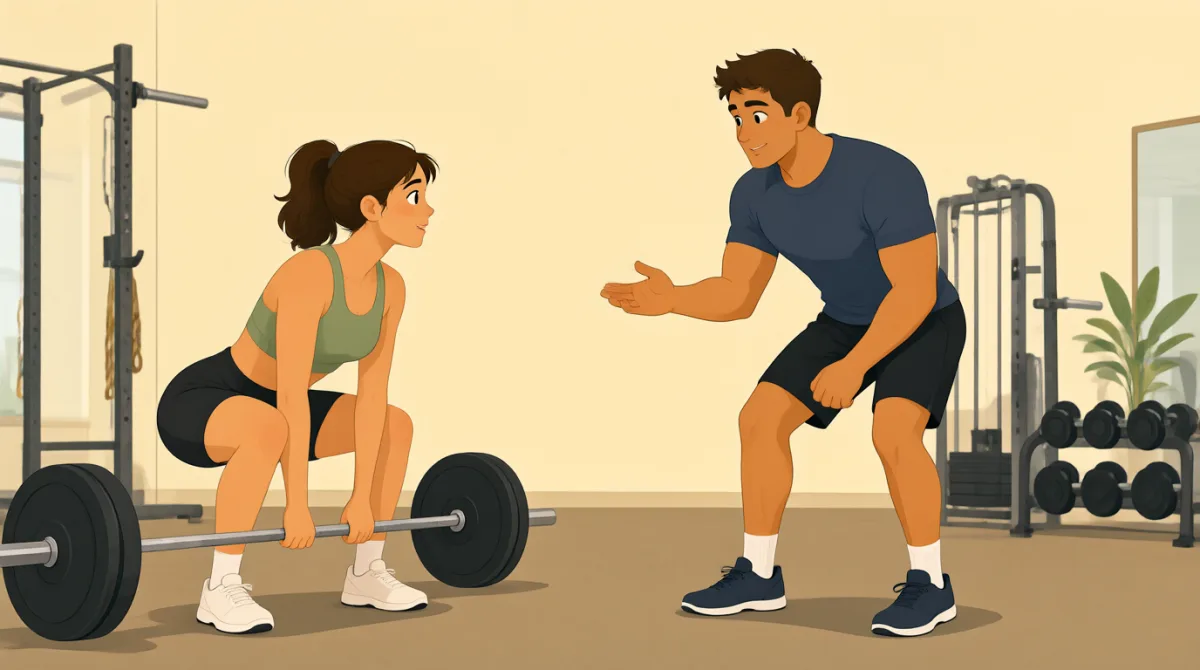

Excuse me, I hope you don't mind me asking, but would you be able to spot me for a set of bench press?
Pardon, sormamın sakıncası yoksa, bench press setimde bana yardım edebilir misin?

Sure, no problem at all! How many reps are you planning to do?
Tabii, hiç sorun değil! Kaç tekrar yapmayı planlıyorsun?
Thanks a lot! I'm aiming for 6 reps. It's my last set and it's pretty heavy for me.
Çok teşekkürler! 6 tekrar yapmayı hedefliyorum. Son setim ve benim için epey ağır.
Got it. Just let me know when you're ready. Do you want me to help you unrack it, or just be ready to assist if you struggle?
Anladım. Hazır olduğunda haber ver yeter. Ağırlığı sehpadan kaldırmama yardım etmemi mi istersin, yoksa zorlanırsan yardım etmeye hazır olmam yeterli mi?
If you could give me a lift-off, that would be great. And then just be there in case I can't get it up.
Ağırlığı sehpadan kaldırmama yardım edersen harika olur. Sonra da kaldıramazsam yanımda ol yeter.
Can do. I'll be right behind you. Just make sure you communicate if you need help.
Olur. Tam arkanda olacağım. Yardıma ihtiyacın olursa mutlaka söyle.
Will do. Thanks again, I really appreciate it!
Tamamdır. Tekrar teşekkürler, gerçekten çok makbule geçiyor!
Anytime! Good luck with the set.
Ne demek! Setinde bol şans.
Kelime Bilgisi7
- spotyardım etmek
In gym contexts, to 'spot' someone means to stand nearby and help if they can't complete a lift safely, like preventing a weight from falling.
Spor salonunda birine “spot” etmek, bir hareketi güvenli şekilde tamamlayamazsa yardım edebilmek için yanında durmak demektir. Örneğin ağırlığın düşmesini önleyebilirsin.
- bench pressbench press
A popular weightlifting exercise where you lie on a bench and push a barbell up from your chest to build upper body strength.
Üst vücut kuvvetini artırmak için sehpaya uzanıp halteri göğsünden yukarı ittiğin popüler bir ağırlık egzersizidir.
- repstekrar
Short for 'repetitions'; it means the number of times you repeat an exercise movement in one set, like doing 10 reps of push-ups.
“Repetitions” sözcüğünün kısaltmasıdır; bir sette hareketi kaç kez tekrarladığını belirtir. Örneğin şınavı 10 tekrar yapmak gibi.
- setset
In workouts, a 'set' is a group of repetitions done one after another, followed by a rest, such as three sets of 10 reps.
Antrenmanda “set”, arada dinlenme verilen bir dizi tekrardır; örneğin 10 tekrardan oluşan üç set yapmak gibi.
- unracksehpadan almak
To 'unrack' a barbell means to lift it off the rack or supports at the start of a lift, often with help for safety.
Bir halteri “unrack” etmek, kaldırışa başlarken onu sehpadan ya da desteklerinden kaldırmak demektir. Güvenlik için çoğu zaman yardım alınır.
- lift-offkaldırışa başlama yardımı
In weightlifting, 'lift-off' refers to the initial help given to start the lift by lifting the bar slightly off the rack.
Ağırlık çalışmasında “lift-off”, kaldırışın başlaması için halteri sehpadan hafifçe kaldırarak verilen ilk yardımdır.
- strugglezorlanmak
To have difficulty completing something, like struggling with a heavy weight during an exercise, often needing assistance.
Bir şeyi yapmakta güçlük çekmek demektir. Örneğin egzersiz sırasında ağır bir ağırlığı kaldırırken zorlanıp yardıma ihtiyaç duyabilirsin.
Önemli Cümleler8
- 1
Excuse me, I hope you don't mind me asking, but would you be able to spot me for a set of bench press?
Pardon, sormamın sakıncası yoksa, bench press setimde bana yardım edebilir misin?
This is a polite way to ask for help in a gym. It uses 'Excuse me' to get attention, 'I hope you don't mind' to be courteous, and a conditional 'would you be able to' to make the request indirect and respectful. Useful for starting conversations with strangers.
Bu, spor salonunda kibarca yardım istemenin bir yoludur. “Excuse me” diyerek dikkat çekersin, “I hope you don't mind” ifadesiyle nazik davranırsın; “would you be able to” ise isteği dolaylı ve saygılı biçimde dile getirir. Tanımadığın biriyle sohbete başlarken işe yarar.
- 2
Sure, no problem at all! How many reps are you planning to do?
Tabii, hiç sorun değil! Kaç tekrar yapmayı planlıyorsun?
A friendly agreement to help, followed by a question to clarify. 'Sure, no problem' shows enthusiasm, and 'planning to do' uses future intention. Great for responding positively and seeking details in casual talks.
Bu ifade, yardım etmeyi samimi bir şekilde kabul eder ve ardından ayrıntı sormaya yarar. “Sure, no problem” isteklilik gösterir; “planning to do” ise gelecekte ne yapmayı planladığını anlatır. Gündelik konuşmalarda olumlu yanıt vermek ve ayrıntı öğrenmek için kullanışlıdır.
- 3
I'm aiming for 6 reps. It's my last set and it's pretty heavy for me.
6 tekrar yapmayı hedefliyorum. Son setim ve benim için epey ağır.
Explains goals and context. 'Aiming for' means targeting a goal, 'last set' refers to the final group of reps, and 'pretty heavy' is informal for 'quite difficult'. Helpful for describing workout plans.
Hedefini ve durumu açıklar. “Aiming for” bir hedef belirlemek, “last set” son tekrar grubunu anlatmak için kullanılır. “Pretty heavy” ise gündelik bir ifadeyle “oldukça ağır” demektir. Antrenman planından söz ederken kullanabilirsin.
- 4
Just let me know when you're ready. Do you want me to help you unrack it, or just be ready to assist if you struggle?
Hazır olduğunda haber ver yeter. Ağırlığı sehpadan kaldırmama yardım etmemi mi istersin, yoksa zorlanırsan yardım etmeye hazır olmam yeterli mi?
Offers specific help options. 'Let me know' is a common phrase for communication, and the question uses 'or' to provide choices. The present continuous 'you're ready' and conditional 'if you struggle' show preparedness. Useful for clarifying assistance.
Bu cümle, yardım için belirli seçenekler sunar. “Let me know” haber vermeyi anlatan yaygın bir ifadedir; sorudaki “or” ise seçenekleri birbirinden ayırır. “You're ready” hazır olma durumunu, “if you struggle” da zorlanma ihtimalini belirtir. Ne tür yardım gerektiğini netleştirmek için kullanışlıdır.
- 5
If you could give me a lift-off, that would be great. And then just be there in case I can't get it up.
Ağırlığı sehpadan kaldırmama yardım edersen harika olur. Sonra da kaldıramazsam yanımda ol yeter.
Makes a specific request politely. 'If you could' softens the ask, 'that would be great' expresses appreciation, and 'in case' means 'if needed'. 'Get it up' is gym slang for lifting the weight. Ideal for requesting targeted help.
Bu, belirli bir yardımı kibarca istemenin yoludur. “If you could” isteği yumuşatır, “that would be great” memnuniyet ve teşekkür ifade eder, “in case” ise “gerekirse” anlamına gelir. “Get it up” spor salonu argosunda ağırlığı kaldırmak demektir. Tam olarak ne tür yardım istediğini belirtirken kullanabilirsin.
- 6
Can do. I'll be right behind you. Just make sure you communicate if you need help.
Olur. Tam arkanda olacağım. Yardıma ihtiyacın olursa mutlaka söyle.
Confirms action and gives advice. 'Can do' means 'I can do that', 'right behind you' means close by for support, and 'make sure' emphasizes importance. Useful for reassuring and reminding about safety in teamwork.
Bu cümle, yardım edeceğini belirtirken bir de hatırlatmada bulunur. “Can do”, “Bunu yapabilirim” anlamına gelir; “right behind you” destek olmak için hemen yanında bulunmayı, “make sure” ise bir şeyin mutlaka yapılması gerektiğini vurgular. Birlikte çalışırken güven vermek ve güvenliği hatırlatmak için kullanışlıdır.
- 7
Will do. Thanks again, I really appreciate it!
Tamamdır. Tekrar teşekkürler, gerçekten çok makbule geçiyor!
Agrees to follow instructions. 'Will do' is a casual way to say 'I will', and 'I really appreciate it' shows strong gratitude. Perfect for ending exchanges positively and building rapport.
Bu ifade, söyleneni yapacağını belirtir. “Will do” gündelik bir “Yaparım” deme şeklidir; “I really appreciate it” ise içten bir teşekkür ifade eder. Sohbeti olumlu bitirmek ve iyi bir iletişim kurmak için idealdir.
- 8
Anytime! Good luck with the set.
Ne demek! Setinde bol şans.
Offers ongoing help and encouragement. 'Anytime' means 'you're welcome anytime', and 'good luck' wishes success. A common closing phrase in supportive conversations like gym interactions.
Bu cümle hem her zaman yardım edebileceğini söyler hem de teşvik eder. “Anytime”, “Ne zaman istersen” anlamına gelir; “good luck” ise başarı dilemek için kullanılır. Spor salonundaki destekleyici konuşmaları bitirirken sıkça duyabileceğin bir ifadedir.