Saying Why You Are Here
บอกว่ามาทำอะไร
Emma tells Grace why she is at the office. Grace asks a short question.
เอ็มมาบอกเกรซว่ามาที่สำนักงานทำไม เกรซถามคำถามสั้น ๆ
บทสนทนา7
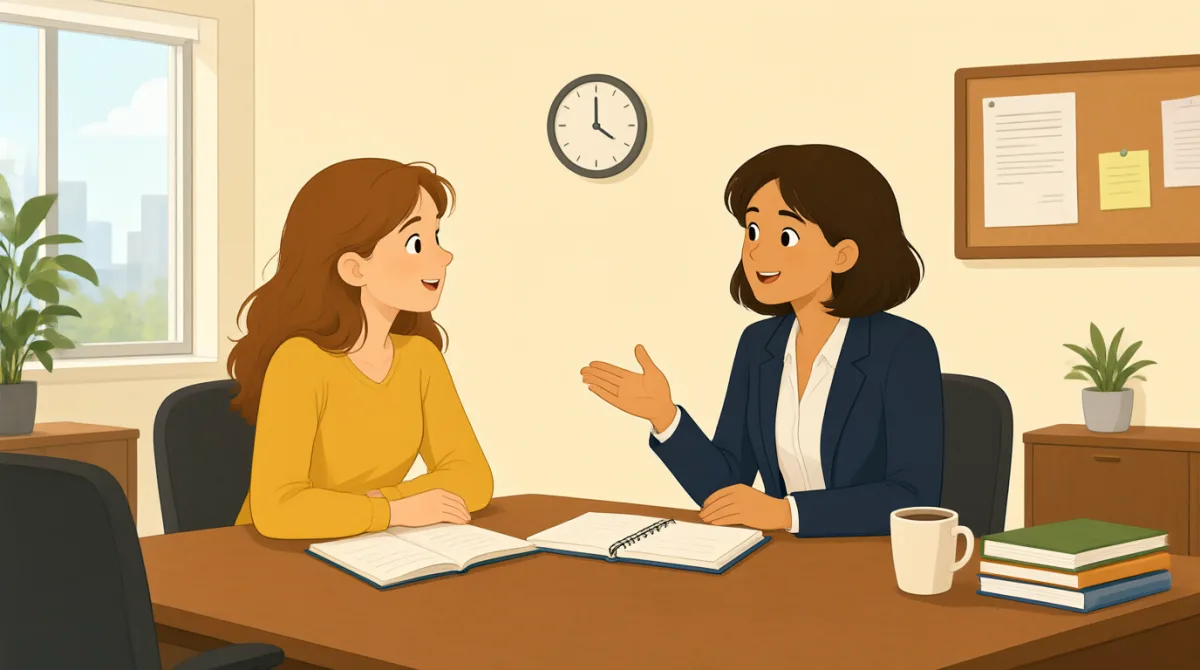

Hello. My number is forty-two.
สวัสดีค่ะ หมายเลขของฉันคือสี่สิบสองค่ะ

Hello. What can I help you with today?
สวัสดีค่ะ วันนี้ให้ช่วยอะไรได้บ้างคะ
I need to pay my water bill.
ฉันต้องการมาจ่ายค่าน้ำค่ะ
Do you have your bill with you?
นำใบแจ้งค่าน้ำมาด้วยไหมคะ
Yes, here it is.
ค่ะ นี่ค่ะ
Thank you. Please give me your ID, too.
ขอบคุณค่ะ ขอเอกสารประจำตัวด้วยนะคะ
Sure. Here you are.
ได้ค่ะ นี่ค่ะ
คำศัพท์7
- numberหมายเลข
Your number shows when it is your turn. You can tell the worker your number.
หมายเลขของคุณจะบอกว่าถึงคิวเมื่อไร คุณสามารถแจ้งหมายเลขให้พนักงานทราบได้
- What can I help you with today?วันนี้ให้ช่วยอะไรได้บ้างคะ
This is a polite way to ask what someone needs. You can use it at an office or service counter.
นี่เป็นวิธีสุภาพในการถามว่าอีกฝ่ายต้องการอะไร ใช้ถามได้ที่สำนักงานหรือเคาน์เตอร์บริการ
- pay my water billจ่ายค่าน้ำ
This means give money to pay for water service. You can replace “water” with another bill, like “phone.”
หมายถึงจ่ายเงินค่าบริการน้ำ คุณเปลี่ยน “water” เป็นบิลประเภทอื่นได้ เช่น “phone”
- Do you have your bill with you?นำใบแจ้งหนี้มาด้วยไหม
This asks if you brought your bill. You can use “Do you have your [thing] with you?” to ask about other items.
ประโยคนี้ใช้ถามว่าอีกฝ่ายนำใบแจ้งหนี้มาด้วยหรือไม่ คุณใช้ “Do you have your [thing] with you?” เพื่อถามถึงสิ่งของอื่น ๆ ได้
- Here it is.นี่ค่ะ
Say this when you give someone something they asked for. You can use it when handing over a bill or form.
พูดประโยคนี้เมื่อยื่นสิ่งที่อีกฝ่ายขอให้ ใช้ได้เมื่อส่งใบแจ้งหนี้หรือแบบฟอร์มให้
- IDเอกสารประจำตัว
ID is a card or document that shows who you are. An office may ask to see your ID.
ID คือบัตรหรือเอกสารที่ใช้ยืนยันว่าคุณเป็นใคร สำนักงานอาจขอดูเอกสารประจำตัวของคุณ
- Here you are.นี่ค่ะ
Say this when you give something to someone. It is a polite phrase to use at a service counter.
พูดประโยคนี้เมื่อยื่นสิ่งของให้ใครสักคน เป็นสำนวนสุภาพที่ใช้ได้ที่เคาน์เตอร์บริการ
ประโยคสำคัญ8
- 1
My number is forty-two.
หมายเลขของฉันคือสี่สิบสอง
Use this to tell a worker your number when you are waiting. Change “forty-two” to your own number.
ใช้ประโยคนี้แจ้งหมายเลขของคุณให้พนักงานทราบระหว่างรอคิว เปลี่ยน “forty-two” เป็นหมายเลขของคุณเอง
- 2
What can I help you with today?
วันนี้ให้ช่วยอะไรได้บ้างคะ
This is a friendly way to ask what someone needs. You can use it when helping a customer.
นี่เป็นวิธีถามอย่างเป็นมิตรว่าอีกฝ่ายต้องการอะไร ใช้ได้เมื่อต้องช่วยเหลือลูกค้า
- 3
I need to pay my water bill.
ฉันต้องการมาจ่ายค่าน้ำค่ะ
Use “I need to” to explain why you are there. Replace “pay my water bill” with another simple task.
ใช้ “I need to” เพื่ออธิบายว่าคุณมาที่นี่ทำไม แทน “pay my water bill” ด้วยธุระง่าย ๆ อย่างอื่นได้
- 4
Do you have your bill with you?
นำใบแจ้งหนี้มาด้วยไหมคะ
Use this to ask if someone brought a document. You can replace “bill” with another item, such as “ID.”
ใช้ถามว่าอีกฝ่ายนำเอกสารมาด้วยหรือไม่ คุณเปลี่ยน “bill” เป็นสิ่งของอย่างอื่น เช่น “ID” ได้
- 5
Yes, here it is.
ค่ะ นี่ค่ะ
Use this when you have the item someone asked for and are giving it to them. It works for one item.
ใช้เมื่อคุณมีสิ่งของที่อีกฝ่ายขอและกำลังยื่นให้ ประโยคนี้ใช้กับสิ่งของหนึ่งชิ้น
- 6
Please give me your ID, too.
ขอเอกสารประจำตัวด้วยนะคะ
This is a polite way to ask someone for their ID. “Too” means the person needs to give you one more thing.
นี่เป็นวิธีสุภาพในการขอเอกสารประจำตัวจากใครสักคน “Too” หมายถึงต้องให้สิ่งของเพิ่มอีกหนึ่งอย่างด้วย
- 7
Sure.
ได้ค่ะ
This is a short, friendly way to agree to a request. You can say it before giving someone an item.
เป็นคำตอบสั้น ๆ ที่เป็นมิตร ใช้ตอบรับคำขอได้ คุณพูดก่อนยื่นสิ่งของให้ใครก็ได้
- 8
Here you are.
นี่ค่ะ
Use this when you hand something to someone. It is polite and common in everyday conversations.
ใช้ประโยคนี้เมื่อยื่นสิ่งของให้ใครสักคน เป็นสำนวนสุภาพที่ใช้กันทั่วไปในบทสนทนาประจำวัน