Finding the Keys
หากุญแจเจอแล้ว
Emma sees the keys next to her bag by the front door. She thanks Jack and is ready to go.
เอ็มมาเห็นกุญแจอยู่ข้างกระเป๋าตรงประตูหน้าบ้าน เธอขอบคุณแจ็ก แล้วก็พร้อมออกไป
บทสนทนา7
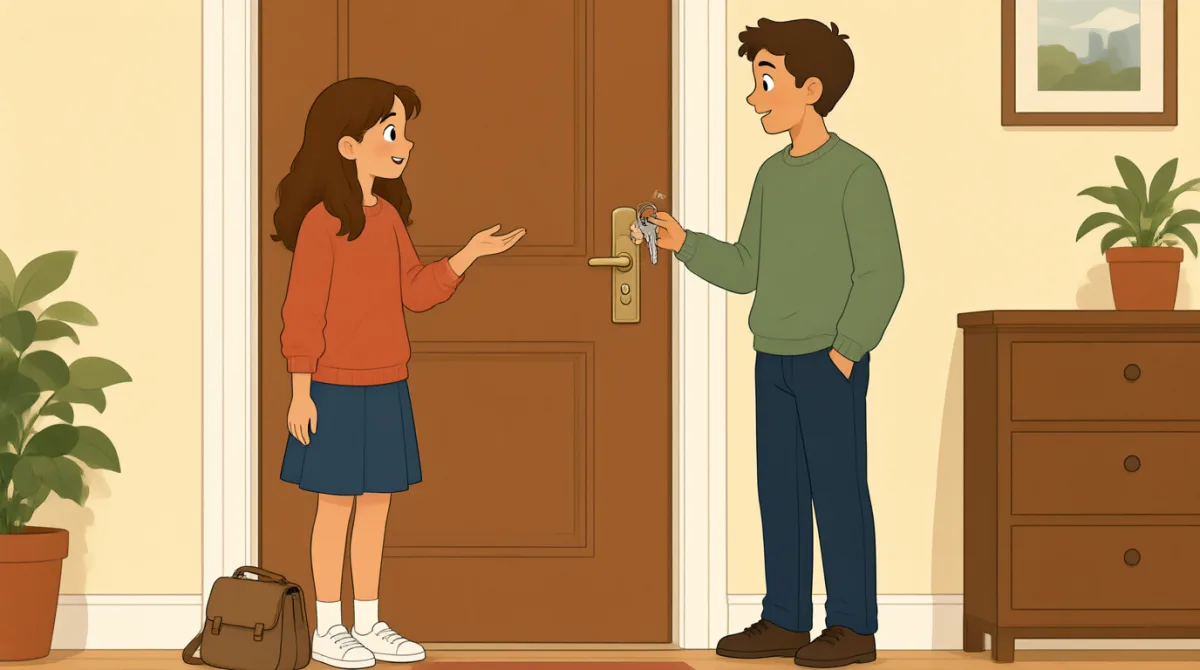

Oh, there they are! My keys are next to my bag.
อ๋อ อยู่นี่เอง! กุญแจอยู่ข้างกระเป๋าฉัน

I told you I saw them by the front door.
ฉันบอกแล้วไงว่าเห็นมันอยู่ตรงประตูหน้าบ้าน
Thanks, Jack. I was looking everywhere.
ขอบใจนะ แจ็ก ฉันหาไปทั่วเลย
You’re welcome. Your bag is right there, too.
ไม่เป็นไร กระเป๋าเธอก็อยู่ตรงนั้นเหมือนกัน
Yes, I have my keys and my bag now.
ใช่ ตอนนี้ฉันมีกุญแจกับกระเป๋าแล้ว
Great. Are you ready to go?
ดีเลย พร้อมไปหรือยัง?
Yes! Let’s go. I’m ready.
พร้อม! ไปกันเถอะ
คำศัพท์7
- there they areอยู่นี่เอง
This means you can see the things you were looking for. Use it when you find something.
หมายถึงมองเห็นสิ่งที่กำลังหาอยู่ ใช้พูดเมื่อหาอะไรเจอ
- next toข้าง
This means beside something. You can use it to say where an object is.
หมายถึงอยู่ด้านข้างของสิ่งหนึ่ง ใช้บอกว่าสิ่งของอยู่ตรงไหน
- front doorประตูหน้าบ้าน
This is the main door to a home or building. Use it when talking about the entrance.
คือประตูหลักของบ้านหรืออาคาร ใช้พูดถึงทางเข้า
- everywhereทั่วทุกที่
This means in many different places. Here, Emma looked in many places for her keys.
หมายถึงในหลาย ๆ แห่ง ในที่นี้เอ็มมาหาหลายที่เพื่อหากุญแจ
- right thereอยู่ตรงนั้นพอดี
This means in a place that is easy to see or very close. Use it to point out where something is.
หมายถึงอยู่ในที่ที่มองเห็นง่ายหรืออยู่ใกล้มาก ใช้ชี้บอกว่าสิ่งของอยู่ตรงไหน
- ready to goพร้อมออกไป
This means prepared to leave. You can ask, “Are you ready to go?” before leaving.
หมายถึงเตรียมพร้อมที่จะออกจากที่นี่ ก่อนออกไปถามได้ว่า “Are you ready to go?” (พร้อมออกไปหรือยัง?)
- Let’s goไปกันเถอะ
This is a friendly way to say that it is time to leave or start moving.
เป็นวิธีพูดชวนกันแบบเป็นกันเองว่าได้เวลาออกไปหรือเริ่มทำอะไรแล้ว
ประโยคสำคัญ7
- 1
Oh, there they are!
อ๋อ อยู่นี่เอง!
Use this when you find something you were looking for. You can replace “they” with “it” for one thing.
ใช้พูดเมื่อหาอะไรที่กำลังหาอยู่เจอ ถ้ามีสิ่งเดียว เปลี่ยน “they” เป็น “it” ได้
- 2
My keys are next to my bag.
กุญแจของฉันอยู่ข้างกระเป๋า
This sentence tells someone where your keys are. Use “next to” to describe where one thing is in relation to another.
ประโยคนี้ใช้บอกว่ากุญแจของคุณอยู่ที่ไหน ใช้ “next to” เพื่อบอกตำแหน่งของสิ่งหนึ่งเมื่อเทียบกับอีกสิ่งหนึ่ง
- 3
I was looking everywhere.
ฉันหาไปทั่วเลย
Use this to say you searched in many places. You can replace “everywhere” with a place, such as “in my room.”
ใช้พูดว่าคุณค้นหาหลายที่ คุณเปลี่ยน “everywhere” เป็นสถานที่ เช่น “in my room” ได้
- 4
Your bag is right there, too.
กระเป๋าเธอก็อยู่ตรงนั้นเหมือนกัน
This sentence points out where something is. Use “right there” when the object is close or easy to see.
ประโยคนี้ใช้ชี้บอกว่าสิ่งของอยู่ที่ไหน ใช้ “right there” เมื่อสิ่งของอยู่ใกล้หรือมองเห็นได้ง่าย
- 5
Yes, I have my keys and my bag now.
ใช่ ตอนนี้ฉันมีกุญแจกับกระเป๋าแล้ว
Use this to say you have the things you need. You can name other items after “I have.”
ใช้พูดว่าคุณมีของที่ต้องใช้แล้ว คุณจะบอกสิ่งของอื่น ๆ ต่อจาก “I have” ก็ได้
- 6
Are you ready to go?
พร้อมไปหรือยัง?
This is a common way to ask if someone is prepared to leave. You can replace “go” with another activity, such as “eat.”
เป็นวิธีถามที่ใช้กันทั่วไปว่ามีใครเตรียมพร้อมจะออกไปหรือยัง คุณเปลี่ยน “go” เป็นกิจกรรมอื่น เช่น “eat” ได้
- 7
Yes! Let’s go.
ใช่! ไปกันเถอะ
Use this to agree that it is time to leave or begin. “Let’s” means “let us” and invites someone to do something with you.
ใช้ตอบตกลงว่าได้เวลาออกไปหรือเริ่มทำอะไรแล้ว “Let’s” ย่อมาจาก “let us” และเป็นการชวนอีกคนมาทำอะไรด้วยกัน