Is It Under the Sofa?
อยู่ใต้โซฟาหรือเปล่า?
Mia asks if the keys are under the sofa. Emma looks and finds nothing there.
มีอาถามว่ากุญแจอยู่ใต้โซฟาหรือเปล่า เอมมามองหาแต่ไม่เจออะไรตรงนั้น
บทสนทนา7
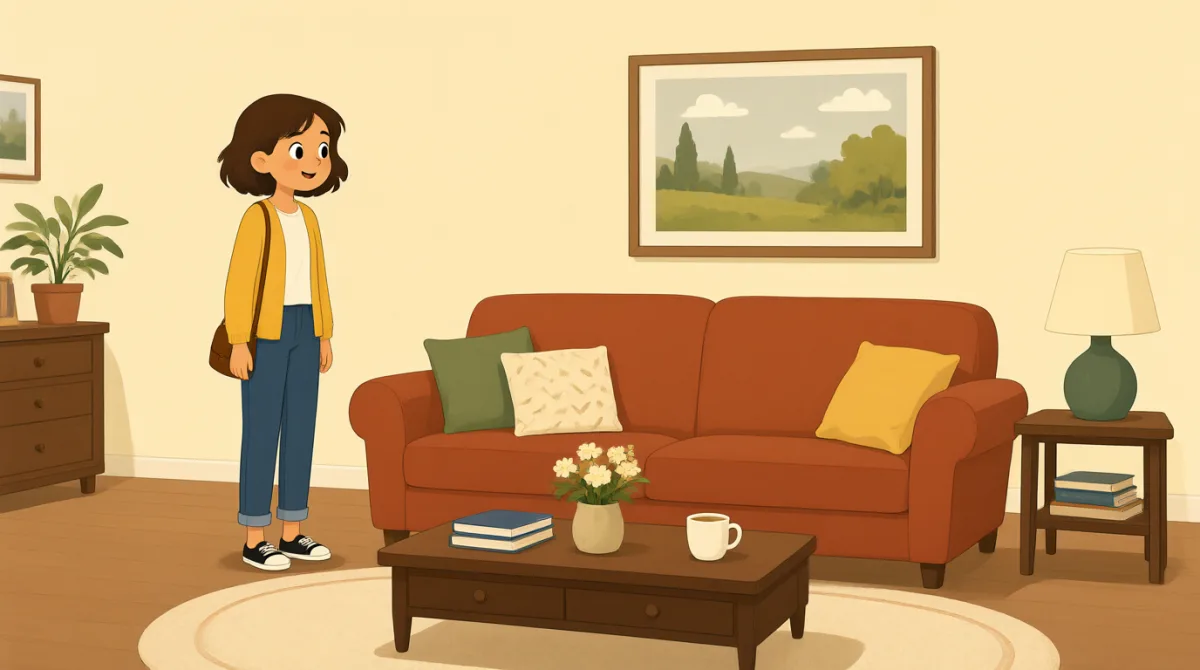

Is it under the sofa?
อยู่ใต้โซฟาหรือเปล่า?

Let me look. I don't see them.
ขอดูหน่อยนะ ไม่เห็นเลย
Look on the floor, too.
ดูบนพื้นด้วยนะ
No, they aren't on the floor.
ไม่อยู่บนพื้นนะ
Maybe they're next to the sofa.
บางทีอาจจะอยู่ข้างโซฟาก็ได้
No. They're not here either.
ไม่อยู่ตรงนี้เหมือนกัน
Let's check by the front door.
ลองดูตรงประตูหน้าบ้านกันเถอะ
คำศัพท์6
- under the sofaใต้โซฟา
This means below the sofa. Use it to say where you think something is.
“under the sofa” หมายถึงอยู่ด้านล่างของโซฟา ใช้พูดบอกตำแหน่งที่คิดว่าสิ่งของอยู่
- Let me look.ขอดูหน่อย
This means “I will check.” Use it when you want to search for something.
“Let me look.” หมายถึง “เดี๋ยวฉันดูให้” ใช้เมื่ออยากค้นหาหรือเช็กอะไรบางอย่าง
- on the floorบนพื้น
This means on the ground inside a room. Use it to say where something is.
“on the floor” หมายถึงอยู่บนพื้นในห้อง ใช้บอกว่าสิ่งของอยู่ตรงไหน
- next to the sofaข้างโซฟา
This means beside the sofa. Use it to describe where something may be.
“next to the sofa” หมายถึงอยู่ข้างโซฟา ใช้บอกว่าสิ่งของอาจอยู่ตรงไหน
- eitherเหมือนกัน
Here, “either” means “also” in a negative sentence. Use it when saying something is not in another place, too.
ในที่นี้ “either” หมายถึง “เหมือนกัน” ในประโยคปฏิเสธ ใช้เมื่อพูดว่าสิ่งของไม่ได้อยู่ในอีกที่หนึ่งด้วย
- front doorประตูหน้าบ้าน
This is the main door at the front of a home. Use it when talking about the entrance.
“front door” คือประตูหลักด้านหน้าของบ้าน ใช้พูดถึงทางเข้าบ้าน
ประโยคสำคัญ8
- 1
Is it under the sofa?
อยู่ใต้โซฟาหรือเปล่า?
This is a useful way to ask if one thing is in a certain place. Change “under the sofa” to ask about another location.
ประโยคนี้ใช้ถามว่าสิ่งของชิ้นหนึ่งอยู่ในตำแหน่งใดตำแหน่งหนึ่งหรือเปล่า เปลี่ยน “under the sofa” เป็นตำแหน่งอื่นได้
- 2
Let me look.
ขอดูหน่อยนะ
Use this short sentence when you are going to check or search for something. You can also say it before looking for a person or an object.
ใช้ประโยคสั้น ๆ นี้เมื่อกำลังจะตรวจดูหรือค้นหาอะไรบางอย่าง จะพูดก่อนออกตามหาคนหรือสิ่งของก็ได้
- 3
I don't see them.
ไม่เห็นเลย
Use this to say that you cannot find or see something. “Them” refers to more than one person or thing.
ใช้พูดว่าเราหาหรือมองไม่เห็นสิ่งของบางอย่าง “them” หมายถึงคนหรือสิ่งของมากกว่าหนึ่งคนหรือชิ้น
- 4
Look on the floor, too.
ดูบนพื้นด้วยนะ
This is a simple way to ask someone to check another place. You can replace “on the floor” with a different location.
เป็นวิธีง่าย ๆ ในการขอให้ใครสักคนลองดูอีกที่หนึ่ง เปลี่ยน “on the floor” เป็นตำแหน่งอื่นได้
- 5
No, they aren't on the floor.
ไม่อยู่บนพื้นนะ
Use this sentence to say that several things are not in a place. Replace “on the floor” with another location.
ใช้ประโยคนี้พูดว่าสิ่งของหลายชิ้นไม่ได้อยู่ในที่หนึ่ง เปลี่ยน “on the floor” เป็นตำแหน่งอื่นได้
- 6
Maybe they're next to the sofa.
บางทีอาจจะอยู่ข้างโซฟาก็ได้
Use “Maybe” to say where something could be when you are not sure. Change the location to suggest another place.
ใช้ “Maybe” บอกว่าสิ่งของอาจอยู่ตรงไหนเมื่อเราไม่แน่ใจ เปลี่ยนตำแหน่งเพื่อเสนอที่อื่นได้
- 7
No. They're not here either.
ไม่อยู่ตรงนี้เหมือนกัน
Use this to say that something is not in this place, just as it was not in another place. “Either” is common in negative sentences.
ใช้พูดว่าสิ่งของไม่ได้อยู่ตรงนี้ เช่นเดียวกับที่ไม่ได้อยู่ในอีกที่หนึ่ง “Either” มักใช้ในประโยคปฏิเสธ
- 8
Let's check by the front door.
ลองดูตรงประตูหน้าบ้านกันเถอะ
Use “Let's check” to suggest looking somewhere together. Replace “by the front door” with another place.
ใช้ “Let's check” เพื่อชวนกันไปดูที่ไหนสักแห่ง เปลี่ยน “by the front door” เป็นสถานที่อื่นได้