Finding the Keys
鍵を見つける
Emma sees the keys next to her bag by the front door. She thanks Jack and is ready to go.
エマは玄関のドアのそばで、自分のバッグの隣に鍵があるのを見つける。ジャックにお礼を言い、出かける準備ができる。
会話7
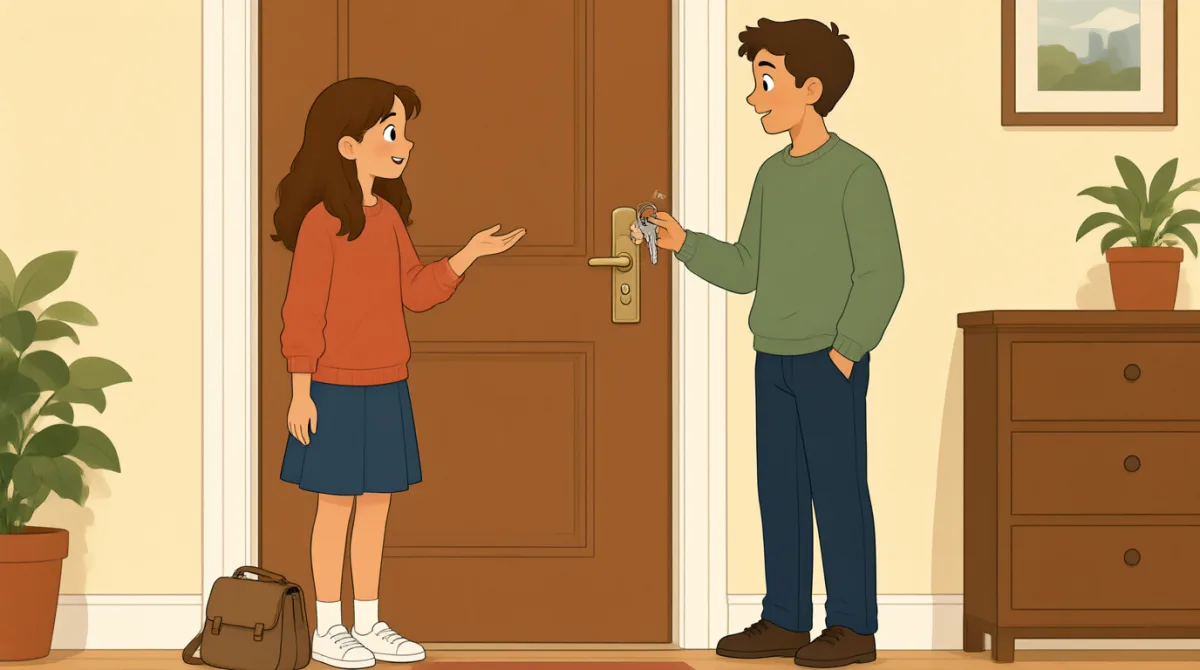

Oh, there they are! My keys are next to my bag.
あ、あった!鍵はバッグの隣にあるよ。

I told you I saw them by the front door.
玄関のドアのそばにあるって言ったでしょ。
Thanks, Jack. I was looking everywhere.
ありがとう、ジャック。あちこち探してたんだ。
You’re welcome. Your bag is right there, too.
どういたしまして。バッグもすぐそこにあるよ。
Yes, I have my keys and my bag now.
うん、これで鍵もバッグもそろったよ。
Great. Are you ready to go?
よかった。出かける準備はできた?
Yes! Let’s go. I’m ready.
うん!行こう。準備できたよ。
語彙7
- there they areあった!
This means you can see the things you were looking for. Use it when you find something.
探していたものを見つけたときに使う表現です。何かを見つけたときに使えます。
- next to〜の隣に
This means beside something. You can use it to say where an object is.
何かのすぐそば、隣にあるという意味です。物の場所を伝えるときに使えます。
- front door玄関のドア
This is the main door to a home or building. Use it when talking about the entrance.
家や建物の正面にある主な出入り口のことです。入り口について話すときに使います。
- everywhereあちこち
This means in many different places. Here, Emma looked in many places for her keys.
いろいろな場所で、という意味です。ここではエマが鍵をあちこち探したことを表しています。
- right thereすぐそこに
This means in a place that is easy to see or very close. Use it to point out where something is.
見つけやすい場所や、とても近い場所にあるという意味です。物の場所を指し示すときに使います。
- ready to go出かける準備ができている
This means prepared to leave. You can ask, “Are you ready to go?” before leaving.
出発する準備ができているという意味です。出かける前に “Are you ready to go?”(出かける準備はできた?)と尋ねることができます。
- Let’s go行こう
This is a friendly way to say that it is time to leave or start moving.
出発したり、動き始めたりする時間だと伝える、親しみのある表現です。
重要な文7
- 1
Oh, there they are!
あ、あった!
Use this when you find something you were looking for. You can replace “they” with “it” for one thing.
探していたものを見つけたときに使います。1つのものなら “they” を “it” に置き換えられます。
- 2
My keys are next to my bag.
鍵はバッグの隣にあるよ。
This sentence tells someone where your keys are. Use “next to” to describe where one thing is in relation to another.
鍵がどこにあるかを相手に伝える文です。“next to” を使うと、ある物が別の物との関係でどこにあるかを説明できます。
- 3
I was looking everywhere.
あちこち探してたんだ。
Use this to say you searched in many places. You can replace “everywhere” with a place, such as “in my room.”
いろいろな場所を探したと伝えるときに使います。“everywhere” は “in my room” のような場所に置き換えられます。
- 4
Your bag is right there, too.
バッグもすぐそこにあるよ。
This sentence points out where something is. Use “right there” when the object is close or easy to see.
物がどこにあるかを伝える文です。物が近くにあるときや、すぐ見つけられるときに “right there” を使います。
- 5
Yes, I have my keys and my bag now.
うん、これで鍵もバッグもそろったよ。
Use this to say you have the things you need. You can name other items after “I have.”
必要な物が手元にあると伝えるときに使います。“I have” の後に、ほかの持ち物を挙げることもできます。
- 6
Are you ready to go?
出かける準備はできた?
This is a common way to ask if someone is prepared to leave. You can replace “go” with another activity, such as “eat.”
出発する準備ができているか尋ねる、よく使われる表現です。“go” を “eat” のような別の活動に置き換えることもできます。
- 7
Yes! Let’s go.
うん!行こう。
Use this to agree that it is time to leave or begin. “Let’s” means “let us” and invites someone to do something with you.
出発したり、何かを始めたりする時間だということに同意するときに使います。“Let’s” は “let us” の短縮形で、相手を何かに誘う表現です。