I Can't Find My Keys
ฉันหากุญแจไม่เจอ
Emma cannot find her keys before she leaves home. She asks Mia for help.
เอ็มมาหากุญแจไม่เจอก่อนออกจากบ้าน เธอจึงขอให้มีอาช่วย
บทสนทนา8
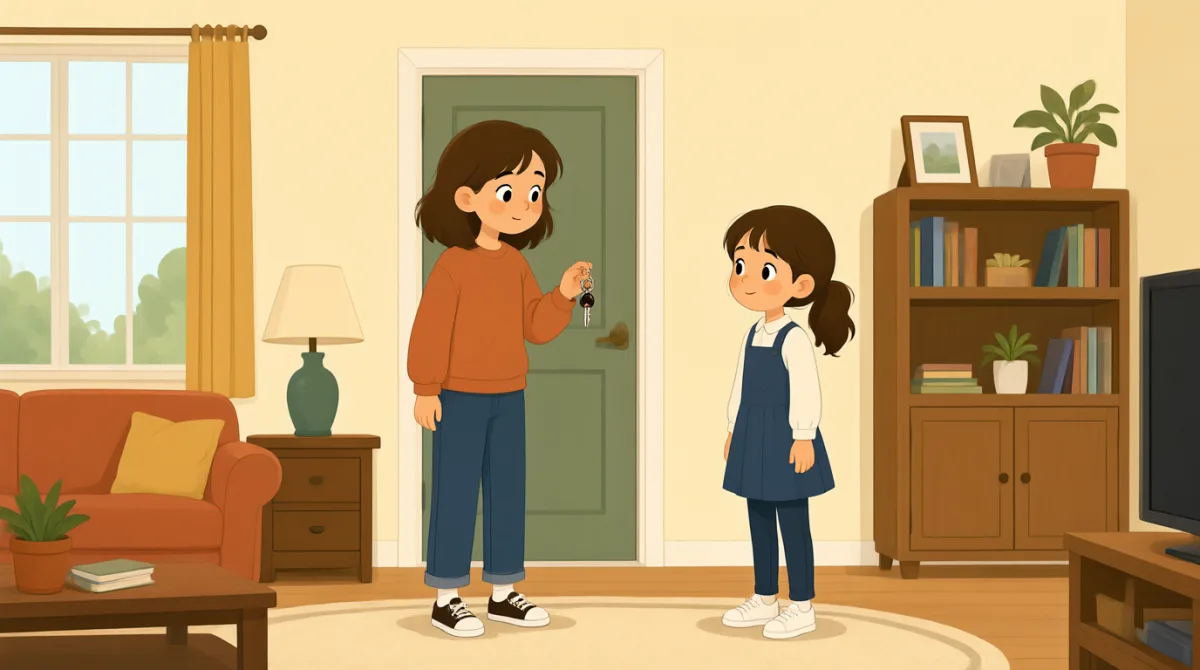

Mia, have you seen my keys?
มีอา เธอเห็นกุญแจของฉันไหม

No. Where did you last see them?
ไม่เห็นนะ เห็นมันครั้งสุดท้ายที่ไหนล่ะ
I don't know. I can't find them.
ไม่รู้สิ ฉันหาไม่เจอ
Are they on the table?
มันอยู่บนโต๊ะหรือเปล่า
No, they're not there.
ไม่ใช่ ไม่ได้อยู่ตรงนั้น
Look under your bag.
ลองดูใต้กระเป๋าสิ
Okay. I don't see them.
โอเค ฉันไม่เห็นมันนะ
Let's look next to the door.
ลองหาข้างประตูกันเถอะ
คำศัพท์6
- have you seen my keys?เธอเห็นกุญแจของฉันไหม
Ask if someone has seen something you cannot find. You can replace “my keys” with another item.
ใช้ถามว่ามีใครเห็นสิ่งของที่คุณหาไม่เจอหรือเปล่า คุณสามารถเปลี่ยน “my keys” เป็นสิ่งของอย่างอื่นได้
- Where did you last see them?เธอเห็นมันครั้งสุดท้ายที่ไหน
Ask about the last place someone saw something. Use “it” for one thing and “them” for more than one.
ใช้ถามถึงสถานที่สุดท้ายที่ใครสักคนเห็นสิ่งของนั้น ใช้ “it” กับสิ่งของหนึ่งชิ้น และใช้ “them” กับสิ่งของมากกว่าหนึ่งชิ้น
- I can't find them.ฉันหาไม่เจอ
Say this when you do not know where something is. Use “it” instead of “them” for one thing.
ใช้พูดเมื่อคุณไม่รู้ว่าสิ่งของนั้นอยู่ที่ไหน ถ้าเป็นสิ่งของหนึ่งชิ้น ให้ใช้ “it” แทน “them”
- on the tableบนโต๊ะ
This phrase tells where something is. Use “on” for something resting on a surface.
วลีนี้ใช้บอกว่าสิ่งของอยู่ที่ไหน ใช้ “on” เมื่อสิ่งของวางอยู่บนพื้นผิว
- under your bagใต้กระเป๋าของคุณ
This phrase tells someone where to look. Use “under” for a place below something.
วลีนี้ใช้บอกให้ใครสักคนรู้ว่าควรหา在哪里 ใช้ “under” กับสถานที่ที่อยู่ด้านล่างของบางสิ่ง
- next to the doorข้างประตู
This phrase means beside the door. Use “next to” to say one thing is near another.
วลีนี้หมายถึงด้านข้างประตู ใช้ “next to” เพื่อบอกว่าสิ่งหนึ่งอยู่ใกล้กับอีกสิ่งหนึ่ง
ประโยคสำคัญ8
- 1
Mia, have you seen my keys?
มีอา เธอเห็นกุญแจของฉันไหม
Use this question when you cannot find something. Replace “my keys” with the item you are looking for.
ใช้คำถามนี้เมื่อคุณหาบางสิ่งไม่เจอ เปลี่ยน “my keys” เป็นสิ่งของที่คุณกำลังหาได้
- 2
Where did you last see them?
เธอเห็นมันครั้งสุดท้ายที่ไหน
Ask this to find out where someone saw something most recently. Change “them” to “it” for one thing.
ใช้ถามเพื่อดูว่าครั้งล่าสุดที่ใครสักคนเห็นสิ่งของนั้นคือที่ไหน เปลี่ยน “them” เป็น “it” เมื่อพูดถึงสิ่งของหนึ่งชิ้น
- 3
I don't know.
ไม่รู้
Use this short sentence when you do not have an answer. It works in many everyday situations.
ใช้ประโยคสั้น ๆ นี้เมื่อคุณไม่มีคำตอบ ประโยคนี้ใช้ได้ในสถานการณ์ทั่วไปในชีวิตประจำวันหลายแบบ
- 4
I can't find them.
ฉันหาไม่เจอ
Use this to say that something is missing. Replace “them” with “it” when you mean one thing.
ใช้พูดว่าสิ่งของบางอย่างหายไป เปลี่ยน “them” เป็น “it” เมื่อหมายถึงสิ่งของหนึ่งชิ้น
- 5
Are they on the table?
มันอยู่บนโต๊ะหรือเปล่า
Use this question to check if things are on a surface. Replace “they” with “it” for one thing.
ใช้คำถามนี้เพื่อตรวจสอบว่าสิ่งของอยู่บนพื้นผิวหรือไม่ เปลี่ยน “they” เป็น “it” เมื่อพูดถึงสิ่งของหนึ่งชิ้น
- 6
Look under your bag.
ลองดูใต้กระเป๋าสิ
Use this simple instruction to tell someone where to search. Replace “your bag” with another object.
ใช้คำสั่งง่าย ๆ นี้เพื่อบอกให้ใครสักคนรู้ว่าควรค้นหาที่ไหน เปลี่ยน “your bag” เป็นสิ่งของอย่างอื่นได้
- 7
I don't see them.
ฉันไม่เห็นมันนะ
Use this to say that something is not visible to you. Replace “them” with “it” for one thing.
ใช้พูดว่าสิ่งของนั้นไม่อยู่ในสายตาของคุณ เปลี่ยน “them” เป็น “it” เมื่อหมายถึงสิ่งของหนึ่งชิ้น
- 8
Let's look next to the door.
ลองหาข้างประตูกันเถอะ
Use “Let's” to suggest doing something together. Replace “next to the door” with another place to search.
ใช้ “Let's” เพื่อเสนอให้ทำบางอย่างด้วยกัน เปลี่ยน “next to the door” เป็นสถานที่อื่นที่ต้องการค้นหาได้