Finding the Keys
找到鑰匙
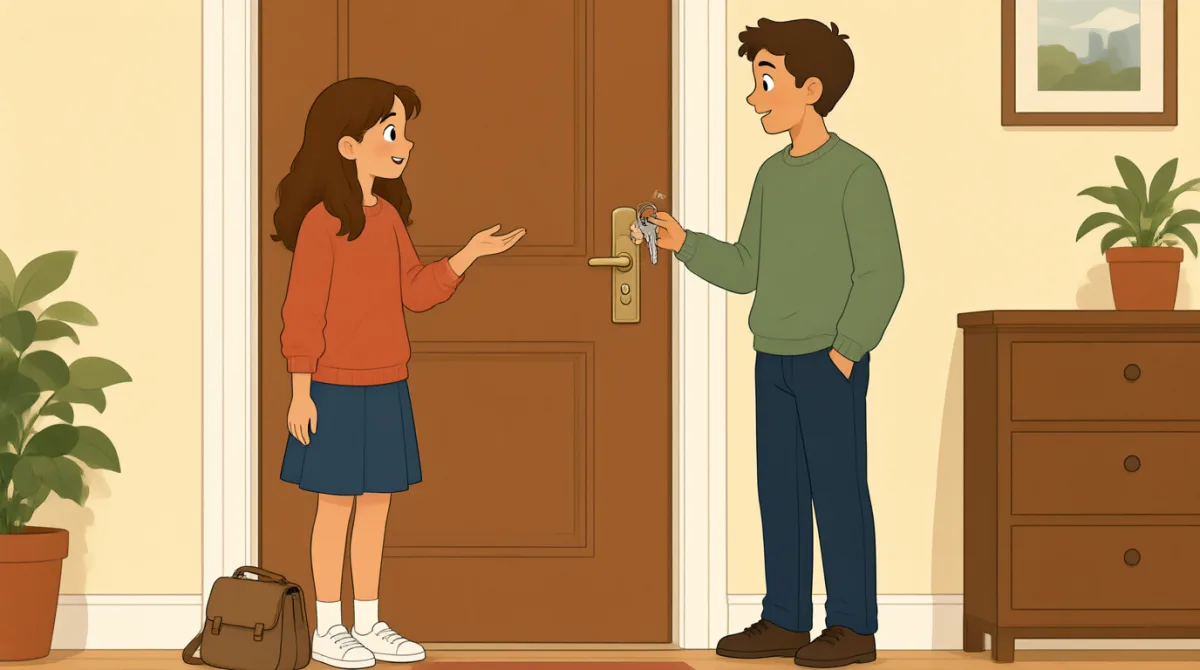
Emma sees the keys next to her bag by the front door. She thanks Jack and is ready to go.
艾瑪看到鑰匙就在前門旁邊、她的包邊上。她向傑克道謝,準備出門。
對話7

Oh, there they are! My keys are next to my bag.
哦,找到了!我的鑰匙在包旁邊。

I told you I saw them by the front door.
我說過我看到它們在前門旁邊。
Thanks, Jack. I was looking everywhere.
謝謝你,傑克。我剛才到處找它們。
You’re welcome. Your bag is right there, too.
不客氣。你的包也就在那兒。
Yes, I have my keys and my bag now.
是啊,現在鑰匙和包都拿到了。
Great. Are you ready to go?
太好了。你準備好出門了嗎?
Yes! Let’s go. I’m ready.
準備好了!我們走吧。
詞彙7
- there they are找到了
This means you can see the things you were looking for. Use it when you find something.
當你看到正在尋找的東西時,可以這麼說。找到一個東西時,可以用這句話。
- next to在……旁邊
This means beside something. You can use it to say where an object is.
意思是挨著某樣東西。你可以用它來說明物品的位置。
- front door前門
This is the main door to a home or building. Use it when talking about the entrance.
指住宅或建築物的主要入口。談到入口時可以用這個詞。
- everywhere到處
This means in many different places. Here, Emma looked in many places for her keys.
意思是在許多不同的地方。這裡,艾瑪在很多地方找她的鑰匙。
- right there就在那兒
This means in a place that is easy to see or very close. Use it to point out where something is.
意思是在很容易看到或離得很近的地方。你可以用它指出某樣東西的位置。
- ready to go準備出發
This means prepared to leave. You can ask, “Are you ready to go?” before leaving.
意思是已經準備好離開。出門前,你可以問:“Are you ready to go?”(你準備好出發了嗎?)
- Let’s go我們走吧
This is a friendly way to say that it is time to leave or start moving.
這是友好地表示該離開或動身了的一種說法。
關鍵句7
- 1
Oh, there they are!
哦,找到了!
Use this when you find something you were looking for. You can replace “they” with “it” for one thing.
找到正在尋找的東西時,可以這麼說。只有一個東西時,可以把“they”換成“it”。
- 2
My keys are next to my bag.
我的鑰匙在包旁邊。
This sentence tells someone where your keys are. Use “next to” to describe where one thing is in relation to another.
這句話告訴別人你的鑰匙在哪裡。用“next to”來說明一樣東西相對於另一樣東西的位置。
- 3
I was looking everywhere.
我剛才到處找了。
Use this to say you searched in many places. You can replace “everywhere” with a place, such as “in my room.”
用這句話表示你在很多地方找過。你可以把“everywhere”換成某個具體地點,比如“in my room”。
- 4
Your bag is right there, too.
你的包也就在那兒。
This sentence points out where something is. Use “right there” when the object is close or easy to see.
這句話指出某樣東西的位置。物品就在附近或很容易看到時,可以用“right there”。
- 5
Yes, I have my keys and my bag now.
是啊,現在鑰匙和包都拿到了。
Use this to say you have the things you need. You can name other items after “I have.”
用這句話表示你已經拿到了需要的東西。“I have”後面可以說出其他物品。
- 6
Are you ready to go?
你準備好出門了嗎?
This is a common way to ask if someone is prepared to leave. You can replace “go” with another activity, such as “eat.”
這是詢問某人是否準備好離開的一種常見說法。你可以把“go”換成其他活動,比如“eat”。
- 7
Yes! Let’s go.
準備好了!我們走吧。
Use this to agree that it is time to leave or begin. “Let’s” means “let us” and invites someone to do something with you.
當你同意該離開或開始行動時,可以這麼說。“Let’s”是“let us”的縮寫,表示邀請別人和你一起做某事。