Finding the Keys
चाबियाँ मिल गईं
Emma sees the keys next to her bag by the front door. She thanks Jack and is ready to go.
दरवाज़े के पास एमा को अपना बैग और चाबियाँ दिखाई देती हैं। वह जैक को धन्यवाद देती है और जाने के लिए तैयार हो जाती है।
संवाद7
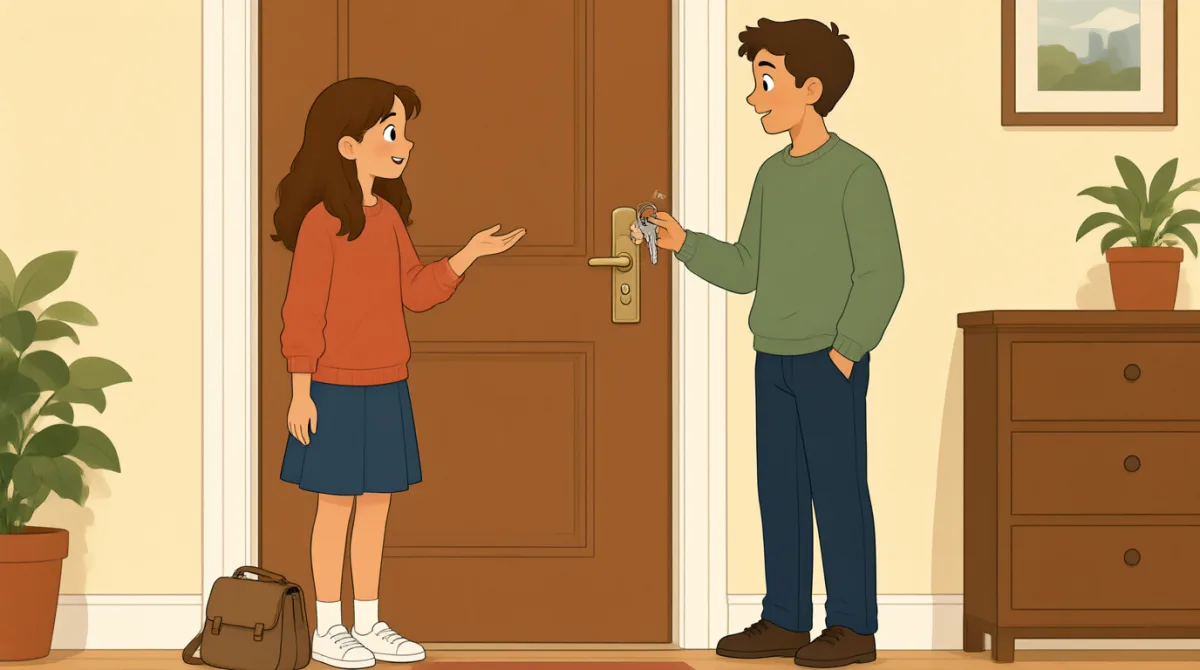

Oh, there they are! My keys are next to my bag.
अरे, ये रही मेरी चाबियाँ! मेरा बैग भी यहीं है।

I told you I saw them by the front door.
मैंने कहा था न कि मैंने उन्हें मुख्य दरवाज़े के पास देखा था।
Thanks, Jack. I was looking everywhere.
शुक्रिया, जैक। मैं हर जगह ढूँढ़ रही थी।
You’re welcome. Your bag is right there, too.
कोई बात नहीं। तुम्हारा बैग भी वहीं है।
Yes, I have my keys and my bag now.
हाँ, अब मेरे पास मेरी चाबियाँ और बैग दोनों हैं।
Great. Are you ready to go?
बढ़िया। चलने के लिए तैयार हो?
Yes! Let’s go. I’m ready.
हाँ! चलो चलते हैं। मैं तैयार हूँ।
शब्दावली7
- there they areये रही/रहे
This means you can see the things you were looking for. Use it when you find something.
जब आपको वह चीज़ दिख जाए जिसे आप ढूँढ़ रहे थे, तब आप यह कहते हैं। कोई चीज़ मिल जाने पर इसका इस्तेमाल करें।
- next toके पास
This means beside something. You can use it to say where an object is.
इसका मतलब है किसी चीज़ के बगल में। किसी वस्तु की जगह बताने के लिए इसका इस्तेमाल कर सकते हैं।
- front doorमुख्य दरवाज़ा
This is the main door to a home or building. Use it when talking about the entrance.
यह घर या इमारत का मुख्य दरवाज़ा होता है। प्रवेश-द्वार की बात करते समय इसका इस्तेमाल करें।
- everywhereहर जगह
This means in many different places. Here, Emma looked in many places for her keys.
इसका मतलब है कई अलग-अलग जगहों पर। यहाँ एमा ने अपनी चाबियाँ कई जगह ढूँढ़ीं।
- right thereठीक वहीं
This means in a place that is easy to see or very close. Use it to point out where something is.
इसका मतलब है ऐसी जगह पर जहाँ चीज़ आसानी से दिखे या जो बहुत पास हो। किसी चीज़ की जगह बताने के लिए इसका इस्तेमाल करें।
- ready to goजाने के लिए तैयार
This means prepared to leave. You can ask, “Are you ready to go?” before leaving.
इसका मतलब है निकलने के लिए तैयार होना। निकलने से पहले आप पूछ सकते हैं, “Are you ready to go?” (क्या तुम चलने के लिए तैयार हो?)
- Let’s goचलो चलते हैं
This is a friendly way to say that it is time to leave or start moving.
यह कहने का दोस्ताना तरीका है कि अब निकलने या चलना शुरू करने का समय हो गया है।
मुख्य वाक्य7
- 1
Oh, there they are!
अरे, ये रही मेरी चाबियाँ!
Use this when you find something you were looking for. You can replace “they” with “it” for one thing.
जिस चीज़ को आप ढूँढ़ रहे थे, वह मिल जाने पर इसका इस्तेमाल करें। अगर एक ही चीज़ हो, तो “they” की जगह “it” कह सकते हैं।
- 2
My keys are next to my bag.
मेरी चाबियाँ मेरे बैग के पास हैं।
This sentence tells someone where your keys are. Use “next to” to describe where one thing is in relation to another.
इस वाक्य से आप किसी को बताते हैं कि आपकी चाबियाँ कहाँ हैं। एक चीज़ की दूसरी चीज़ के मुकाबले जगह बताने के लिए “next to” का इस्तेमाल करें।
- 3
I was looking everywhere.
मैं हर जगह ढूँढ़ रही थी।
Use this to say you searched in many places. You can replace “everywhere” with a place, such as “in my room.”
कई जगहों पर खोजने की बात कहने के लिए इसका इस्तेमाल करें। आप “everywhere” की जगह कोई जगह बता सकते हैं, जैसे “in my room.”
- 4
Your bag is right there, too.
तुम्हारा बैग भी ठीक वहीं है।
This sentence points out where something is. Use “right there” when the object is close or easy to see.
इस वाक्य से आप किसी चीज़ की जगह बताते हैं। जब चीज़ पास हो या आसानी से दिखाई दे, तो “right there” का इस्तेमाल करें।
- 5
Yes, I have my keys and my bag now.
हाँ, अब मेरे पास मेरी चाबियाँ और बैग दोनों हैं।
Use this to say you have the things you need. You can name other items after “I have.”
आपके पास ज़रूरी चीज़ें होने की बात कहने के लिए इसका इस्तेमाल करें। “I have” के बाद आप दूसरी चीज़ों के नाम भी बता सकते हैं।
- 6
Are you ready to go?
क्या तुम चलने के लिए तैयार हो?
This is a common way to ask if someone is prepared to leave. You can replace “go” with another activity, such as “eat.”
यह पूछने का आम तरीका है कि कोई निकलने के लिए तैयार है या नहीं। आप “go” की जगह कोई दूसरी गतिविधि रख सकते हैं, जैसे “eat.”
- 7
Yes! Let’s go.
हाँ! चलो चलते हैं।
Use this to agree that it is time to leave or begin. “Let’s” means “let us” and invites someone to do something with you.
अब निकलने या कुछ शुरू करने के समय से सहमत होने के लिए इसका इस्तेमाल करें। “Let’s” का अर्थ “let us” है और यह किसी को आपके साथ कुछ करने के लिए आमंत्रित करता है।