Finding the Keys
العثور على المفاتيح
Emma sees the keys next to her bag by the front door. She thanks Jack and is ready to go.
ترى إيما المفاتيح بجانب حقيبتها قرب الباب الرئيسي. تشكر جاك وتكون مستعدة للانطلاق.
حوار7
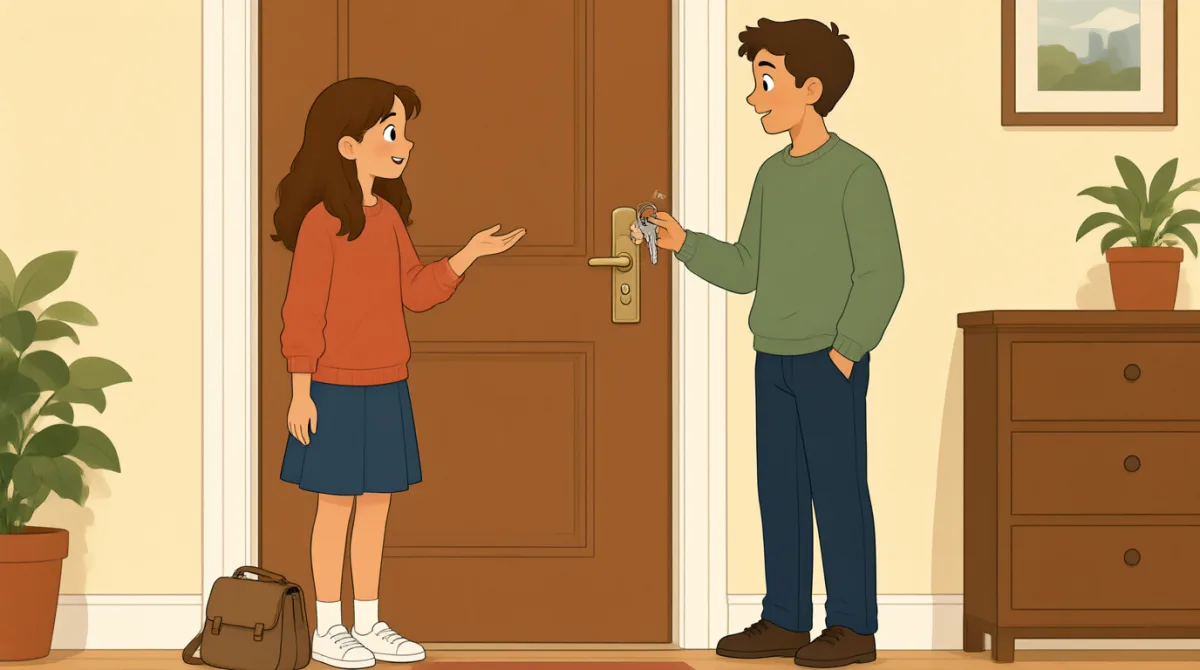

Oh, there they are! My keys are next to my bag.
أوه، ها هي! مفاتيحي بجانب حقيبتي.

I told you I saw them by the front door.
قلت لك إنني رأيتها قرب الباب الرئيسي.
Thanks, Jack. I was looking everywhere.
شكرًا يا جاك. بحثت في كل مكان.
You’re welcome. Your bag is right there, too.
على الرحب والسعة. حقيبتك هناك أيضًا.
Yes, I have my keys and my bag now.
نعم، معي مفاتيحي وحقيبتي الآن.
Great. Are you ready to go?
رائع. هل أنتِ مستعدة للانطلاق؟
Yes! Let’s go. I’m ready.
نعم! هيا بنا. أنا مستعدة.
المفردات7
- there they areها هي
This means you can see the things you were looking for. Use it when you find something.
تعني هذه العبارة أنك ترى الأشياء التي كنت تبحث عنها. استخدمها عندما تعثر على شيء.
- next toبجانب
This means beside something. You can use it to say where an object is.
تعني هذه العبارة أن شيئًا ما يقع إلى جانب شيء آخر. يمكنك استخدامها لتحديد مكان غرض.
- front doorالباب الرئيسي
This is the main door to a home or building. Use it when talking about the entrance.
هو الباب الأساسي للمنزل أو المبنى. استخدم هذه العبارة عند الحديث عن المدخل.
- everywhereفي كل مكان
This means in many different places. Here, Emma looked in many places for her keys.
تعني هذه الكلمة في أماكن كثيرة مختلفة. بحثت إيما هنا في أماكن كثيرة عن مفاتيحها.
- right thereهناك بالضبط
This means in a place that is easy to see or very close. Use it to point out where something is.
تعني هذه العبارة في مكان يسهل رؤيته أو قريب جدًا. استخدمها للإشارة إلى مكان شيء ما.
- ready to goمستعد للانطلاق
This means prepared to leave. You can ask, “Are you ready to go?” before leaving.
تعني هذه العبارة أنك مستعد للمغادرة. يمكنك أن تسأل “Are you ready to go?” قبل المغادرة.
- Let’s goهيا بنا
This is a friendly way to say that it is time to leave or start moving.
هذه طريقة ودودة للقول إن وقت المغادرة أو بدء التحرك قد حان.
الجمل الأساسية7
- 1
Oh, there they are!
أوه، ها هي!
Use this when you find something you were looking for. You can replace “they” with “it” for one thing.
استخدم هذه العبارة عندما تعثر على شيء كنت تبحث عنه. يمكنك استبدال “they” بـ “it” عند الحديث عن شيء واحد.
- 2
My keys are next to my bag.
مفاتيحي بجانب حقيبتي.
This sentence tells someone where your keys are. Use “next to” to describe where one thing is in relation to another.
تخبر هذه الجملة شخصًا بمكان مفاتيحك. استخدم “next to” لوصف مكان شيء بالنسبة إلى شيء آخر.
- 3
I was looking everywhere.
بحثت في كل مكان.
Use this to say you searched in many places. You can replace “everywhere” with a place, such as “in my room.”
استخدم هذه العبارة لتقول إنك بحثت في أماكن كثيرة. يمكنك استبدال “everywhere” بمكان محدد، مثل “in my room.”
- 4
Your bag is right there, too.
حقيبتك هناك بالضبط أيضًا.
This sentence points out where something is. Use “right there” when the object is close or easy to see.
تشير هذه الجملة إلى مكان شيء ما. استخدم “right there” عندما يكون الغرض قريبًا أو يسهل رؤيته.
- 5
Yes, I have my keys and my bag now.
نعم، معي مفاتيحي وحقيبتي الآن.
Use this to say you have the things you need. You can name other items after “I have.”
استخدم هذه الجملة لتقول إن لديك الأشياء التي تحتاج إليها. يمكنك ذكر أغراض أخرى بعد “I have.”
- 6
Are you ready to go?
هل أنتِ مستعدة للانطلاق؟
This is a common way to ask if someone is prepared to leave. You can replace “go” with another activity, such as “eat.”
هذه طريقة شائعة للسؤال عما إذا كان شخص ما مستعدًا للمغادرة. يمكنك استبدال “go” بنشاط آخر، مثل “eat.”
- 7
Yes! Let’s go.
نعم! هيا بنا.
Use this to agree that it is time to leave or begin. “Let’s” means “let us” and invites someone to do something with you.
استخدم هذه العبارة للموافقة على أن وقت المغادرة أو البدء قد حان. تعني “Let’s” عبارة “let us”، وتدعو شخصًا إلى فعل شيء معك.