Finding the Keys
열쇠 찾기
Emma sees the keys next to her bag by the front door. She thanks Jack and is ready to go.
에마는 현관문 옆에 있는 가방 옆에서 열쇠를 발견해요. 잭에게 고맙다고 하고 이제 나갈 준비를 해요.
대화7
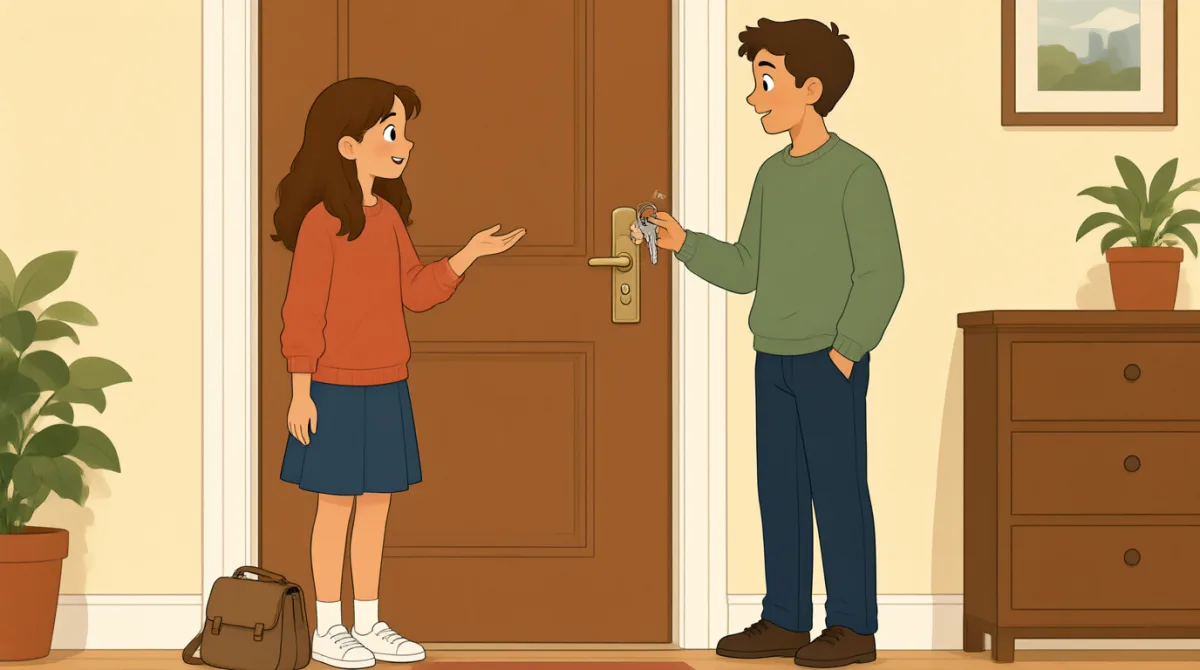

Oh, there they are! My keys are next to my bag.
아, 여기 있네! 내 열쇠가 가방 옆에 있어.

I told you I saw them by the front door.
현관문 옆에 있다고 했잖아.
Thanks, Jack. I was looking everywhere.
고마워, 잭. 여기저기 다 찾아봤어.
You’re welcome. Your bag is right there, too.
천만에. 네 가방도 바로 저기 있어.
Yes, I have my keys and my bag now.
응, 이제 열쇠랑 가방 다 챙겼어.
Great. Are you ready to go?
좋아. 이제 갈 준비됐어?
Yes! Let’s go. I’m ready.
응! 가자. 준비됐어.
어휘7
- there they are저기 있네
This means you can see the things you were looking for. Use it when you find something.
찾고 있던 물건이 보일 때 쓰는 표현이에요. 무언가를 찾았을 때 사용해요.
- next to~ 옆에
This means beside something. You can use it to say where an object is.
무언가의 곁에 있다는 뜻이에요. 물건이 어디 있는지 말할 때 사용할 수 있어요.
- front door현관문
This is the main door to a home or building. Use it when talking about the entrance.
집이나 건물의 주 출입문을 뜻해요. 입구에 관해 이야기할 때 사용해요.
- everywhere여기저기
This means in many different places. Here, Emma looked in many places for her keys.
여러 곳을 뜻해요. 여기서 에마는 열쇠를 찾아 여러 곳을 살펴봤어요.
- right there바로 저기
This means in a place that is easy to see or very close. Use it to point out where something is.
잘 보이는 곳이나 아주 가까운 곳에 있다는 뜻이에요. 물건이 어디 있는지 가리킬 때 사용해요.
- ready to go갈 준비가 된
This means prepared to leave. You can ask, “Are you ready to go?” before leaving.
떠날 준비가 됐다는 뜻이에요. 떠나기 전에 “Are you ready to go?”라고 물어볼 수 있어요.
- Let’s go가자
This is a friendly way to say that it is time to leave or start moving.
이제 떠나거나 움직이기 시작할 때 쓰는 친근한 표현이에요.
핵심 문장7
- 1
Oh, there they are!
아, 저기 있네!
Use this when you find something you were looking for. You can replace “they” with “it” for one thing.
찾고 있던 물건을 발견했을 때 사용해요. 하나를 가리킬 때는 “they” 대신 “it”을 쓸 수 있어요.
- 2
My keys are next to my bag.
내 열쇠가 가방 옆에 있어.
This sentence tells someone where your keys are. Use “next to” to describe where one thing is in relation to another.
이 문장은 열쇠가 어디 있는지 알려줘요. 한 물건이 다른 물건을 기준으로 어디에 있는지 설명할 때 “next to”를 사용해요.
- 3
I was looking everywhere.
여기저기 다 찾아봤어.
Use this to say you searched in many places. You can replace “everywhere” with a place, such as “in my room.”
여러 곳을 찾아봤다고 말할 때 사용해요. “everywhere” 대신 “in my room”처럼 장소를 넣을 수도 있어요.
- 4
Your bag is right there, too.
네 가방도 바로 저기 있어.
This sentence points out where something is. Use “right there” when the object is close or easy to see.
이 문장은 물건이 어디 있는지 알려줘요. 물건이 가깝거나 잘 보일 때 “right there”를 사용해요.
- 5
Yes, I have my keys and my bag now.
응, 이제 열쇠랑 가방 다 챙겼어.
Use this to say you have the things you need. You can name other items after “I have.”
필요한 물건을 가지고 있다고 말할 때 사용해요. “I have” 뒤에 다른 물건을 덧붙일 수 있어요.
- 6
Are you ready to go?
이제 갈 준비됐어?
This is a common way to ask if someone is prepared to leave. You can replace “go” with another activity, such as “eat.”
누군가 떠날 준비가 됐는지 물을 때 흔히 쓰는 표현이에요. “go” 대신 “eat”처럼 다른 활동을 넣을 수도 있어요.
- 7
Yes! Let’s go.
응! 가자.
Use this to agree that it is time to leave or begin. “Let’s” means “let us” and invites someone to do something with you.
이제 떠나거나 시작하자는 말에 동의할 때 사용해요. “Let’s”는 “let us”의 줄임말로, 상대에게 함께 무언가 하자고 권하는 표현이에요.