Stating the Reason for Switching
บอกเหตุผลที่ขอสลับที่นั่ง
The person briefly explains why they want to switch seats (e.g., to sit with family, for easier access, for a better view), to make the request more understandable and persuasive.
ผู้พูดอธิบายสั้น ๆ ว่าทำไมถึงอยากสลับที่นั่ง เช่น อยากนั่งกับครอบครัว เดินเข้าออกสะดวกขึ้น หรือได้เห็นวิวชัดขึ้น เพื่อให้คำขอฟังเข้าใจง่ายและน่าเห็นใจมากขึ้น
บทสนทนา8
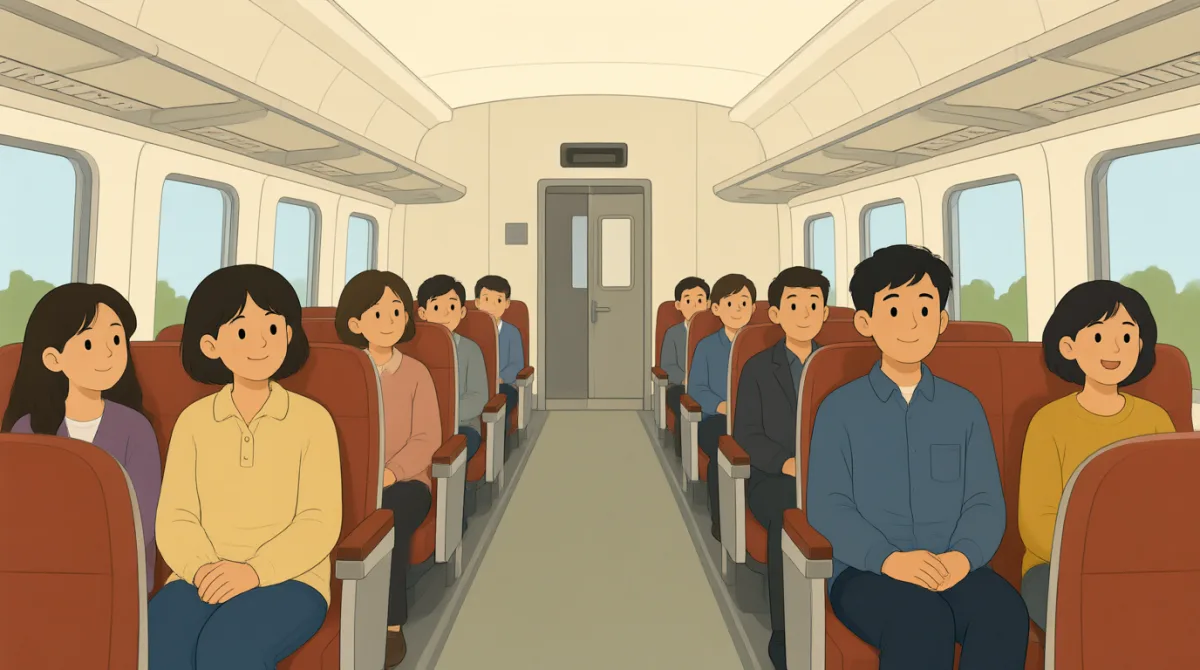

Excuse me, I was wondering if you might be willing to switch seats with me?
ขอโทษนะคะ ขอถามหน่อยได้ไหมคะว่าคุณสะดวกสลับที่นั่งกับฉันไหม

Oh, sure. What's up?
อ๋อ ได้สิ มีอะไรเหรอ
My son is actually sitting in the row behind you, and I was hoping to sit next to him. I’m in seat 12D, and it's an aisle seat, just like this one.
คือว่าลูกชายฉันนั่งอยู่แถวหลังคุณน่ะค่ะ ฉันเลยอยากนั่งข้าง ๆ เขา ที่นั่งฉันคือ 12D เป็นที่นั่งริมทางเดินเหมือนที่นั่งนี้เลยค่ะ
Oh, I see. So you want to be closer to your son. Is your seat right behind mine?
อ๋อ เข้าใจแล้ว งั้นคุณอยากนั่งใกล้ลูกชายมากขึ้นใช่ไหม ที่นั่งคุณอยู่แถวหลังผมเลยหรือเปล่าครับ
No, it's two rows back, but it's still an aisle seat with good legroom. It's actually very similar to this one.
ไม่ใช่ค่ะ อยู่ถอยไปอีกสองแถว แต่ก็ยังเป็นที่นั่งริมทางเดินและมีพื้นที่วางขาเยอะค่ะ จริง ๆ แล้วก็คล้ายกับที่นั่งนี้มากเลยค่ะ
Okay, that's fine. I don't mind. Go ahead.
โอเค ได้เลย ผมไม่ติดอะไร เชิญเลยครับ
Thank you so much! I really appreciate it.
ขอบคุณมากนะคะ ซาบซึ้งจริง ๆ ค่ะ
No problem at all.
ไม่เป็นไรเลยครับ
คำศัพท์7
- switchสลับ
To exchange or change positions, like seats. Use it when asking to trade places politely, e.g., 'Can we switch seats?'
หมายถึงแลกเปลี่ยนหรือเปลี่ยนตำแหน่งกัน เช่น สลับที่นั่ง ใช้เวลาขอแลกที่นั่งอย่างสุภาพ เช่น 'Can we switch seats?' (เราสลับที่นั่งกันได้ไหม)
- willingเต็มใจ
Ready or agreeing to do something. It's polite in requests, like 'Are you willing to help?' to show respect.
หมายถึงพร้อมหรือยินดีที่จะทำบางอย่าง ใช้ในคำขออย่างสุภาพ เช่น 'Are you willing to help?' (คุณยินดีช่วยไหม) เพื่อแสดงความให้เกียรติอีกฝ่าย
- aisle seatที่นั่งริมทางเดิน
A seat next to the walkway in a plane, bus, or theater, making it easier to get in and out. Useful for describing seat types when requesting changes.
ที่นั่งที่อยู่ติดทางเดินในเครื่องบิน รถโดยสาร หรือโรงละคร ทำให้เข้าออกได้สะดวก ใช้บอกลักษณะที่นั่งเมื่อต้องการขอเปลี่ยนที่นั่ง
- rowแถว
A line of seats, like in a theater or airplane. Common in public transport contexts, e.g., 'the front row.'
แนวที่นั่งที่เรียงต่อกัน เช่น ในโรงละครหรือเครื่องบิน มักใช้พูดถึงที่นั่งในระบบขนส่งสาธารณะ เช่น 'the front row' (แถวหน้า)
- legroomพื้นที่วางขา
The space available for your legs under a seat. Mention it to explain why a seat is comfortable or similar.
พื้นที่สำหรับวางขาใต้ที่นั่ง ใช้พูดถึงเหตุผลที่ทำให้ที่นั่งนั่งสบายหรือคล้ายกับอีกที่นั่งหนึ่ง
- appreciateซาบซึ้ง
To feel grateful for something. Use it after receiving help, like 'I appreciate your kindness,' to show thanks politely.
รู้สึกขอบคุณต่อสิ่งที่ใครทำให้ ใช้หลังได้รับความช่วยเหลือ เช่น 'I appreciate your kindness,' (ฉันซาบซึ้งในน้ำใจของคุณ) เพื่อแสดงความขอบคุณอย่างสุภาพ
- No problemไม่เป็นไร
A casual way to say it's easy or no trouble. Common response to thanks, meaning you're welcome without effort.
คำพูดสบาย ๆ ที่หมายถึงว่าไม่ลำบากหรือไม่มีปัญหา มักใช้ตอบรับคำขอบคุณในความหมายว่า ยินดีช่วย ไม่ได้ลำบากอะไร
ประโยคสำคัญ7
- 1
Excuse me, I was wondering if you might be willing to switch seats with me?
ขอโทษนะคะ ขอถามหน่อยได้ไหมคะว่าคุณสะดวกสลับที่นั่งกับฉันไหม
This is a polite way to make a request. 'I was wondering if' softens the question, making it less direct. Use it in public to ask for favors without being rude; grammar uses past continuous for politeness.
นี่เป็นวิธีขอความช่วยเหลืออย่างสุภาพ 'I was wondering if' ช่วยทำให้คำถามฟังนุ่มนวลและไม่ตรงเกินไป ใช้ถามขอความช่วยเหลือในที่สาธารณะโดยไม่ให้ฟังดูเสียมารยาท รูปประโยคใช้ past continuous เพื่อเพิ่มความสุภาพ
- 2
What's up?
มีอะไรเหรอ
A casual way to ask 'What's the problem?' or 'Why?'. It's informal and friendly; use it when someone approaches you to show you're open to listening.
'What's up?' เป็นวิธีถามแบบกันเองว่า “มีปัญหาอะไรหรือเปล่า” หรือ “ทำไมเหรอ” ใช้ในสถานการณ์ไม่เป็นทางการและเป็นมิตร เมื่อต้องการแสดงว่าพร้อมรับฟัง
- 3
My son is actually sitting in the row behind you, and I was hoping to sit next to him.
คือว่าลูกชายฉันนั่งอยู่แถวหลังคุณน่ะค่ะ ฉันเลยอยากนั่งข้าง ๆ เขา
This explains the reason for the request clearly. 'Actually' adds emphasis, and 'I was hoping' is polite for wishes. Useful for making requests persuasive by giving a family or personal reason; connects clauses with 'and' for smooth flow.
ประโยคนี้อธิบายเหตุผลของคำขออย่างชัดเจน 'Actually' ช่วยเน้นย้ำ ส่วน 'I was hoping' เป็นวิธีพูดถึงความต้องการอย่างสุภาพ ใช้เหตุผลเกี่ยวกับครอบครัวหรือเรื่องส่วนตัวเพื่อช่วยให้คำขอฟังน่าเห็นใจขึ้น และใช้ 'and' เชื่อมข้อความให้ลื่นไหล
- 4
Oh, I see. So you want to be closer to your son.
อ๋อ เข้าใจแล้ว งั้นคุณอยากนั่งใกล้ลูกชายมากขึ้นใช่ไหม
This shows understanding and summarizes the reason. 'Oh, I see' acknowledges info; rephrasing helps confirm. Use it in conversations to clarify and build rapport before agreeing.
ประโยคนี้แสดงว่าเข้าใจและสรุปเหตุผลของอีกฝ่าย 'Oh, I see' ใช้รับทราบข้อมูล การพูดทวนด้วยคำพูดของตัวเองช่วยยืนยันความเข้าใจ ใช้เพื่อทำความเข้าใจให้ตรงกันและสร้างความรู้สึกเป็นมิตรก่อนตอบตกลง
- 5
It's actually very similar to this one.
จริง ๆ แล้วก็คล้ายกับที่นั่งนี้มากเลยค่ะ
Compares seats to make the switch fair. 'Actually' emphasizes truth; useful when describing similarities to persuade someone. Helps in negotiations by highlighting equality.
ประโยคนี้เปรียบเทียบที่นั่งทั้งสองเพื่อให้การสลับดูยุติธรรม 'Actually' ใช้เน้นข้อเท็จจริง และยังช่วยโน้มน้าวเมื่อพูดถึงสิ่งที่คล้ายกัน การชี้ให้เห็นว่าที่นั่งไม่ต่างกันมากมีประโยชน์ในการต่อรอง
- 6
Thank you so much! I really appreciate it.
ขอบคุณมากนะคะ ซาบซึ้งจริง ๆ ค่ะ
Expresses strong gratitude. 'So much' intensifies thanks; 'appreciate it' is sincere. Always use after help to end politely and show good manners.
ประโยคนี้แสดงความขอบคุณอย่างมาก 'So much' ช่วยเน้นคำขอบคุณ ส่วน 'appreciate it' สื่อความรู้สึกขอบคุณอย่างจริงใจ ควรใช้หลังได้รับความช่วยเหลือเพื่อแสดงมารยาทและจบการสนทนาอย่างสุภาพ
- 7
No problem at all.
ไม่เป็นไรเลยครับ
A relaxed response to thanks, meaning it's easy. 'At all' strengthens the casual tone. Common in English to respond to appreciation without formality.
เป็นคำตอบสบาย ๆ เมื่อมีคนขอบคุณ หมายความว่าไม่ได้ลำบากอะไร 'At all' ช่วยเน้นน้ำเสียงที่เป็นกันเอง มักใช้ตอบรับคำขอบคุณในภาษาอังกฤษโดยไม่เป็นทางการเกินไป