Stating the Reason for Switching
सीट बदलने का कारण बताना
The person briefly explains why they want to switch seats (e.g., to sit with family, for easier access, for a better view), to make the request more understandable and persuasive.
व्यक्ति संक्षेप में बताता है कि वह सीट क्यों बदलना चाहता है—जैसे परिवार के साथ बैठने, आसानी से आने-जाने या बेहतर नज़ारे के लिए—ताकि उसका अनुरोध समझने में आसान और अधिक भरोसेमंद लगे।
संवाद8
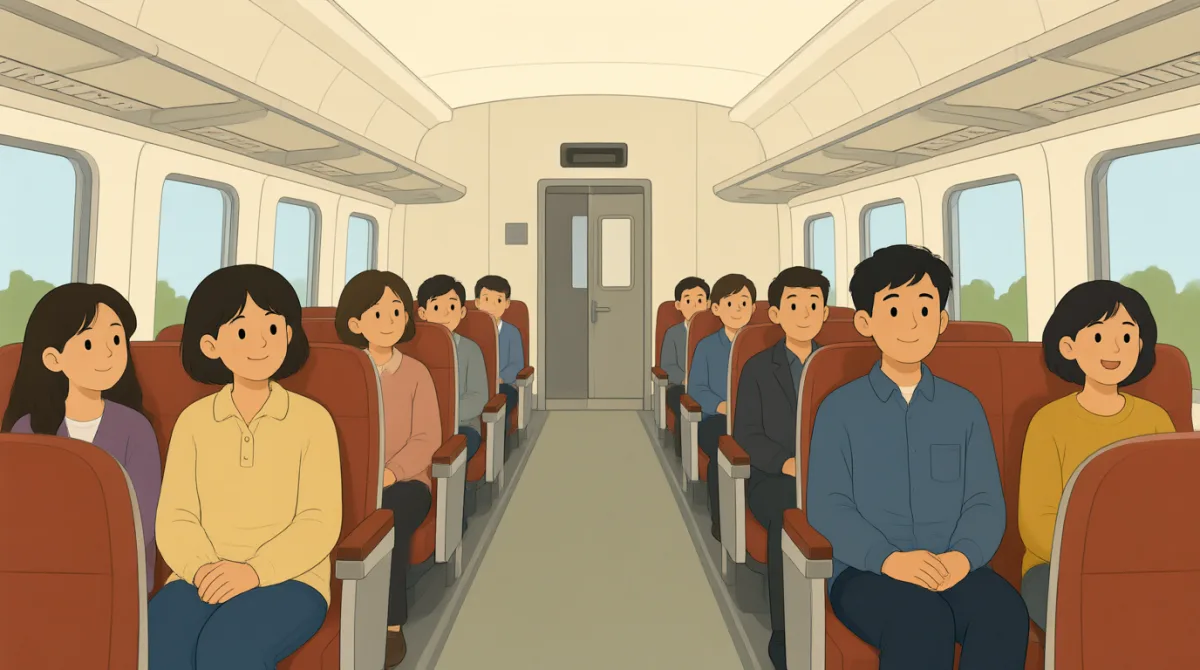

Excuse me, I was wondering if you might be willing to switch seats with me?
माफ़ कीजिए, क्या आप मेरे साथ सीट बदलने के लिए तैयार होंगे?

Oh, sure. What's up?
ओह, हाँ, ज़रूर। क्या बात है?
My son is actually sitting in the row behind you, and I was hoping to sit next to him. I’m in seat 12D, and it's an aisle seat, just like this one.
दरअसल, मेरा बेटा आपके पीछे वाली पंक्ति में बैठा है, और मैं उसके पास बैठना चाहती थी। मेरी सीट 12D है, और वह भी इसी सीट की तरह गलियारे वाली सीट है।
Oh, I see. So you want to be closer to your son. Is your seat right behind mine?
ओह, अच्छा। तो आप अपने बेटे के पास बैठना चाहती हैं। क्या आपकी सीट ठीक मेरे पीछे है?
No, it's two rows back, but it's still an aisle seat with good legroom. It's actually very similar to this one.
नहीं, वह दो पंक्तियाँ पीछे है, लेकिन वह भी गलियारे वाली सीट है और वहाँ पैरों के लिए अच्छी जगह है। दरअसल, वह इस सीट से काफ़ी मिलती-जुलती है।
Okay, that's fine. I don't mind. Go ahead.
ठीक है, कोई बात नहीं। मुझे कोई एतराज़ नहीं। आप बदल लीजिए।
Thank you so much! I really appreciate it.
बहुत-बहुत धन्यवाद! मैं सचमुच आपकी आभारी हूँ।
No problem at all.
कोई बात नहीं।
शब्दावली7
- switchबदलना
To exchange or change positions, like seats. Use it when asking to trade places politely, e.g., 'Can we switch seats?'
किसी जगह या स्थिति को बदलना, जैसे सीट बदलना। सीटों की अदला-बदली का विनम्रता से अनुरोध करते समय इसका इस्तेमाल करें, जैसे 'Can we switch seats?' (क्या हम सीटें बदल सकते हैं?)।
- willingतैयार
Ready or agreeing to do something. It's polite in requests, like 'Are you willing to help?' to show respect.
कुछ करने के लिए राज़ी या तैयार होना। अनुरोधों में यह विनम्र लगता है। सम्मान दिखाने के लिए 'Are you willing to help?' (क्या आप मदद करने के लिए तैयार हैं?) जैसे कह सकते हैं।
- aisle seatगलियारे वाली सीट
A seat next to the walkway in a plane, bus, or theater, making it easier to get in and out. Useful for describing seat types when requesting changes.
हवाई जहाज़, बस या थिएटर में रास्ते के पास वाली सीट, जहाँ से अंदर-बाहर जाना आसान होता है। सीट बदलने का अनुरोध करते समय सीट का प्रकार बताने के लिए यह उपयोगी है।
- rowपंक्ति
A line of seats, like in a theater or airplane. Common in public transport contexts, e.g., 'the front row.'
सीटों की एक कतार, जैसे थिएटर या हवाई जहाज़ में। सार्वजनिक परिवहन के संदर्भ में यह आम शब्द है, जैसे 'the front row' (आगे की पंक्ति)।
- legroomपैरों के लिए जगह
The space available for your legs under a seat. Mention it to explain why a seat is comfortable or similar.
सीट के नीचे पैरों को रखने के लिए उपलब्ध जगह। सीट आरामदायक है या दूसरी सीट जैसी है, यह बताने के लिए इसका ज़िक्र कर सकते हैं।
- appreciateआभारी होना
To feel grateful for something. Use it after receiving help, like 'I appreciate your kindness,' to show thanks politely.
किसी चीज़ के लिए कृतज्ञ महसूस करना। मदद मिलने पर धन्यवाद जताने के लिए इसका इस्तेमाल करें, जैसे 'I appreciate your kindness' (मैं आपकी दयालुता की आभारी हूँ)।
- No problemकोई बात नहीं
A casual way to say it's easy or no trouble. Common response to thanks, meaning you're welcome without effort.
यह कहने का अनौपचारिक तरीका कि कोई परेशानी नहीं हुई। धन्यवाद के जवाब में आम तौर पर इसका मतलब होता है कि मदद करने में कोई दिक्कत नहीं हुई।
मुख्य वाक्य7
- 1
Excuse me, I was wondering if you might be willing to switch seats with me?
माफ़ कीजिए, क्या आप मेरे साथ सीट बदलने के लिए तैयार होंगे?
This is a polite way to make a request. 'I was wondering if' softens the question, making it less direct. Use it in public to ask for favors without being rude; grammar uses past continuous for politeness.
यह अनुरोध करने का एक विनम्र तरीका है। 'I was wondering if' सवाल को कम सीधा और अधिक नरम बनाता है। सार्वजनिक जगह पर बिना रूखे लगे किसी से मदद माँगने के लिए इसका इस्तेमाल करें। विनम्रता जताने के लिए इसमें past continuous का प्रयोग हुआ है।
- 2
What's up?
क्या बात है?
A casual way to ask 'What's the problem?' or 'Why?'. It's informal and friendly; use it when someone approaches you to show you're open to listening.
'What's up?' कहने का अनौपचारिक तरीका है 'What's the problem?' या 'Why?'। यह दोस्ताना और बेझिझक लहजे में कहा जाता है। जब कोई आपसे बात करने आए, तो सुनने की इच्छा दिखाने के लिए इसका इस्तेमाल करें।
- 3
My son is actually sitting in the row behind you, and I was hoping to sit next to him.
दरअसल, मेरा बेटा आपके पीछे वाली पंक्ति में बैठा है, और मैं उसके पास बैठना चाहती थी।
This explains the reason for the request clearly. 'Actually' adds emphasis, and 'I was hoping' is polite for wishes. Useful for making requests persuasive by giving a family or personal reason; connects clauses with 'and' for smooth flow.
यह वाक्य अनुरोध का कारण साफ़-साफ़ बताता है। 'Actually' बात पर ज़ोर देता है, जबकि 'I was hoping' इच्छा जताने का विनम्र तरीका है। परिवार या निजी कारण बताकर अनुरोध को अधिक मनवाने वाला बनाने के लिए यह उपयोगी है। 'And' दोनों बातों को सहजता से जोड़ता है।
- 4
Oh, I see. So you want to be closer to your son.
ओह, अच्छा। तो आप अपने बेटे के पास बैठना चाहती हैं।
This shows understanding and summarizes the reason. 'Oh, I see' acknowledges info; rephrasing helps confirm. Use it in conversations to clarify and build rapport before agreeing.
यह बात समझने और कारण को अपने शब्दों में दोहराने का तरीका है। 'Oh, I see' से पता चलता है कि आपने बात समझ ली है। दोबारा कहने से यह पक्का होता है कि आपने सही समझा। सहमत होने से पहले बात स्पष्ट करने और अपनापन बढ़ाने के लिए इसका इस्तेमाल करें।
- 5
It's actually very similar to this one.
दरअसल, वह इस सीट से काफ़ी मिलती-जुलती है।
Compares seats to make the switch fair. 'Actually' emphasizes truth; useful when describing similarities to persuade someone. Helps in negotiations by highlighting equality.
यह तुलना दिखाती है कि सीट बदलना दोनों के लिए उचित रहेगा। 'Actually' बात पर ज़ोर देता है। किसी को मनाने के लिए समानताएँ बताते समय यह उपयोगी है। बातचीत में बराबरी को उजागर करके समझौता करने में मदद मिलती है।
- 6
Thank you so much! I really appreciate it.
बहुत-बहुत धन्यवाद! मैं सचमुच आपकी आभारी हूँ।
Expresses strong gratitude. 'So much' intensifies thanks; 'appreciate it' is sincere. Always use after help to end politely and show good manners.
यह गहरी कृतज्ञता जताता है। 'So much' धन्यवाद को ज़ोरदार बनाता है, और 'appreciate it' सच्ची सराहना दिखाता है। मदद मिलने पर विनम्रता से बातचीत पूरी करने और अच्छे शिष्टाचार दिखाने के लिए इसका इस्तेमाल करें।
- 7
No problem at all.
कोई बात नहीं।
A relaxed response to thanks, meaning it's easy. 'At all' strengthens the casual tone. Common in English to respond to appreciation without formality.
यह धन्यवाद का सहज जवाब है और इसका मतलब है कि मदद करने में कोई परेशानी नहीं हुई। 'At all' अनौपचारिक लहजे को और ज़ोर देता है। किसी की सराहना के जवाब में अंग्रेज़ी में यह आम तौर पर कहा जाता है।