Stating the Reason for Switching
說明換座位的原因
The person briefly explains why they want to switch seats (e.g., to sit with family, for easier access, for a better view), to make the request more understandable and persuasive.
詢問者簡要解釋他們想要換座位的原因(例如,與家人坐在一起、方便出入、觀景更好),使請求更容易理解和更有說服力。
對話8
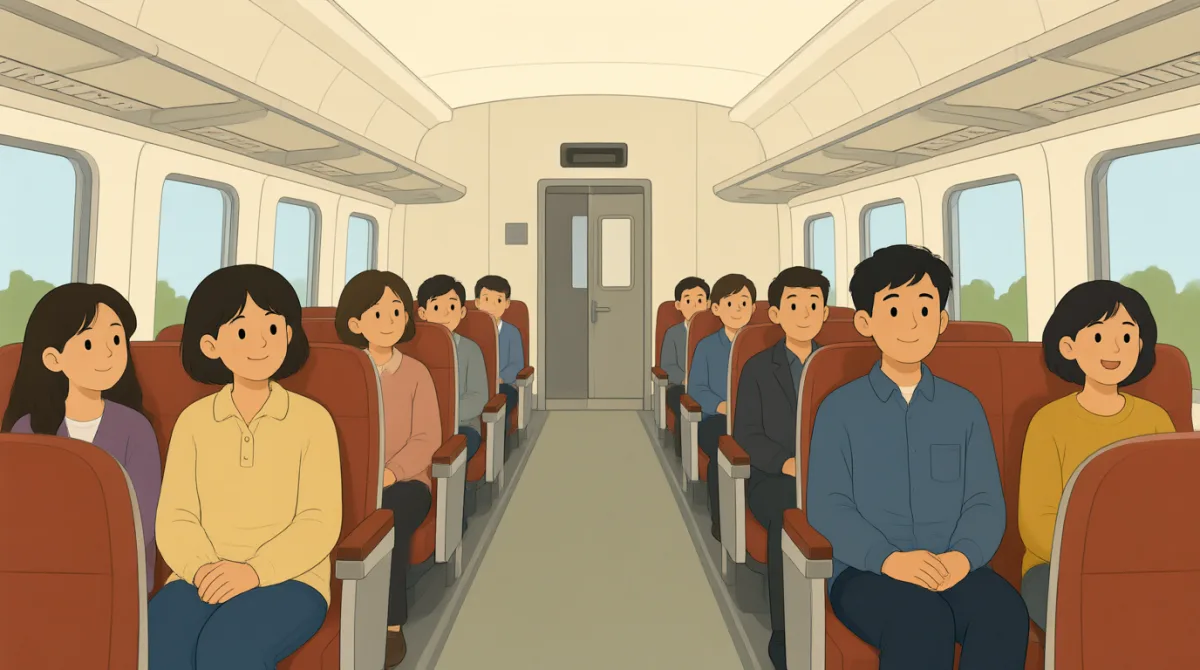

Excuse me, I was wondering if you might be willing to switch seats with me?
打擾一下,請問您是否願意和我換一下座位?

Oh, sure. What's up?
哦,好的。怎麼了?
My son is actually sitting in the row behind you, and I was hoping to sit next to him. I’m in seat 12D, and it's an aisle seat, just like this one.
我兒子坐在您後面那一排,我希望能坐他旁邊。我的是12D座,和您這個一樣是靠過道的座位。
Oh, I see. So you want to be closer to your son. Is your seat right behind mine?
哦,我明白了。所以你想離你兒子近一點。你的座位就在我後面嗎?
No, it's two rows back, but it's still an aisle seat with good legroom. It's actually very similar to this one.
不,在後面兩排,但它仍然是靠過道的座位,腿部空間也很好。實際上和這個座位非常相似。
Okay, that's fine. I don't mind. Go ahead.
好的,沒關係。我不介意。你換吧。
Thank you so much! I really appreciate it.
非常感謝您!我真的很感激。
No problem at all.
一點問題都沒有。
詞彙7
- switch交換
To exchange or change positions, like seats. Use it when asking to trade places politely, e.g., 'Can we switch seats?'
指交換或更換位置,比如座位。禮貌地詢問是否可以換位置時可以用這個詞,例如:'Can we switch seats?'(我們可以換一下座位嗎?)
- willing願意的
Ready or agreeing to do something. It's polite in requests, like 'Are you willing to help?' to show respect.
表示準備好或同意做某事。在請求中使用會顯得禮貌,例如用 'Are you willing to help?'(你願意幫忙嗎?)表達尊重。
- aisle seat靠過道的座位
A seat next to the walkway in a plane, bus, or theater, making it easier to get in and out. Useful for describing seat types when requesting changes.
指飛機、公交車或劇院裡靠著通道的座位,進出更方便。請求換座時,可以用它來說明座位型別。
- row排
A line of seats, like in a theater or airplane. Common in public transport contexts, e.g., 'the front row.'
指一排座位,比如劇院或飛機裡的座位。這個詞常用於公共交通場景,例如:'the front row'(前排)。
- legroom腿部空間
The space available for your legs under a seat. Mention it to explain why a seat is comfortable or similar.
指座位下方留給腿的空間。提到它可以說明座位為什麼舒適,或與另一個座位相似。
- appreciate感激
To feel grateful for something. Use it after receiving help, like 'I appreciate your kindness,' to show thanks politely.
指對某事心懷感謝。得到幫助後可以用這個詞表達謝意,例如:'I appreciate your kindness'(我很感激你的好意)。
- No problem沒關係
A casual way to say it's easy or no trouble. Common response to thanks, meaning you're welcome without effort.
一種輕鬆隨意的說法,表示事情不麻煩。常用來回應感謝,表示不用客氣、舉手之勞。
關鍵句7
- 1
Excuse me, I was wondering if you might be willing to switch seats with me?
打擾一下,請問您願意和我換一下座位嗎?
This is a polite way to make a request. 'I was wondering if' softens the question, making it less direct. Use it in public to ask for favors without being rude; grammar uses past continuous for politeness.
這是一種禮貌的請求方式。'I was wondering if'(我想請問是否)能讓問題聽起來不那麼直接。在公共場合請別人幫忙時可以用它,既表達請求又不顯得唐突;這裡用過去進行時是為了顯得更禮貌。
- 2
What's up?
怎麼了?
A casual way to ask 'What's the problem?' or 'Why?'. It's informal and friendly; use it when someone approaches you to show you're open to listening.
'What's up?' 是一種隨意的問法,可以表示“怎麼了?”或“為什麼?”。它語氣輕鬆友好,適合別人主動找你時使用,表示你願意聽對方說。
- 3
My son is actually sitting in the row behind you, and I was hoping to sit next to him.
其實我兒子坐在您後面那一排,我希望能坐在他旁邊。
This explains the reason for the request clearly. 'Actually' adds emphasis, and 'I was hoping' is polite for wishes. Useful for making requests persuasive by giving a family or personal reason; connects clauses with 'and' for smooth flow.
這句話清楚地說明了提出請求的原因。'Actually'(其實)起強調作用,'I was hoping'(我希望)則是禮貌地表達願望。說明家庭或個人原因有助於讓請求更有說服力;用 'and' 連線分句,表達也更流暢。
- 4
Oh, I see. So you want to be closer to your son.
哦,我明白了。所以你想離兒子近一點。
This shows understanding and summarizes the reason. 'Oh, I see' acknowledges info; rephrasing helps confirm. Use it in conversations to clarify and build rapport before agreeing.
這句話表示理解,並概括了對方的理由。'Oh, I see'(哦,我明白了)表示你聽懂了;換一種說法複述對方的意思,也能確認自己沒有理解錯。在同意請求前,這樣回應有助於溝通並拉近彼此距離。
- 5
It's actually very similar to this one.
其實它和這個座位非常相似。
Compares seats to make the switch fair. 'Actually' emphasizes truth; useful when describing similarities to persuade someone. Helps in negotiations by highlighting equality.
這句話透過比較座位,讓換座聽起來更公平。'Actually'(其實)用於強調事實;說明兩個座位相似時可以這樣說,讓請求更有說服力。在協商時,強調雙方條件相當會有所幫助。
- 6
Thank you so much! I really appreciate it.
非常感謝您!我真的很感激。
Expresses strong gratitude. 'So much' intensifies thanks; 'appreciate it' is sincere. Always use after help to end politely and show good manners.
這句話表達了由衷的感謝。'So much'(非常)加強了謝意,'appreciate it'(很感激)則顯得真誠。別人幫忙後可以這樣說,禮貌地結束對話。
- 7
No problem at all.
一點問題都沒有。
A relaxed response to thanks, meaning it's easy. 'At all' strengthens the casual tone. Common in English to respond to appreciation without formality.
這是對感謝的輕鬆回應,意思是這點忙不麻煩。'At all'(一點也)進一步加強語氣。英語中常用這句話回應別人的感謝,語氣自然隨和。