Describing the Cooking Process (Step-by-Step)
อธิบายขั้นตอนการทำอาหารทีละขั้น
The speaker explains the core cooking process, detailing each step sequentially. This involves using transition words (first, then, next, after that, finally) and precise cooking verbs like 'sauté,' 'boil,' 'simmer,' 'fry,' and 'stir.'
ผู้พูดอธิบายขั้นตอนหลักในการทำอาหาร โดยไล่เรียงทีละขั้น พร้อมใช้คำบอกลำดับ เช่น 'first, then, next, after that, finally' และคำกริยาเกี่ยวกับการทำอาหารที่เฉพาะเจาะจง เช่น 'sauté,' 'boil,' 'simmer,' 'fry,' และ 'stir'.
บทสนทนา8
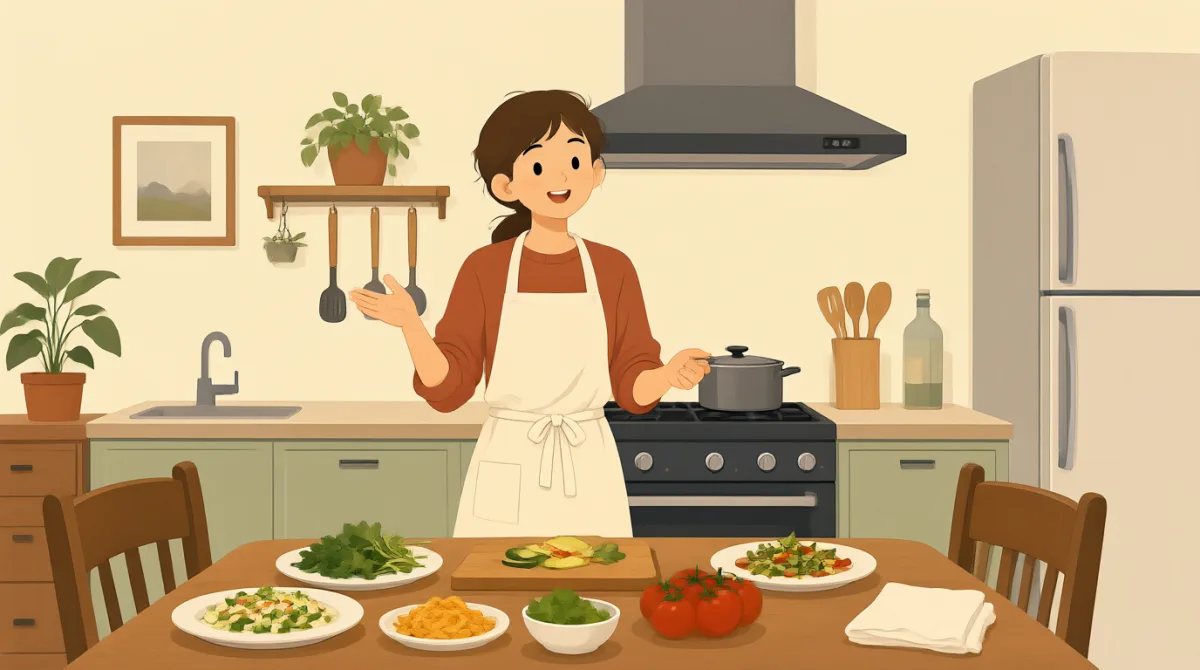

Hey Jack, I'm trying to make that simple pasta dish you mentioned. Can you walk me through the steps again?
เฮ้ แจ็ก ฉันกำลังลองทำพาสต้าง่าย ๆ ที่เธอพูดถึงอยู่ ช่วยบอกขั้นตอนอีกทีได้ไหม?

Sure, Emma! It's super easy. First, you need to boil a pot of salted water for the pasta. Make sure it's a rolling boil.
ได้เลย เอ็มมา! ง่ายมาก ก่อนอื่น ต้มน้ำใส่เกลือในหม้อสำหรับทำพาสต้า ให้เดือดพล่านเลยนะ
Okay, got it. Boiling water. Then what?
โอเค เข้าใจแล้ว ต้มน้ำให้เดือด แล้วทำอะไรต่อ?
Next, while the water is heating up, you can start on the sauce. Sauté some minced garlic and chopped onions in olive oil until they're fragrant and translucent.
ต่อไป ระหว่างรอให้น้ำร้อน ก็เริ่มทำซอสได้เลย ผัดกระเทียมสับกับหอมหัวใหญ่หั่นในน้ำมันมะกอก จนหอมและเริ่มใส
Sauté garlic and onions... got it. And for the pasta itself?
ผัดกระเทียมกับหอมหัวใหญ่... เข้าใจแล้ว แล้วตัวพาสต้าล่ะ?
Once the water is boiling, add your pasta and cook it according to the package directions, usually 8-10 minutes, until it's al dente. After that, drain the pasta, but save a little bit of the pasta water.
พอน้ำเดือดแล้ว ใส่พาสต้าลงไปแล้วต้มตามคำแนะนำบนห่อ ปกติประมาณ 8-10 นาที จนได้ความสุกแบบ al dente จากนั้นเทน้ำออก แต่เก็บน้ำต้มพาสต้าไว้สักหน่อยนะ
Save the pasta water, really? Why?
เก็บน้ำต้มพาสต้าไว้ด้วยเหรอ? ทำไมล่ะ?
Yes, it helps to thicken the sauce! Finally, combine the drained pasta with your sautéed garlic and onions, add your favorite tomato sauce, and if it's too thick, stir in a splash of that reserved pasta water. Simmer everything together for a few minutes and you're good to go!
ใช่ มันช่วยให้ซอสข้นขึ้น! สุดท้าย เอาพาสต้าที่สะเด็ดน้ำแล้วมาผสมกับกระเทียมและหอมหัวใหญ่ที่ผัดไว้ เติมซอสมะเขือเทศที่ชอบ แล้วถ้าซอสข้นเกินไป ก็เติมน้ำต้มพาสต้าที่เก็บไว้ลงไปนิดหน่อยแล้วคนให้เข้ากัน เคี่ยวทุกอย่างด้วยกันสักสองสามนาที แค่นี้ก็พร้อมกินแล้ว!
คำศัพท์8
- boilต้มให้เดือด
To boil means to heat a liquid until it reaches its boiling point and bubbles vigorously. In cooking, it's used for pasta or vegetables, like 'boil water for pasta' to prepare it quickly.
'boil' หมายถึงต้มน้ำหรือของเหลวให้ร้อนจนถึงจุดเดือดและมีฟองผุดขึ้นมาอย่างแรง ในการทำอาหารมักใช้กับพาสต้าหรือผัก เช่น 'boil water for pasta' (ต้มน้ำสำหรับทำพาสต้า) เพื่อเตรียมอาหารอย่างรวดเร็ว
- rolling boilเดือดพล่าน
A rolling boil is a strong, continuous boil where bubbles keep coming up rapidly without stopping. It's important for cooking pasta evenly so it doesn't stick.
'rolling boil' คือการเดือดแรงและต่อเนื่อง มีฟองผุดขึ้นมาอย่างรวดเร็วไม่หยุด การต้มน้ำให้เดือดแบบนี้ช่วยให้พาสต้าสุกทั่วถึงและไม่ติดกัน
- sautéผัดด้วยน้ำมันเล็กน้อย
To sauté means to quickly cook food in a small amount of hot oil or fat over high heat, often stirring. It's common for garlic or onions to release flavors, like 'sauté vegetables' before adding sauce.
'sauté' หมายถึงปรุงอาหารอย่างรวดเร็วด้วยน้ำมันหรือไขมันปริมาณเล็กน้อยบนไฟแรง โดยมักคนไปด้วย นิยมใช้กับกระเทียมหรือหอมหัวใหญ่เพื่อให้กลิ่นและรสออกมา เช่น 'sauté vegetables' (ผัดผัก) ก่อนเติมซอส
- fragrantหอม
Fragrant describes a pleasant, strong smell, especially from food. In cooking, it means the ingredients are ready when they smell good, like 'the garlic is fragrant after sautéing'.
'fragrant' ใช้บรรยายกลิ่นที่หอมชัดเจน โดยเฉพาะกลิ่นอาหาร ในการทำอาหารหมายถึงวัตถุดิบส่งกลิ่นหอมและพร้อมใช้ เช่น 'the garlic is fragrant after sautéing' (กระเทียมส่งกลิ่นหอมหลังผัด)
- translucentโปร่งแสง
Translucent means allowing light to pass through but not completely clear, like semi-see-through. For onions, it means they're cooked until soft and slightly clear, not raw.
'translucent' หมายถึงแสงผ่านได้ แต่ยังมองทะลุไม่ชัด คล้ายกึ่งโปร่งใส สำหรับหอมหัวใหญ่ หมายถึงผัดจนนุ่มและเริ่มใสเล็กน้อย ไม่ดิบแล้ว
- al denteสุกแบบ al dente (นุ่มแต่ยังหนึบ)
Al dente is an Italian term meaning 'to the tooth' – pasta that's cooked firm but not hard, with a slight bite. It's the ideal texture for pasta, usually after 8-10 minutes of boiling.
'al dente' เป็นคำภาษาอิตาลีที่หมายถึง “ถึงฟัน” ใช้บอกพาสต้าที่สุกแต่ยังแน่น ไม่แข็ง และมีความหนึบเล็กน้อย เป็นเนื้อสัมผัสที่เหมาะกับพาสต้า โดยมักได้หลังต้มประมาณ 8-10 นาที
- drainสะเด็ดน้ำ
To drain means to remove liquid from food, like pouring pasta water out through a colander. In recipes, it's key after boiling to avoid soggy dishes.
'drain' หมายถึงเอาของเหลวออกจากอาหาร เช่น เทน้ำต้มพาสต้าผ่านกระชอน ในสูตรอาหาร ขั้นตอนนี้สำคัญหลังต้มเพื่อไม่ให้อาหารแฉะเกินไป
- simmerเคี่ยว
To simmer means to cook food gently in liquid just below boiling, with small bubbles. It's used to blend flavors without boiling away, like 'simmer the sauce for a few minutes'.
'simmer' หมายถึงปรุงอาหารในของเหลวด้วยไฟอ่อน โดยให้เดือดปุด ๆ เบา ๆ ใช้วิธีนี้เพื่อให้รสชาติผสมเข้ากันโดยไม่ปล่อยให้ของเหลวเดือดระเหยมากเกินไป เช่น 'simmer the sauce for a few minutes' (เคี่ยวซอสสักสองสามนาที)
ประโยคสำคัญ7
- 1
First, you need to boil a pot of salted water for the pasta. Make sure it's a rolling boil.
ก่อนอื่น ต้มน้ำใส่เกลือในหม้อสำหรับทำพาสต้า ให้เดือดพล่านเลยนะ
This sentence uses 'first' to start a sequence of steps, common in recipes. 'Boil' is a cooking verb, and 'make sure' adds a tip for success. Useful for giving instructions clearly, like in cooking or DIY guides.
ประโยคนี้ใช้ 'first' เพื่อเริ่มเรียงลำดับขั้นตอน ซึ่งพบได้บ่อยในสูตรอาหาร 'Boil' เป็นคำกริยาเกี่ยวกับการทำอาหาร ส่วน 'make sure' ใช้เพิ่มคำแนะนำเพื่อให้ทำได้ผลดี รูปแบบนี้มีประโยชน์เวลาบอกวิธีทำอะไรให้ชัดเจน เช่น ในคู่มือทำอาหารหรืองานประดิษฐ์
- 2
Next, while the water is heating up, you can start on the sauce.
ต่อไป ระหว่างรอให้น้ำร้อน ก็เริ่มทำซอสได้เลย
Here, 'next' shows the following step, and 'while' connects actions happening at the same time for efficiency. It's practical for multi-tasking in recipes, teaching how to use time clauses in instructions.
ในประโยคนี้ 'next' ใช้บอกขั้นตอนถัดไป ส่วน 'while' เชื่อมการกระทำสองอย่างที่เกิดขึ้นพร้อมกัน ช่วยให้ทำหลายอย่างไปพร้อมกันได้อย่างมีประสิทธิภาพ และเป็นตัวอย่างการใช้วลีบอกเวลาในคำแนะนำ
- 3
Sauté some minced garlic and chopped onions in olive oil until they're fragrant and translucent.
ผัดกระเทียมสับกับหอมหัวใหญ่หั่นในน้ำมันมะกอกจนหอมและเริ่มใส
This demonstrates a precise cooking action with 'sauté' and 'until' for timing. 'Minced' and 'chopped' describe preparation. Great for intermediate learners to practice imperative sentences in recipes.
ประโยคนี้แสดงวิธีทำอาหารอย่างเจาะจงด้วย 'sauté' และใช้ 'until' เพื่อบอกว่าต้องทำไปจนถึงจุดไหน ส่วน 'minced' และ 'chopped' บอกวิธีเตรียมวัตถุดิบ เหมาะสำหรับผู้เรียนระดับกลางที่ต้องการฝึกประโยคคำสั่งในสูตรอาหาร
- 4
Once the water is boiling, add your pasta and cook it according to the package directions, usually 8-10 minutes, until it's al dente.
พอน้ำเดือดแล้ว ใส่พาสต้าลงไปแล้วต้มตามคำแนะนำบนห่อ ปกติประมาณ 8-10 นาที จนได้ความสุกแบบ al dente
'Once' introduces a condition for the next action, with 'until' for duration. 'According to' means following instructions. This pattern is useful for step-by-step processes, including time and texture descriptions.
'Once' ใช้เกริ่นเงื่อนไขก่อนทำสิ่งถัดไป ส่วน 'until' ใช้บอกระยะเวลาหรือจุดสิ้นสุด 'According to' หมายถึงทำตามคำแนะนำ รูปแบบนี้มีประโยชน์ในการอธิบายขั้นตอนทีละขั้น รวมถึงการบอกเวลาและเนื้อสัมผัส
- 5
After that, drain the pasta, but save a little bit of the pasta water.
จากนั้นเทน้ำออก แต่เก็บน้ำต้มพาสต้าไว้สักหน่อยนะ
'After that' transitions to the next step, and 'but' contrasts actions (drain but save). It's helpful for explaining reasons in sequences, common in cooking to avoid waste.
'After that' ใช้เชื่อมไปยังขั้นตอนถัดไป ส่วน 'but' ใช้แสดงการกระทำที่ต่างกัน คือให้เทน้ำออกแต่เก็บน้ำไว้ รูปแบบนี้ช่วยอธิบายขั้นตอนต่อเนื่องและหลีกเลี่ยงการทิ้งของที่ยังใช้ประโยชน์ได้ ซึ่งพบได้บ่อยในการทำอาหาร
- 6
Finally, combine the drained pasta with your sautéed garlic and onions, add your favorite tomato sauce, and if it's too thick, stir in a splash of that reserved pasta water.
สุดท้าย เอาพาสต้าที่สะเด็ดน้ำแล้วมาผสมกับกระเทียมและหอมหัวใหญ่ที่ผัดไว้ เติมซอสมะเขือเทศที่ชอบ แล้วถ้าซอสข้นเกินไป ก็เติมน้ำต้มพาสต้าที่เก็บไว้ลงไปนิดหน่อยแล้วคนให้เข้ากัน
'Finally' ends the sequence, using imperatives like 'combine', 'add', and 'stir'. The conditional 'if it's too thick' adds flexibility. Ideal for wrapping up instructions and troubleshooting in recipes.
'Finally' ใช้ปิดท้ายลำดับขั้นตอน โดยมีคำสั่งอย่าง 'combine', 'add' และ 'stir' ส่วนเงื่อนไข 'if it's too thick' ทำให้ปรับวิธีได้ตามต้องการ รูปแบบนี้เหมาะสำหรับสรุปคำแนะนำและบอกวิธีแก้ปัญหาในสูตรอาหาร
- 7
Simmer everything together for a few minutes and you're good to go!
เคี่ยวทุกอย่างด้วยกันสักสองสามนาที แค่นี้ก็พร้อมกินแล้ว!
'Simmer' is a key verb, and 'you're good to go' is an idiomatic expression meaning 'it's ready to use or eat'. This casual ending makes instructions friendly, useful in everyday conversations about food.
'Simmer' เป็นคำกริยาสำคัญ ส่วน 'you're good to go' เป็นสำนวนที่หมายถึง “พร้อมใช้หรือพร้อมกินแล้ว” การปิดท้ายแบบเป็นกันเองช่วยให้คำแนะนำฟังดูเป็นมิตร และใช้ได้ดีในบทสนทนาทั่วไปเกี่ยวกับอาหาร