Describing the Cooking Process (Step-by-Step)
描述烹飪過程(分步進行)
The speaker explains the core cooking process, detailing each step sequentially. This involves using transition words (first, then, next, after that, finally) and precise cooking verbs like 'sauté,' 'boil,' 'simmer,' 'fry,' and 'stir.'
說話者解釋核心烹飪過程,詳細說明每個步驟的順序。這包括使用過渡詞(首先、然後、接下來、之後、最後)和精確的烹飪動詞,如“sauté”、“boil”、“simmer”、“fry”和“stir”。
對話8
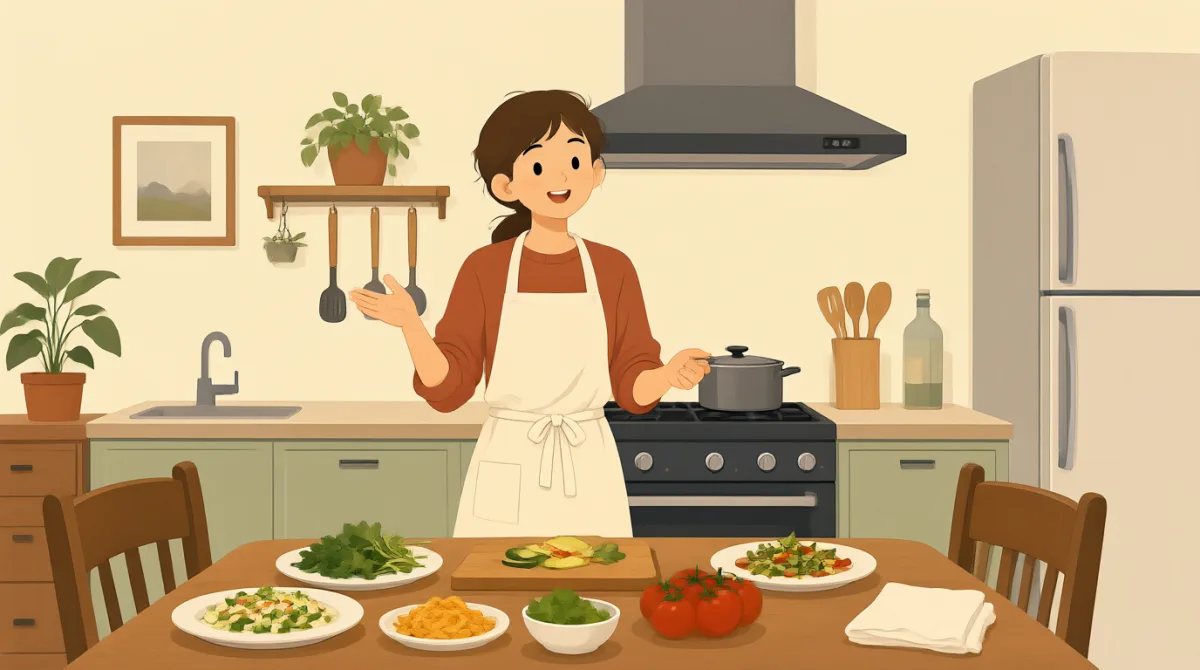

Hey Jack, I'm trying to make that simple pasta dish you mentioned. Can you walk me through the steps again?
嘿,傑克,我想做你提到的那個簡單意麵。你能再給我講講步驟嗎?

Sure, Emma! It's super easy. First, you need to boil a pot of salted water for the pasta. Make sure it's a rolling boil.
當然,艾瑪!這超級簡單。首先,你需要燒一鍋加鹽的水來煮意麵。確保水是劇烈沸騰的。
Okay, got it. Boiling water. Then what?
好的,明白了。燒水。然後呢?
Next, while the water is heating up, you can start on the sauce. Sauté some minced garlic and chopped onions in olive oil until they're fragrant and translucent.
接下來,在水加熱的時候,你可以開始做醬料。用橄欖油炒一些蒜末和洋蔥丁,直到它們散發出香味並變得半透明。
Sauté garlic and onions... got it. And for the pasta itself?
炒蒜和洋蔥……明白了。意麵本身呢?
Once the water is boiling, add your pasta and cook it according to the package directions, usually 8-10 minutes, until it's al dente. After that, drain the pasta, but save a little bit of the pasta water.
水開後,加入意麵,按照包裝說明煮8-10分鐘,直到意麵煮至彈牙。之後,瀝乾意麵,但要留一小部分煮意麵的水。
Save the pasta water, really? Why?
真的要留意麵水嗎?為什麼?
Yes, it helps to thicken the sauce! Finally, combine the drained pasta with your sautéed garlic and onions, add your favorite tomato sauce, and if it's too thick, stir in a splash of that reserved pasta water. Simmer everything together for a few minutes and you're good to go!
是的,它有助於使醬汁變稠!最後,將瀝乾的意麵與你炒好的蒜和洋蔥混合,加入你喜歡的番茄醬,如果太濃稠,就加入一小部分預留的意麵水。將所有東西一起燉煮幾分鐘,就可以吃了!
詞彙8
- boil煮沸
To boil means to heat a liquid until it reaches its boiling point and bubbles vigorously. In cooking, it's used for pasta or vegetables, like 'boil water for pasta' to prepare it quickly.
“boil”指加熱液體,直到它達到沸點並劇烈冒泡。烹飪時,這個詞常用於煮意麵或蔬菜,比如“boil water for pasta”(燒水煮意麵),讓食材快速煮熟。
- rolling boil大火沸騰
A rolling boil is a strong, continuous boil where bubbles keep coming up rapidly without stopping. It's important for cooking pasta evenly so it doesn't stick.
“rolling boil”指液體持續劇烈沸騰,氣泡不斷快速冒出。煮意麵時保持這種沸騰狀態很重要,這樣意麵才能受熱均勻,也不容易粘在一起。
- sauté炒;煸炒
To sauté means to quickly cook food in a small amount of hot oil or fat over high heat, often stirring. It's common for garlic or onions to release flavors, like 'sauté vegetables' before adding sauce.
“sauté”指用少量熱油或油脂,在大火上快速烹炒食材,通常還要不斷翻動。常用來炒蒜或洋蔥以釋放香味,比如“sauté vegetables”(炒蔬菜),然後再加入醬料。
- fragrant香氣撲鼻的
Fragrant describes a pleasant, strong smell, especially from food. In cooking, it means the ingredients are ready when they smell good, like 'the garlic is fragrant after sautéing'.
“fragrant”形容氣味宜人而濃郁,尤其常用來描述食物。烹飪時,它表示食材聞起來很香,通常說明已經炒好了,比如“the garlic is fragrant after sautéing”(蒜炒好後香氣撲鼻)。
- translucent半透明的
Translucent means allowing light to pass through but not completely clear, like semi-see-through. For onions, it means they're cooked until soft and slightly clear, not raw.
“translucent”指光線可以透過,但看不太清楚,也就是半透明。用來描述洋蔥時,表示洋蔥已經煮軟,略微透明,不再是生的。
- al dente彈牙的;有嚼勁的
Al dente is an Italian term meaning 'to the tooth' – pasta that's cooked firm but not hard, with a slight bite. It's the ideal texture for pasta, usually after 8-10 minutes of boiling.
“al dente”是義大利語,意思是“有嚼勁”——形容意麵煮熟了,但仍然略硬、有彈性。意麵理想的口感通常就是這樣,一般需要沸煮8到10分鐘。
- drain瀝乾
To drain means to remove liquid from food, like pouring pasta water out through a colander. In recipes, it's key after boiling to avoid soggy dishes.
“drain”指把食物中的液體倒掉,比如用濾網瀝掉意麵水。食譜中,食材煮好後通常需要瀝乾,以免成品水分過多、口感軟爛。
- simmer小火慢燉
To simmer means to cook food gently in liquid just below boiling, with small bubbles. It's used to blend flavors without boiling away, like 'simmer the sauce for a few minutes'.
“simmer”指讓食物在液體中以接近沸騰但未沸騰的狀態慢慢煮,液麵會有小氣泡。這樣能讓味道融合,又不會把液體煮幹,比如“simmer the sauce for a few minutes”(把醬汁小火燉幾分鐘)。
關鍵句7
- 1
First, you need to boil a pot of salted water for the pasta. Make sure it's a rolling boil.
首先,你要燒一鍋加了鹽的水來煮意麵。確保水一直劇烈沸騰。
This sentence uses 'first' to start a sequence of steps, common in recipes. 'Boil' is a cooking verb, and 'make sure' adds a tip for success. Useful for giving instructions clearly, like in cooking or DIY guides.
這句話用“first”來開始一連串步驟,食譜裡經常這樣寫。“boil”是烹飪動詞,而“make sure”則用來提醒對方注意,幫助事情順利完成。無論是講烹飪步驟還是DIY指南,這種說法都能讓指示更清楚。
- 2
Next, while the water is heating up, you can start on the sauce.
接下來,趁水加熱的時候,你可以開始做醬汁。
Here, 'next' shows the following step, and 'while' connects actions happening at the same time for efficiency. It's practical for multi-tasking in recipes, teaching how to use time clauses in instructions.
這裡用“next”表示接下來的步驟,用“while”連線同時進行的動作,讓做菜更有效率。食譜中經常需要一邊做一件事、一邊準備另一件事;這個句型也能教你如何在指示中使用時間從句。
- 3
Sauté some minced garlic and chopped onions in olive oil until they're fragrant and translucent.
用橄欖油炒一些蒜末和切碎的洋蔥,直到它們香氣撲鼻、變得半透明。
This demonstrates a precise cooking action with 'sauté' and 'until' for timing. 'Minced' and 'chopped' describe preparation. Great for intermediate learners to practice imperative sentences in recipes.
這句話用“sauté”準確描述烹飪動作,並用“until”說明要做到什麼程度。“Minced”和“chopped”描述食材的處理方式。對於中級學習者來說,這也是練習食譜祈使句的好例子。
- 4
Once the water is boiling, add your pasta and cook it according to the package directions, usually 8-10 minutes, until it's al dente.
水開後,加入意麵,按照包裝說明煮,通常需要8到10分鐘,直到意麵煮得有嚼勁。
'Once' introduces a condition for the next action, with 'until' for duration. 'According to' means following instructions. This pattern is useful for step-by-step processes, including time and texture descriptions.
“Once”引出下一步的條件,“until”則說明動作要持續到什麼時候。“According to”表示按照某種說明或指示。這個句型適用於描述一步一步的流程,也能用來說明時間和食物的口感。
- 5
After that, drain the pasta, but save a little bit of the pasta water.
之後,瀝乾意麵,但留一點意麵水。
'After that' transitions to the next step, and 'but' contrasts actions (drain but save). It's helpful for explaining reasons in sequences, common in cooking to avoid waste.
“After that”用來過渡到下一個步驟,“but”則表示兩件事之間的對比:瀝乾意麵,但要留下一些煮麵水。這種說法有助於按順序說明操作和注意事項;烹飪時這樣做還能避免浪費。
- 6
Finally, combine the drained pasta with your sautéed garlic and onions, add your favorite tomato sauce, and if it's too thick, stir in a splash of that reserved pasta water.
最後,把瀝乾的意麵和炒好的蒜、洋蔥混合,加入你喜歡的番茄醬;如果醬汁太稠,就加一點預留的意麵水並攪勻。
'Finally' ends the sequence, using imperatives like 'combine', 'add', and 'stir'. The conditional 'if it's too thick' adds flexibility. Ideal for wrapping up instructions and troubleshooting in recipes.
“Finally”用來結束一連串步驟,句中還用了“combine”、“add”和“stir”等祈使動詞。“If it's too thick”這個條件句則讓做法更靈活。這種表達很適合用來收尾說明,也能提供食譜中常見的調整建議。
- 7
Simmer everything together for a few minutes and you're good to go!
把所有東西一起小火燉幾分鐘,就可以開吃啦!
'Simmer' is a key verb, and 'you're good to go' is an idiomatic expression meaning 'it's ready to use or eat'. This casual ending makes instructions friendly, useful in everyday conversations about food.
“Simmer”是一個重要的烹飪動詞;“you're good to go”是習語,意思是“已經準備好了,可以開始用了或吃了”。這樣輕鬆隨意的結尾讓說明聽起來更親切,適合日常聊美食時使用。