Describing the Cooking Process (Step-by-Step)
खाना बनाने की प्रक्रिया बताना (चरण-दर-चरण)
The speaker explains the core cooking process, detailing each step sequentially. This involves using transition words (first, then, next, after that, finally) and precise cooking verbs like 'sauté,' 'boil,' 'simmer,' 'fry,' and 'stir.'
वक्ता खाना बनाने की मुख्य प्रक्रिया समझाता है और हर चरण को क्रम से बताता है। इसमें क्रम बताने वाले शब्दों (first, then, next, after that, finally) और खाना पकाने की सटीक क्रियाओं, जैसे 'sauté,' 'boil,' 'simmer,' 'fry,' और 'stir,' का इस्तेमाल शामिल है।
संवाद8
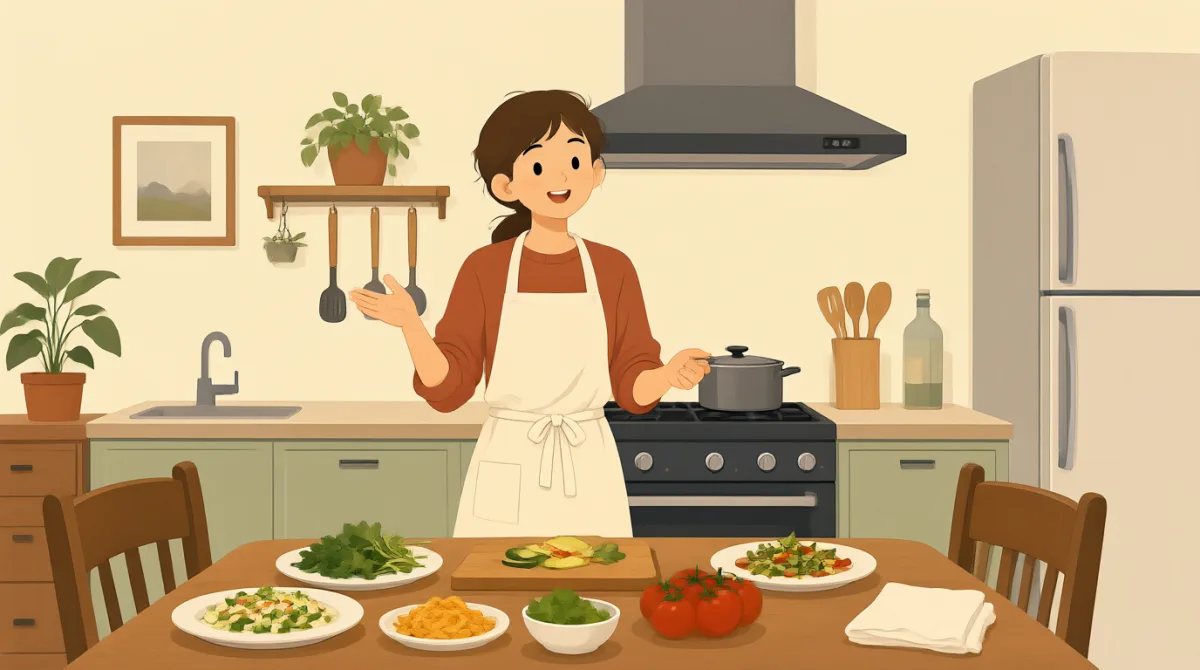

Hey Jack, I'm trying to make that simple pasta dish you mentioned. Can you walk me through the steps again?
अरे जैक, मैं तुम्हारी बताई हुई पास्ता की आसान-सी डिश बनाने की कोशिश कर रही हूँ। क्या तुम मुझे एक बार फिर से सारे चरण बता सकते हो?

Sure, Emma! It's super easy. First, you need to boil a pot of salted water for the pasta. Make sure it's a rolling boil.
ज़रूर, एमा! ये बहुत आसान है। सबसे पहले, पास्ता के लिए नमक मिले पानी का एक बर्तन उबालो। ध्यान रखना कि पानी में तेज़ उबाल आ रहा हो।
Okay, got it. Boiling water. Then what?
ठीक है, समझ गई। पानी उबालना है। फिर क्या?
Next, while the water is heating up, you can start on the sauce. Sauté some minced garlic and chopped onions in olive oil until they're fragrant and translucent.
इसके बाद, पानी गरम हो रहा हो तब तुम सॉस बनाना शुरू कर सकती हो। जैतून के तेल में थोड़ा कुटा हुआ लहसुन और कटा हुआ प्याज़ तब तक भूनो, जब तक उनमें से अच्छी खुशबू आने लगे और प्याज़ पारदर्शी-सा हो जाए।
Sauté garlic and onions... got it. And for the pasta itself?
लहसुन और प्याज़ भूनने हैं... समझ गई। और पास्ता के लिए?
Once the water is boiling, add your pasta and cook it according to the package directions, usually 8-10 minutes, until it's al dente. After that, drain the pasta, but save a little bit of the pasta water.
पानी उबलने लगे तो उसमें पास्ता डालो और पैकेट पर दिए निर्देशों के अनुसार पकाओ। आम तौर पर इसमें 8-10 मिनट लगते हैं। पास्ता ऐसा पकना चाहिए कि उसमें हल्का-सा कड़ापन रहे। इसके बाद, पास्ता का पानी छान दो, लेकिन थोड़ा-सा पानी बचाकर रख लेना।
Save the pasta water, really? Why?
पास्ता का पानी बचाकर रखूँ, सच में? क्यों?
Yes, it helps to thicken the sauce! Finally, combine the drained pasta with your sautéed garlic and onions, add your favorite tomato sauce, and if it's too thick, stir in a splash of that reserved pasta water. Simmer everything together for a few minutes and you're good to go!
हाँ, इससे सॉस गाढ़ा करने में मदद मिलती है! आखिर में, छाने हुए पास्ते को भुने हुए लहसुन और प्याज़ के साथ मिलाओ, अपनी पसंद की टमाटर सॉस डालो, और अगर सॉस बहुत गाढ़ी हो तो बचाकर रखे हुए पास्ता के पानी की थोड़ी-सी मात्रा मिलाते हुए चलाओ। सब कुछ कुछ मिनट तक धीमी आँच पर पकाओ और बस, तैयार है!
शब्दावली8
- boilउबालना
To boil means to heat a liquid until it reaches its boiling point and bubbles vigorously. In cooking, it's used for pasta or vegetables, like 'boil water for pasta' to prepare it quickly.
'Boil' का मतलब है किसी तरल को उसके उबलने के बिंदु तक गरम करना, ताकि उसमें तेज़ी से बुलबुले उठें। खाना पकाते समय इसका इस्तेमाल पास्ता या सब्ज़ियाँ पकाने के लिए होता है। जैसे, 'boil water for pasta' यानी पास्ता के लिए पानी उबालना।
- rolling boilतेज़ और लगातार उबाल
A rolling boil is a strong, continuous boil where bubbles keep coming up rapidly without stopping. It's important for cooking pasta evenly so it doesn't stick.
'Rolling boil' ऐसा तेज़ और लगातार उबाल होता है जिसमें बुलबुले बिना रुके तेज़ी से ऊपर आते रहते हैं। पास्ता को बराबर पकाने और चिपकने से बचाने के लिए ऐसा उबाल ज़रूरी होता है।
- sautéतेल में तेज़ आँच पर जल्दी भूनना
To sauté means to quickly cook food in a small amount of hot oil or fat over high heat, often stirring. It's common for garlic or onions to release flavors, like 'sauté vegetables' before adding sauce.
'Sauté' का मतलब है थोड़े-से गरम तेल या चिकनाई में तेज़ आँच पर खाना जल्दी पकाना, और अक्सर उसे चलाते रहना। लहसुन या प्याज़ का स्वाद उभारने के लिए यह आम तरीका है। जैसे, सॉस डालने से पहले 'sauté vegetables' यानी सब्ज़ियाँ भूनना।
- fragrantखुशबूदार
Fragrant describes a pleasant, strong smell, especially from food. In cooking, it means the ingredients are ready when they smell good, like 'the garlic is fragrant after sautéing'.
'Fragrant' ऐसी सुखद और तेज़ खुशबू का वर्णन करता है, खासकर खाने की। खाना पकाते समय इसका मतलब है कि सामग्री से अच्छी खुशबू आने लगे तो वह तैयार है। जैसे, भूनने के बाद लहसुन 'the garlic is fragrant after sautéing' यानी अच्छी खुशबू देने लगता है।
- translucentपारदर्शी-सा
Translucent means allowing light to pass through but not completely clear, like semi-see-through. For onions, it means they're cooked until soft and slightly clear, not raw.
'Translucent' का मतलब है जिससे रोशनी तो आर-पार जा सके, लेकिन जो पूरी तरह साफ़ न दिखे—यानी कुछ-कुछ पारदर्शी। प्याज़ के लिए इसका मतलब है कि वह पककर नरम और थोड़ा पारदर्शी हो गया है, कच्चा नहीं रहा।
- al denteहल्का कड़ा, दाँत से काटने पर थोड़ा सख़्त
Al dente is an Italian term meaning 'to the tooth' – pasta that's cooked firm but not hard, with a slight bite. It's the ideal texture for pasta, usually after 8-10 minutes of boiling.
'Al dente' एक इतालवी शब्द है, जिसका मतलब है 'दाँत तक'—ऐसा पास्ता जो पक तो गया हो, लेकिन बहुत नरम न हो और काटने पर हल्का सख़्त लगे। पास्ते के लिए यह आदर्श बनावट है, जो आम तौर पर 8-10 मिनट उबालने पर आती है।
- drainछानना
To drain means to remove liquid from food, like pouring pasta water out through a colander. In recipes, it's key after boiling to avoid soggy dishes.
'Drain' का मतलब है खाने की चीज़ से तरल निकालना, जैसे पास्ते का पानी छलनी से छानकर निकालना। व्यंजनों में उबालने के बाद यह ज़रूरी होता है, ताकि खाना बहुत गीला न हो जाए।
- simmerधीमी आँच पर हल्का उबालना
To simmer means to cook food gently in liquid just below boiling, with small bubbles. It's used to blend flavors without boiling away, like 'simmer the sauce for a few minutes'.
'Simmer' का मतलब है खाने को तरल में उबाल से थोड़े कम तापमान पर, छोटे बुलबुलों के साथ धीरे-धीरे पकाना। इससे स्वाद अच्छी तरह मिलते हैं और तरल जल्दी सूखता नहीं। जैसे, 'simmer the sauce for a few minutes' यानी सॉस को कुछ मिनट धीमी आँच पर पकाना।
मुख्य वाक्य7
- 1
First, you need to boil a pot of salted water for the pasta. Make sure it's a rolling boil.
सबसे पहले, पास्ता के लिए नमक मिले पानी का एक बर्तन उबालो। ध्यान रखना कि पानी में तेज़ उबाल आ रहा हो।
This sentence uses 'first' to start a sequence of steps, common in recipes. 'Boil' is a cooking verb, and 'make sure' adds a tip for success. Useful for giving instructions clearly, like in cooking or DIY guides.
इस वाक्य में चरणों का क्रम शुरू करने के लिए 'first' का इस्तेमाल हुआ है, जो पाक-विधियों में आम है। 'Boil' खाना पकाने की क्रिया है, और 'make sure' सफलता के लिए एक सुझाव देता है। खाना बनाने या घर पर कुछ करने के निर्देश साफ़-साफ़ देने के लिए यह उपयोगी है।
- 2
Next, while the water is heating up, you can start on the sauce.
इसके बाद, पानी गरम हो रहा हो तब तुम सॉस बनाना शुरू कर सकती हो।
Here, 'next' shows the following step, and 'while' connects actions happening at the same time for efficiency. It's practical for multi-tasking in recipes, teaching how to use time clauses in instructions.
यहाँ 'next' अगले चरण को दिखाता है, और 'while' एक ही समय पर हो रहे दो कामों को जोड़ता है, जिससे समय का अच्छा इस्तेमाल होता है। कई काम साथ-साथ करने वाली पाक-विधियों में यह काम आता है और निर्देशों में समय बताने वाले वाक्यांश सिखाता है।
- 3
Sauté some minced garlic and chopped onions in olive oil until they're fragrant and translucent.
जैतून के तेल में थोड़ा कुटा हुआ लहसुन और कटा हुआ प्याज़ तब तक भूनो, जब तक उनमें से अच्छी खुशबू आने लगे और प्याज़ पारदर्शी-सा हो जाए।
This demonstrates a precise cooking action with 'sauté' and 'until' for timing. 'Minced' and 'chopped' describe preparation. Great for intermediate learners to practice imperative sentences in recipes.
इस वाक्य में 'sauté' से खाना पकाने की एक सटीक क्रिया और 'until' से समय की सीमा बताई गई है। 'Minced' और 'chopped' सामग्री को तैयार करने का तरीका बताते हैं। बीच के स्तर के सीखने वालों के लिए पाक-विधियों में आदेश देने वाले वाक्यों का अभ्यास करने का यह अच्छा उदाहरण है।
- 4
Once the water is boiling, add your pasta and cook it according to the package directions, usually 8-10 minutes, until it's al dente.
पानी उबलने लगे तो उसमें पास्ता डालो और पैकेट पर दिए निर्देशों के अनुसार पकाओ। आम तौर पर इसमें 8-10 मिनट लगते हैं। पास्ता ऐसा पकना चाहिए कि उसमें हल्का-सा कड़ापन रहे।
'Once' introduces a condition for the next action, with 'until' for duration. 'According to' means following instructions. This pattern is useful for step-by-step processes, including time and texture descriptions.
'Once' अगली क्रिया के लिए एक शर्त बताता है, जबकि 'until' अवधि बताता है। 'According to' का मतलब है निर्देशों का पालन करते हुए। समय और बनावट का ज़िक्र करने वाले चरण-दर-चरण निर्देशों में यह ढाँचा काम आता है।
- 5
After that, drain the pasta, but save a little bit of the pasta water.
इसके बाद, पास्ता का पानी छान दो, लेकिन थोड़ा-सा पानी बचाकर रख लेना।
'After that' transitions to the next step, and 'but' contrasts actions (drain but save). It's helpful for explaining reasons in sequences, common in cooking to avoid waste.
'After that' अगले चरण पर ले जाता है, और 'but' दो कामों के बीच अंतर दिखाता है—पानी छानना, लेकिन थोड़ा बचा लेना। क्रम से काम समझाते हुए वजहें बताने में यह मददगार है। खाना बनाने में चीज़ें बर्बाद होने से बचाने के लिए यह आम है।
- 6
Finally, combine the drained pasta with your sautéed garlic and onions, add your favorite tomato sauce, and if it's too thick, stir in a splash of that reserved pasta water.
आखिर में, छाने हुए पास्ते को भुने हुए लहसुन और प्याज़ के साथ मिलाओ, अपनी पसंद की टमाटर सॉस डालो, और अगर सॉस बहुत गाढ़ी हो तो बचाकर रखे हुए पास्ता के पानी की थोड़ी-सी मात्रा मिलाते हुए चलाओ।
'Finally' ends the sequence, using imperatives like 'combine', 'add', and 'stir'. The conditional 'if it's too thick' adds flexibility. Ideal for wrapping up instructions and troubleshooting in recipes.
'Finally' क्रम के आख़िरी चरण को दिखाता है और 'combine', 'add', और 'stir' जैसी आदेश देने वाली क्रियाओं का इस्तेमाल करता है। 'If it's too thick' वाली शर्त निर्देशों में थोड़ा लचीलापन देती है। पाक-विधि के निर्देश पूरे करने और समस्या का हल बताने के लिए यह अच्छा तरीका है।
- 7
Simmer everything together for a few minutes and you're good to go!
सब कुछ कुछ मिनट तक धीमी आँच पर पकाओ और बस, तैयार है!
'Simmer' is a key verb, and 'you're good to go' is an idiomatic expression meaning 'it's ready to use or eat'. This casual ending makes instructions friendly, useful in everyday conversations about food.
'Simmer' खाना पकाने की एक ज़रूरी क्रिया है, और 'you're good to go' मुहावरे का मतलब है कि अब चीज़ खाने या इस्तेमाल करने के लिए तैयार है। यह सहज-सा अंत खाने के बारे में रोज़मर्रा की बातचीत में निर्देशों को दोस्ताना बनाता है।