Introducing the Dish and Ingredients
แนะนำเมนูและวัตถุดิบ
The speaker introduces the name of the simple dish they will explain and lists all the necessary ingredients, including quantities, to the listener. This involves using vocabulary for food items and measurements.
ผู้พูดบอกชื่อเมนูง่าย ๆ ที่จะอธิบาย พร้อมแจกแจงวัตถุดิบที่ต้องใช้และปริมาณให้ผู้ฟัง โดยใช้คำศัพท์เกี่ยวกับอาหารและหน่วยตวง
บทสนทนา8
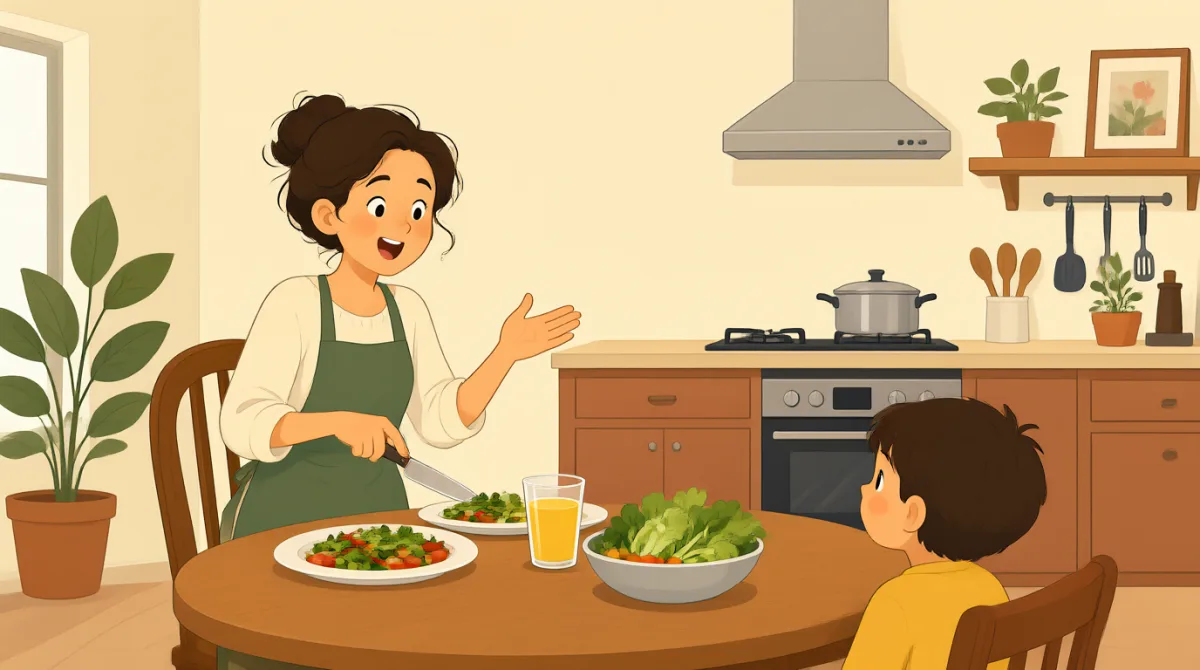

Hi David! I was thinking of making that simple tomato pasta dish you mentioned. Can you remind me what it's called and what I need for it?
หวัดดีเดวิด! ฉันกำลังคิดว่าจะทำพาสต้ามะเขือเทศง่าย ๆ ที่เธอเคยพูดถึง ช่วยเตือนหน่อยได้ไหมว่าเมนูนี้เรียกว่าอะไร แล้วต้องใช้อะไรบ้าง

Of course, Emma! It's just a basic 'Quick Tomato Pasta.' Super easy. For the ingredients, you'll need one box of your favorite pasta, about 400 grams usually.
ได้เลย เอ็มมา! ก็แค่ “พาสต้ามะเขือเทศฉบับง่าย ๆ” ทำง่ายสุด ๆ ส่วนวัตถุดิบก็ใช้พาสต้ากล่องที่ชอบหนึ่งกล่อง ปกติก็ประมาณ 400 กรัม
Okay, one box of pasta. Got it. What else?
โอเค พาสต้าหนึ่งกล่อง เข้าใจแล้ว แล้วต้องใช้อะไรอีก
Then you'll need one can of crushed tomatoes, around 700 to 800 grams. And for aromatics, two cloves of garlic, minced, and half a medium onion, finely chopped.
ต่อมาก็ต้องใช้มะเขือเทศบดกระป๋องหนึ่งกระป๋อง ประมาณ 700 ถึง 800 กรัม แล้วก็เครื่องหอมอีกหน่อย กระเทียมสับละเอียดสองกลีบ กับหัวหอมขนาดกลางครึ่งหัว หั่นละเอียด
Crushed tomatoes, minced garlic, and chopped onion. Check. Do I need any herbs or spices?
มะเขือเทศบด กระเทียมสับละเอียด แล้วก็หอมหั่นละเอียด โอเค ต้องใส่สมุนไพรหรือเครื่องเทศอะไรไหม
Yes, absolutely! A teaspoon of dried oregano, half a teaspoon of dried basil, and then a quarter cup of fresh parsley, chopped, for garnish at the end. Don't forget salt and pepper to taste, and about two tablespoons of olive oil.
ต้องใส่สิ! ออริกาโนแห้งหนึ่งช้อนชา โหระพาแห้งครึ่งช้อนชา แล้วก็พาร์สลีย์สดสับหนึ่งในสี่ถ้วย ไว้โรยหน้าเป็นขั้นตอนสุดท้าย อย่าลืมเติมเกลือกับพริกไทยตามชอบ แล้วก็น้ำมันมะกอกประมาณสองช้อนโต๊ะด้วยนะ
Oregano, basil, fresh parsley, salt, pepper, and olive oil. Wow, that's more than I thought, but it still sounds manageable.
ออริกาโน โหระพา พาร์สลีย์สด เกลือ พริกไทย แล้วก็น้ำมันมะกอก ว้าว มีเยอะกว่าที่คิดนะ แต่ก็ดูทำไม่ยากอยู่ดี
It is! And the best part is, most of these are pantry staples. That's all you need for the ingredients. Ready for the steps?
ใช่เลย! ที่ดีที่สุดคือส่วนใหญ่เป็นของพื้นฐานที่มีติดครัวอยู่แล้ว แค่นี้ก็ครบวัตถุดิบที่ต้องใช้ พร้อมดูขั้นตอนต่อหรือยัง
คำศัพท์8
- pastaพาสต้า
Pasta is a type of Italian food made from dough, like spaghetti or penne, often boiled and served with sauce. It's a staple in quick meals.
พาสต้าเป็นอาหารอิตาเลียนที่ทำจากแป้งโด เช่น สปาเกตตีหรือเพนเน ในนำไปต้มและมักเสิร์ฟกับซอส เป็นวัตถุดิบพื้นฐานสำหรับมื้ออาหารที่ทำได้รวดเร็ว
- crushed tomatoesมะเขือเทศบด
Crushed tomatoes are canned tomatoes that have been broken into small pieces, used as a base for sauces in dishes like pasta.
มะเขือเทศบดคือมะเขือเทศกระป๋องที่บดให้เป็นชิ้นเล็ก ๆ นิยมใช้เป็นซอสพื้นฐานในอาหารอย่างพาสต้า
- mincedสับละเอียด
Minced means chopped into very small pieces, often used for garlic or herbs to release flavor evenly in cooking.
สับละเอียดหมายถึงหั่นหรือสับให้เป็นชิ้นเล็กมาก มักใช้กับกระเทียมหรือสมุนไพรเพื่อให้รสชาติออกมาทั่วถึงเวลาปรุงอาหาร
- finely choppedหั่นละเอียด
Finely chopped means cut into tiny, even pieces, like for onions, to make them cook quickly and blend into sauces.
หั่นละเอียดหมายถึงหั่นเป็นชิ้นเล็ก ๆ ขนาดใกล้เคียงกัน เช่น หอมหัวใหญ่ เพื่อให้สุกเร็วและเข้ากับซอสได้ดี
- oreganoออริกาโน
Oregano is a dried herb with a strong, earthy flavor, commonly used in Italian and Mediterranean recipes like pasta sauces.
ออริกาโนเป็นสมุนไพรแห้งที่มีกลิ่นรสเข้มและออกแนวดิน นิยมใช้ในอาหารอิตาเลียนและอาหารเมดิเตอร์เรเนียน เช่น ซอสพาสต้า
- basilโหระพา
Basil is an herb with a sweet, fresh aroma, used dried or fresh in Italian dishes; dried basil adds flavor to tomato-based sauces.
โหระพาเป็นสมุนไพรที่มีกลิ่นหอมหวานสดชื่น ใช้ได้ทั้งแบบสดและแบบแห้งในอาหารอิตาเลียน โดยโหระพาแห้งช่วยเพิ่มรสชาติให้ซอสมะเขือเทศ
- garnishเครื่องตกแต่งหน้าอาหาร
A garnish is a small amount of food, like chopped parsley, added at the end to decorate and improve the taste of a dish.
เครื่องตกแต่งหน้าอาหารคืออาหารปริมาณเล็กน้อย เช่น พาร์สลีย์สับ ที่ใส่ตอนท้ายเพื่อให้จานอาหารดูน่ากินและมีรสชาติดีขึ้น
- pantry staplesของพื้นฐานที่มีติดครัว
Pantry staples are basic ingredients like salt, oil, or herbs that you always keep in your kitchen cupboard for everyday cooking.
ของพื้นฐานที่มีติดครัวคือวัตถุดิบทั่วไป เช่น เกลือ น้ำมัน หรือสมุนไพร ที่มักเก็บไว้ในตู้ครัวสำหรับทำอาหารในชีวิตประจำวัน
ประโยคสำคัญ7
- 1
For the ingredients, you'll need one box of your favorite pasta, about 400 grams usually.
ส่วนวัตถุดิบก็ใช้พาสต้ากล่องที่ชอบหนึ่งกล่อง ปกติก็ประมาณ 400 กรัม
This sentence introduces ingredients with 'for the ingredients, you'll need' to list items clearly. It's useful for recipes; 'about' shows approximate quantities, common in casual cooking instructions.
ประโยคนี้ใช้ 'for the ingredients, you'll need' (สำหรับวัตถุดิบ คุณจะต้องใช้...) เพื่อเริ่มแจกแจงรายการวัตถุดิบได้อย่างชัดเจน เหมาะกับการบอกสูตรอาหาร ส่วน 'about' (ประมาณ) ใช้บอกปริมาณคร่าว ๆ ซึ่งพบได้บ่อยในคำแนะนำการทำอาหารแบบกันเอง
- 2
Then you'll need one can of crushed tomatoes, around 700 to 800 grams.
ต่อมาก็ต้องใช้มะเขือเทศบดกระป๋องหนึ่งกระป๋อง ประมาณ 700 ถึง 800 กรัม
Using 'then' connects items in a sequence, helping to build a list step by step. This pattern is great for explaining shopping lists or recipe parts; 'around' indicates a range for flexibility.
'then' (ต่อมา) ใช้เชื่อมรายการตามลำดับ ช่วยแจกแจงสิ่งต่าง ๆ ทีละข้อ รูปแบบนี้เหมาะกับการอธิบายรายการซื้อของหรือส่วนผสมในสูตรอาหาร ส่วน 'around' (ประมาณ) ใช้บอกช่วงปริมาณที่ยืดหยุ่นได้
- 3
What else?
แล้วต้องใช้อะไรอีก
This short question prompts more information in a conversation. It's practical for interviews or discussions, like asking for additional details in a recipe or instructions.
คำถามสั้น ๆ นี้ช่วยชวนให้อีกฝ่ายให้ข้อมูลเพิ่มเติม ใช้ได้จริงในการสัมภาษณ์หรือการพูดคุย เช่น ถามรายละเอียดเพิ่มเติมเกี่ยวกับสูตรอาหารหรือวิธีทำ
- 4
Do I need any herbs or spices?
ต้องใส่สมุนไพรหรือเครื่องเทศอะไรไหม
This uses 'do I need' to ask about requirements, with 'any' for unspecified items. It's useful in shopping or cooking contexts to clarify if extras like seasonings are necessary.
'do I need' ใช้ถามว่าจำเป็นต้องใช้อะไรหรือไม่ และ 'any' ใช้กับสิ่งที่ยังไม่ได้ระบุชัดเจน เหมาะสำหรับถามเวลาซื้อของหรือทำอาหาร เพื่อให้แน่ใจว่าต้องใช้เครื่องปรุงเพิ่มเติมหรือเปล่า
- 5
A teaspoon of dried oregano, half a teaspoon of dried basil, and then a quarter cup of fresh parsley, chopped, for garnish at the end.
ออริกาโนแห้งหนึ่งช้อนชา โหระพาแห้งครึ่งช้อนชา แล้วก็พาร์สลีย์สดสับหนึ่งในสี่ถ้วย ไว้โรยหน้าเป็นขั้นตอนสุดท้าย
This lists measurements precisely with units like 'teaspoon' and 'cup,' using 'and then' for addition. It's key for recipe accuracy; explains purpose ('for garnish') to show when to use items.
ประโยคนี้ระบุปริมาณอย่างแม่นยำด้วยหน่วยอย่าง 'teaspoon' และ 'cup' และใช้ 'and then' เพื่อเพิ่มรายการ เหมาะกับการบอกสูตรให้ทำตามได้ถูกต้อง ส่วน 'for garnish' บอกจุดประสงค์ของวัตถุดิบและเวลาที่ควรใช้
- 6
Don't forget salt and pepper to taste, and about two tablespoons of olive oil.
อย่าลืมเติมเกลือกับพริกไทยตามชอบ แล้วก็น้ำมันมะกอกประมาณสองช้อนโต๊ะด้วยนะ
'Don't forget' reminds someone of essentials, and 'to taste' means add until it tastes right, common in cooking for personalization. Useful for giving complete recipe advice.
'Don't forget' ใช้เตือนให้อีกฝ่ายไม่ลืมสิ่งสำคัญ ส่วน 'to taste' หมายถึงเติมจนได้รสชาติที่ถูกใจ ซึ่งเป็นสำนวนที่ใช้บ่อยในการทำอาหารเพื่อให้ปรับรสได้ตามชอบ เหมาะสำหรับให้คำแนะนำสูตรอาหารอย่างครบถ้วน
- 7
That's all you need for the ingredients. Ready for the steps?
แค่นี้ก็ครบวัตถุดิบที่ต้องใช้ พร้อมดูขั้นตอนต่อหรือยัง
This concludes a list with 'that's all' and transitions with a question. It's helpful for structuring explanations, like moving from ingredients to instructions in a tutorial or guide.
ประโยคนี้ใช้ 'that's all' เพื่อสรุปรายการ และถามคำถามเพื่อเชื่อมไปยังหัวข้อถัดไป ช่วยจัดลำดับการอธิบายได้ดี เช่น เปลี่ยนจากการบอกวัตถุดิบไปเป็นขั้นตอนการทำในบทเรียนหรือคู่มือ