Explaining Serving and Garnish
การจัดเสิร์ฟและตกแต่งอาหาร
The speaker describes how to properly serve the dish, including any final touches or garnishes. This touches upon presentation and finishing touches.
ผู้พูดอธิบายวิธีจัดเสิร์ฟอาหารให้เหมาะสม รวมถึงการเก็บรายละเอียดและการตกแต่งจาน เน้นการจัดหน้าตาอาหารและการเติมสัมผัสสุดท้าย
บทสนทนา6
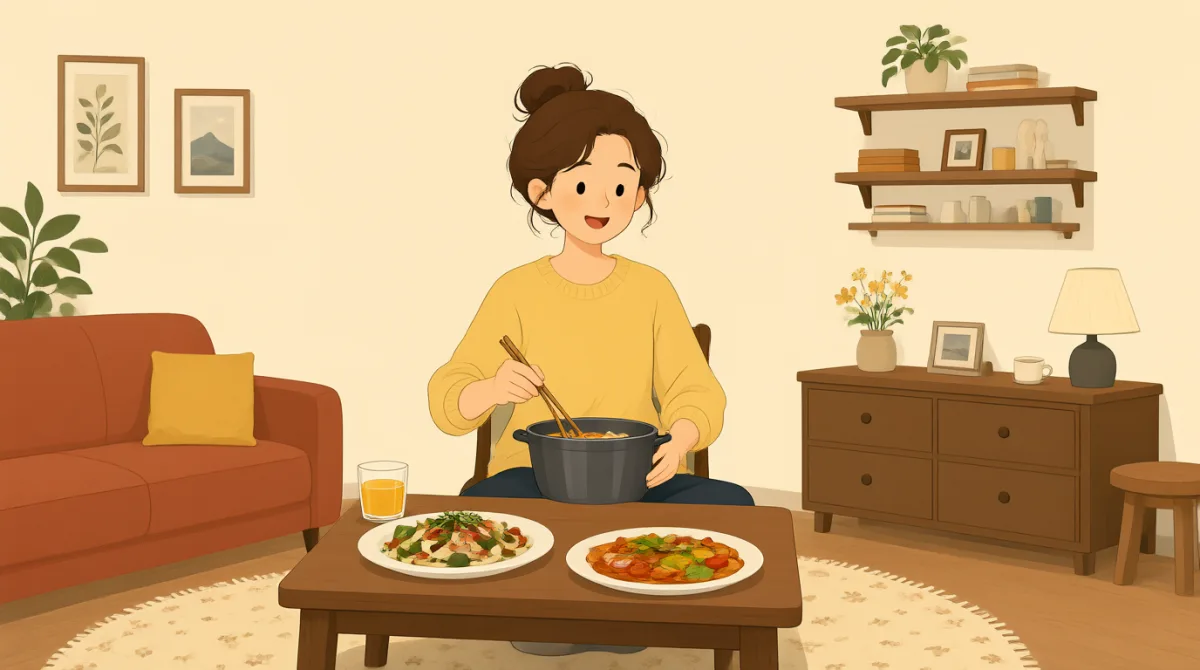

Okay, so once it's cooked, how do I actually serve it? Does it just go straight onto a plate?
โอเค พอสุกแล้วต้องเสิร์ฟยังไงนะ ตักใส่จานได้เลยหรือเปล่า

Good question! Before you serve, let it rest for a couple of minutes off the heat. That helps the flavors really meld. Then, yes, you can spoon it directly onto your plates.
ถามดีนี่! ก่อนเสิร์ฟ พักอาหารไว้สักสองสามนาทีนอกเตาก่อนนะ จะช่วยให้รสชาติเข้ากันดีขึ้น แล้วก็ใช่ ตักใส่จานได้เลย
Resting, got it. And what about garnishes? Do I need anything special for that?
พักไว้ เข้าใจแล้ว แล้วเรื่องตกแต่งล่ะ ต้องใช้อะไรเป็นพิเศษไหม
Absolutely! For a nice touch, a sprinkle of freshly chopped parsley or cilantro works wonders. It adds a pop of color and freshness. Or, if you have some lemon wedges, a squeeze of lemon juice at the end brightens everything up.
แน่นอน! ถ้าอยากเพิ่มความน่ากิน โรยพาร์สลีย์หรือผักชีที่สับสดใหม่สักหน่อยก็ช่วยได้มากเลย สีสันจะสดใสขึ้น แถมดูสดใหม่ด้วย หรือถ้ามีเลมอนหั่นเสี้ยว บีบน้ำเลมอนลงไปตอนท้ายก็ช่วยชูรสทุกอย่างได้ดี
Oh, parsley or cilantro, that makes sense. I have some fresh parsley. So, plate it, then sprinkle the parsley?
อ๋อ พาร์สลีย์หรือผักชี ฟังดูเข้าท่าดี เรามีพาร์สลีย์สดอยู่ งั้นตักใส่จานแล้วโรยพาร์สลีย์ใช่ไหม
Exactly. Arrange it nicely on the plate, then finish with the parsley right before serving. It'll make it look professional, and truly enhance the dining experience.
ใช่เลย จัดวางลงบนจานให้สวย แล้วค่อยโรยพาร์สลีย์ปิดท้ายก่อนเสิร์ฟพอดี จานจะดูเหมือนมืออาชีพทำ แถมทำให้มื้ออาหารน่าประทับใจขึ้นจริง ๆ
คำศัพท์8
- restพัก (อาหาร)
In cooking, to 'rest' means to let food sit for a short time after cooking so the juices settle and flavors improve. For example, 'Let the meat rest for 5 minutes.'
ในบริบทการทำอาหาร 'rest' หมายถึงการพักอาหารไว้สักครู่หลังปรุงเสร็จ เพื่อให้น้ำในอาหารกระจายตัวและรสชาติดีขึ้น เช่น 'Let the meat rest for 5 minutes.' (พักเนื้อไว้ 5 นาที)
- meldผสมกลมกลืน
To 'meld' means for flavors to blend or mix together nicely. It's often used in recipes: 'Allow the ingredients to meld for better taste.'
'Meld' หมายถึงรสชาติต่าง ๆ ผสมเข้ากันได้อย่างลงตัว มักใช้ในสูตรอาหาร เช่น 'Allow the ingredients to meld for better taste.' (ปล่อยให้ส่วนผสมเข้ากันเพื่อให้รสชาติดีขึ้น)
- spoonตักด้วยช้อน
To 'spoon' something means to use a spoon to scoop and transfer food, like serving soup. Example: 'Spoon the sauce over the pasta.'
'Spoon' หมายถึงใช้ช้อนตักและย้ายอาหาร เช่น การตักซุปไปเสิร์ฟ ตัวอย่างเช่น 'Spoon the sauce over the pasta.' (ตักซอสราดลงบนพาสต้า)
- garnishของตกแต่งอาหาร
A 'garnish' is a decoration added to food to make it look better and add flavor, like herbs or lemon. You 'garnish' by placing it on top.
'Garnish' คือของตกแต่งอาหารที่ช่วยให้อาหารดูน่ากินและเพิ่มรสชาติ เช่น สมุนไพรหรือเลมอน เราตกแต่งอาหารโดยวางสิ่งนั้นไว้ด้านบน
- sprinkleโรย
To 'sprinkle' means to scatter small amounts of something lightly over food, like salt or herbs. Example: 'Sprinkle cheese on top.'
'Sprinkle' หมายถึงโปรยสิ่งของปริมาณเล็กน้อยลงบนอาหารเบา ๆ เช่น เกลือหรือสมุนไพร ตัวอย่างเช่น 'Sprinkle cheese on top.' (โรยชีสด้านบน)
- squeezeบีบ
To 'squeeze' means to press something to get liquid out, like squeezing a lemon for juice. In cooking: 'Squeeze lime over the fish.'
'Squeeze' หมายถึงบีบสิ่งของเพื่อให้ของเหลวออกมา เช่น บีบเลมอนเอาน้ำ ในการทำอาหารใช้ได้ในประโยค 'Squeeze lime over the fish.' (บีบมะนาวลงบนปลา)
- brightenชูรสให้สดชื่น
In food context, to 'brighten' means to make flavors more fresh and lively. Example: 'A bit of vinegar brightens the salad.'
เมื่อพูดถึงอาหาร 'brighten' หมายถึงทำให้รสชาติสดชื่นและมีชีวิตชีวามากขึ้น ตัวอย่างเช่น 'A bit of vinegar brightens the salad.' (น้ำส้มสายชูเล็กน้อยช่วยชูรสสลัดให้สดชื่นขึ้น)
- enhanceยกระดับ
To 'enhance' means to improve or make something better, like adding garnishes to make a dish more appealing. Example: 'Fresh herbs enhance the meal.'
'Enhance' หมายถึงปรับปรุงหรือทำให้สิ่งใดดีขึ้น เช่น เติมของตกแต่งเพื่อให้อาหารน่ากินยิ่งขึ้น ตัวอย่างเช่น 'Fresh herbs enhance the meal.' (สมุนไพรสดช่วยยกระดับมื้ออาหาร)
ประโยคสำคัญ8
- 1
Before you serve, let it rest for a couple of minutes off the heat.
ก่อนเสิร์ฟ พักอาหารไว้นอกเตาสักสองสามนาที
This sentence uses 'before' for sequence and shows a cooking tip. 'Let it rest' is a common imperative in recipes. Useful for explaining steps in food preparation to ensure better results.
ประโยคนี้ใช้ 'before' เพื่อบอกลำดับขั้นตอน และแนะนำเคล็ดลับการทำอาหาร ส่วน 'Let it rest' เป็นคำสั่งที่ใช้กันทั่วไปในสูตรอาหาร เหมาะสำหรับอธิบายขั้นตอนเตรียมอาหารเพื่อให้ได้ผลลัพธ์ที่ดีขึ้น
- 2
That helps the flavors really meld.
วิธีนี้ช่วยให้รสชาติเข้ากันดีขึ้นจริง ๆ
Here, 'helps' explains a benefit, and 'meld' describes flavors blending. 'Really' adds emphasis. This is useful for giving reasons in cooking instructions to sound natural.
ในที่นี้ 'helps' ใช้อธิบายประโยชน์ ส่วน 'meld' บรรยายการผสมกลมกลืนของรสชาติ และ 'really' ใช้เน้นความหมาย รูปแบบนี้มีประโยชน์เวลาบอกเหตุผลประกอบคำแนะนำในการทำอาหารให้ฟังเป็นธรรมชาติ
- 3
You can spoon it directly onto your plates.
ตักใส่จานได้เลย
'You can' suggests a simple option, and 'directly onto' shows straightforward action. This demonstrates permissive language in recipes, good for guiding friends casually.
'You can' ใช้เสนอทางเลือกง่าย ๆ ส่วน 'directly onto' บอกว่าทำได้โดยตรง ประโยคนี้แสดงวิธีใช้ภาษาที่บอกว่าสามารถทำได้ เหมาะสำหรับแนะนำขั้นตอนทำอาหารให้เพื่อนแบบสบาย ๆ
- 4
For a nice touch, a sprinkle of freshly chopped parsley or cilantro works wonders.
ถ้าอยากเพิ่มความน่ากิน โรยพาร์สลีย์หรือผักชีที่สับสดใหม่สักหน่อยก็ช่วยได้มากเลย
'For a nice touch' introduces a suggestion, and 'works wonders' means it greatly improves. 'Or' connects alternatives. Useful for recommending garnishes to enhance presentation.
'For a nice touch' ใช้เกริ่นข้อเสนอแนะ ส่วน 'works wonders' หมายถึงช่วยได้มาก และ 'or' ใช้เชื่อมตัวเลือกต่าง ๆ รูปแบบนี้มีประโยชน์เมื่อต้องแนะนำของตกแต่งเพื่อให้อาหารดูดีขึ้น
- 5
It adds a pop of color and freshness.
ช่วยเพิ่มสีสันและความสดใหม่ให้อาหาร
'Adds a pop of' is an idiomatic expression for adding a bright, noticeable element. This sentence explains benefits of garnishes, helpful for describing visual and taste improvements.
'Adds a pop of' เป็นสำนวนที่หมายถึงเพิ่มองค์ประกอบที่โดดเด่นและสะดุดตา ประโยคนี้อธิบายประโยชน์ของของตกแต่งอาหาร จึงเหมาะสำหรับพูดถึงการช่วยให้อาหารดูดีและมีรสชาติดีขึ้น
- 6
A squeeze of lemon juice at the end brightens everything up.
บีบน้ำเลมอนลงไปตอนท้ายจะช่วยชูรสทุกอย่างให้สดชื่นขึ้น
'At the end' indicates timing in sequence, and 'brightens everything up' is a phrasal verb meaning to make more vibrant. Great for final steps in recipes to add zing.
'At the end' ใช้บอกช่วงเวลาในลำดับขั้นตอน ส่วน 'brightens everything up' เป็นกริยาวลีที่หมายถึงทำให้สิ่งต่าง ๆ สดชื่นมีชีวิตชีวามากขึ้น เหมาะกับขั้นตอนสุดท้ายของสูตรอาหารเพื่อเพิ่มรสชาติสดชื่น
- 7
Arrange it nicely on the plate, then finish with the parsley right before serving.
จัดวางลงบนจานให้สวย แล้วค่อยโรยพาร์สลีย์ปิดท้ายก่อนเสิร์ฟพอดี
Uses 'arrange,' 'then,' and 'right before' for sequential instructions. This pattern is key for step-by-step explanations in cooking dialogues.
ประโยคนี้ใช้ 'arrange,' 'then,' และ 'right before' เพื่อบอกลำดับขั้นตอน รูปแบบนี้สำคัญต่อการอธิบายวิธีทำอาหารทีละขั้นตอน
- 8
It'll make it look professional, and truly enhance the dining experience.
จานจะดูเหมือนมืออาชีพทำ แถมช่วยยกระดับประสบการณ์การกินได้จริง ๆ
'It'll' is a contraction for 'it will,' and 'truly enhance' means really improve. 'And' connects ideas. Useful for concluding advice on presentation to impress guests.
'It'll' เป็นรูปย่อของ 'it will' และ 'truly enhance' หมายถึงช่วยปรับปรุงให้ดีขึ้นอย่างแท้จริง ส่วน 'and' ใช้เชื่อมความคิดสองส่วนเข้าด้วยกัน เหมาะสำหรับสรุปคำแนะนำเรื่องการจัดจานให้ดูน่าประทับใจ