Introducing the Dish and Ingredients
介紹菜餚和食材
The speaker introduces the name of the simple dish they will explain and lists all the necessary ingredients, including quantities, to the listener. This involves using vocabulary for food items and measurements.
說話者向聽者介紹他們將要解釋的簡單菜餚的名稱,並列出所有必要的食材,包括數量。這涉及到食物名稱和度量單位的詞彙使用。
對話8
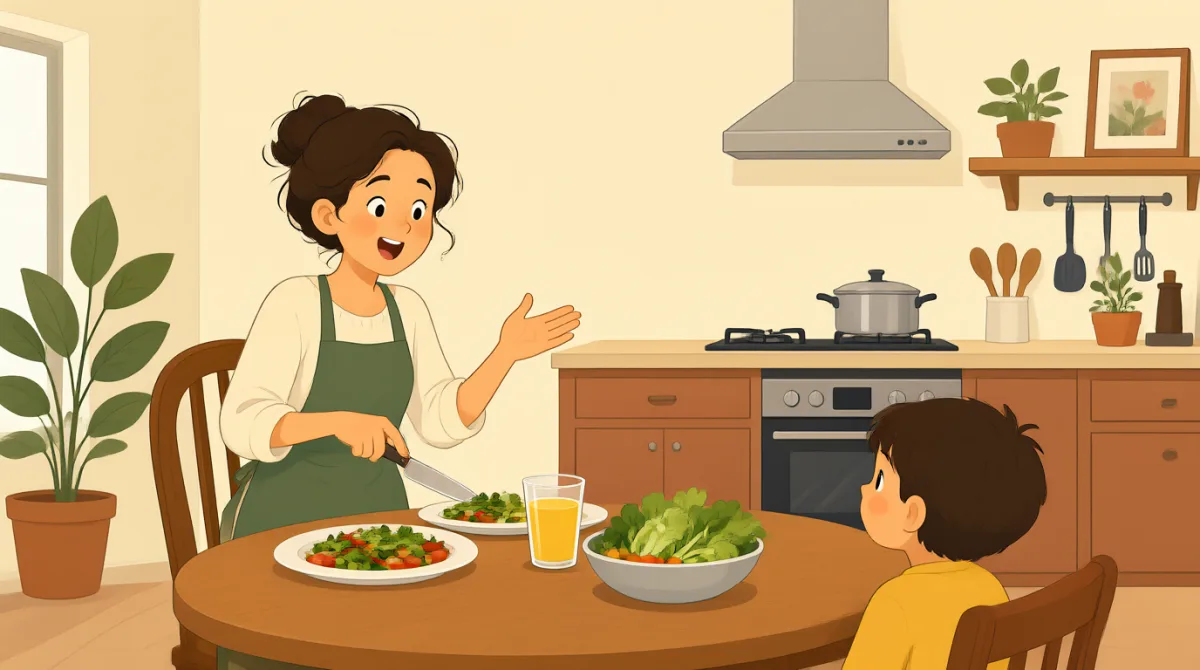

Hi David! I was thinking of making that simple tomato pasta dish you mentioned. Can you remind me what it's called and what I need for it?
嗨大衛!我正想著做你提到的那個簡單的番茄意麵。你能提醒我它叫什麼,以及我需要些什麼嗎?

Of course, Emma! It's just a basic 'Quick Tomato Pasta.' Super easy. For the ingredients, you'll need one box of your favorite pasta, about 400 grams usually.
當然可以,艾瑪!它就是一道基本的“番茄快手意麵”。超級簡單。食材方面,你需要一盒你喜歡的意麵,大概400克左右。
Okay, one box of pasta. Got it. What else?
好的,一盒意麵。記下了。還有呢?
Then you'll need one can of crushed tomatoes, around 700 to 800 grams. And for aromatics, two cloves of garlic, minced, and half a medium onion, finely chopped.
然後你需要一罐番茄碎,大約700到800克。調料的話,兩瓣蒜,切碎,還有半個中等大小的洋蔥,切丁。
Crushed tomatoes, minced garlic, and chopped onion. Check. Do I need any herbs or spices?
番茄碎、蒜末和洋蔥丁。沒問題。我需要香草或香料嗎?
Yes, absolutely! A teaspoon of dried oregano, half a teaspoon of dried basil, and then a quarter cup of fresh parsley, chopped, for garnish at the end. Don't forget salt and pepper to taste, and about two tablespoons of olive oil.
是的,當然!一茶匙幹牛至,半茶匙幹羅勒,最後還有四分之一杯切碎的新鮮歐芹,用來最後點綴。別忘了鹽和胡椒調味,以及大約兩大湯匙橄欖油。
Oregano, basil, fresh parsley, salt, pepper, and olive oil. Wow, that's more than I thought, but it still sounds manageable.
牛至、羅勒、新鮮歐芹、鹽、胡椒和橄欖油。哇,比我以為的要多,但聽起來仍然可以搞定。
It is! And the best part is, most of these are pantry staples. That's all you need for the ingredients. Ready for the steps?
確實!最棒的是,這些大多都是廚房常備品。這就是你所需要的全部食材。準備好聽步驟了嗎?
詞彙8
- pasta意麵
Pasta is a type of Italian food made from dough, like spaghetti or penne, often boiled and served with sauce. It's a staple in quick meals.
意麵是一種義大利麵食,由麵糰製成,比如義大利細面或通心粉,通常煮熟後搭配醬汁食用。它是快速做飯時常用的食材。
- crushed tomatoes番茄碎
Crushed tomatoes are canned tomatoes that have been broken into small pieces, used as a base for sauces in dishes like pasta.
番茄碎是切成小塊的罐裝番茄,常用作意麵等菜餚中醬汁的底料。
- minced切碎的
Minced means chopped into very small pieces, often used for garlic or herbs to release flavor evenly in cooking.
Minced 的意思是切成非常小的碎末,常用於蒜或香草,讓它們在烹飪時均勻釋放風味。
- finely chopped切成細末
Finely chopped means cut into tiny, even pieces, like for onions, to make them cook quickly and blend into sauces.
Finely chopped 的意思是切成細小、大小均勻的碎塊,比如洋蔥。這樣食材熟得更快,也更容易融入醬汁。
- oregano牛至
Oregano is a dried herb with a strong, earthy flavor, commonly used in Italian and Mediterranean recipes like pasta sauces.
牛至是一種幹香草,味道濃郁醇厚,常用於義大利和地中海風味的菜餚,比如意麵醬汁。
- basil羅勒
Basil is an herb with a sweet, fresh aroma, used dried or fresh in Italian dishes; dried basil adds flavor to tomato-based sauces.
羅勒是一種香草,香氣清甜清新,可用新鮮或乾燥的羅勒製作義大利菜;幹羅勒能為番茄醬汁增添風味。
- garnish裝飾用配菜
A garnish is a small amount of food, like chopped parsley, added at the end to decorate and improve the taste of a dish.
Garnish 指少量用於裝飾並提升菜餚風味的食材,比如最後撒上的切碎歐芹。
- pantry staples廚房常備食材
Pantry staples are basic ingredients like salt, oil, or herbs that you always keep in your kitchen cupboard for everyday cooking.
Pantry staples 指鹽、油或香草等基本食材,平時會常備在廚房的儲物櫃裡,方便日常烹飪。
關鍵句7
- 1
For the ingredients, you'll need one box of your favorite pasta, about 400 grams usually.
食材方面,你需要一盒你喜歡的意麵,大概400克左右。
This sentence introduces ingredients with 'for the ingredients, you'll need' to list items clearly. It's useful for recipes; 'about' shows approximate quantities, common in casual cooking instructions.
這句話用 'for the ingredients, you'll need'(食材方面,你需要……)來清楚地列出食材,常用於介紹食譜。'about' 表示數量大約如此,在日常烹飪說明中很常見。
- 2
Then you'll need one can of crushed tomatoes, around 700 to 800 grams.
然後你需要一罐番茄碎,大約700到800克。
Using 'then' connects items in a sequence, helping to build a list step by step. This pattern is great for explaining shopping lists or recipe parts; 'around' indicates a range for flexibility.
'then' 用來連線順序,幫助你一步步列出食材。這個句型也適合說明購物清單或食譜內容;'around' 表示大致的範圍,留有一定靈活性。
- 3
What else?
還有呢?
This short question prompts more information in a conversation. It's practical for interviews or discussions, like asking for additional details in a recipe or instructions.
這是一個簡短的問題,用來在對話中詢問更多資訊。比如在討論食譜或說明步驟時,你可以用它來詢問其他細節。
- 4
Do I need any herbs or spices?
我需要香草或香料嗎?
This uses 'do I need' to ask about requirements, with 'any' for unspecified items. It's useful in shopping or cooking contexts to clarify if extras like seasonings are necessary.
這裡用 'do I need' 來詢問是否需要某樣東西,並用 'any' 指代尚未具體說明的物品。在購物或烹飪時,可以用這個句型確認是否還需要調味料等額外食材。
- 5
A teaspoon of dried oregano, half a teaspoon of dried basil, and then a quarter cup of fresh parsley, chopped, for garnish at the end.
一茶匙幹牛至、半茶匙幹羅勒,然後再加四分之一杯切碎的新鮮歐芹,最後用來裝飾。
This lists measurements precisely with units like 'teaspoon' and 'cup,' using 'and then' for addition. It's key for recipe accuracy; explains purpose ('for garnish') to show when to use items.
這句話用 'teaspoon' 和 'cup' 等單位準確列出用量,並用 'and then' 表示接著新增。在食譜中,準確的用量很重要;'for garnish' 說明食材的用途和使用時機。
- 6
Don't forget salt and pepper to taste, and about two tablespoons of olive oil.
別忘了加鹽和胡椒調味,還要大約兩大湯匙橄欖油。
'Don't forget' reminds someone of essentials, and 'to taste' means add until it tastes right, common in cooking for personalization. Useful for giving complete recipe advice.
'Don't forget' 用來提醒對方別漏掉重要的東西。'to taste' 指按個人口味新增,直到味道合適為止,在烹飪中很常見。掌握這些說法能幫你更完整地介紹食譜。
- 7
That's all you need for the ingredients. Ready for the steps?
這就是你所需要的全部食材。準備好聽步驟了嗎?
This concludes a list with 'that's all' and transitions with a question. It's helpful for structuring explanations, like moving from ingredients to instructions in a tutorial or guide.
這句話用 'that's all' 結束食材清單,並透過提問自然地轉入下一部分。在教程或指南中,這種表達有助於讓說明條理清晰,比如從介紹食材過渡到講解做法。