Checkout and Payment
ชำระเงินที่แคชเชียร์
Going through the checkout process, interacting with cashier, choosing payment method, and handling bags
ขั้นตอนการชำระเงิน การพูดคุยกับแคชเชียร์ การเลือกวิธีชำระเงิน และการจัดการถุงใส่ของ
บทสนทนา9
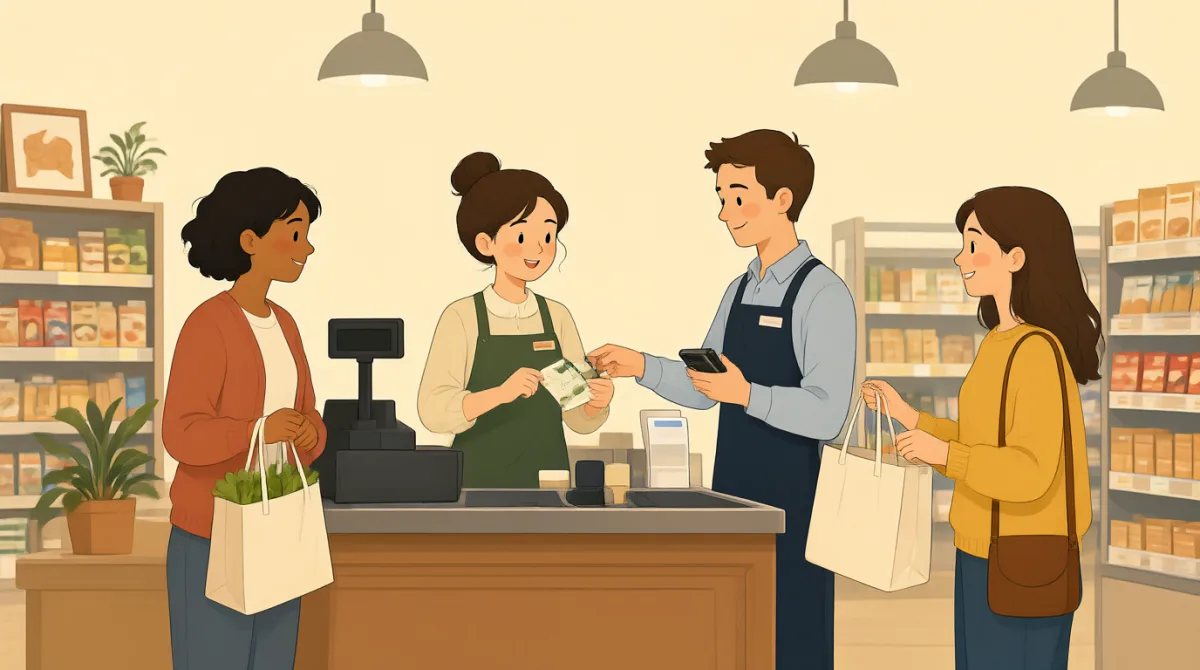

Hi there. Did you find everything you needed today?
สวัสดีครับ วันนี้ได้ของครบตามที่ต้องการไหมครับ

Yes, thanks! Just these few items.
ได้ครบแล้วค่ะ ขอบคุณ มีแค่นี้ค่ะ
Alright. That'll be $12.50. Will that be cash or card?
ได้ครับ ทั้งหมด 12.50 ดอลลาร์ จะจ่ายเงินสดหรือบัตรดีครับ
Card, please. And do you have any paper bags? I forgot my reusable ones.
จ่ายบัตรค่ะ แล้วมีถุงกระดาษไหมคะ พอดีลืมเอาถุงที่ใช้ซ้ำได้มาค่ะ
No problem! We have paper bags for an extra 10 cents. Is that okay?
ไม่มีปัญหาครับ เรามีถุงกระดาษ คิดเพิ่ม 10 เซ็นต์ รับได้ไหมครับ
Yes, that's fine. Just one bag should be enough.
ได้ค่ะ ไม่เป็นไรค่ะ เอาถุงเดียวก็พอค่ะ
Okay, just tap your card here when you're ready. And here's your bag.
ได้ครับ แตะบัตรตรงนี้ได้เลยเมื่อพร้อมนะครับ แล้วนี่ถุงของคุณครับ
Thanks! Have a great day.
ขอบคุณค่ะ ขอให้วันนี้เป็นวันที่ดีนะคะ
You too! Come again soon.
เช่นกันครับ แวะมาอีกนะครับ
คำศัพท์7
- neededจำเป็นต้องใช้
This word means required or necessary. In shopping, it's used to ask if customers got what they wanted, like 'Did you find everything you needed?' It's polite and common in service situations.
คำนี้หมายถึงสิ่งที่ต้องการหรือจำเป็นต้องมี ในบริบทการซื้อของ ใช้ถามลูกค้าว่าได้ของที่ต้องการครบหรือยัง เช่น 'Did you find everything you needed?' (ได้ของที่ต้องการครบไหม) เป็นสำนวนสุภาพที่ใช้กันทั่วไปในการบริการลูกค้า
- itemsสินค้า
This refers to things or products you buy. In stores, people say 'these items' to mean the products on the counter. It's a general word for goods in shopping contexts.
หมายถึงสิ่งของหรือสินค้าที่ซื้อ ในร้านค้า คนมักพูดว่า 'these items' เพื่อหมายถึงสินค้าที่วางอยู่บนเคาน์เตอร์ เป็นคำทั่วไปสำหรับเรียกของที่ซื้อ
- cashเงินสด
Money in physical form, like bills and coins. At checkout, cashiers ask 'cash or card?' to know how you'll pay. It's a basic payment option everywhere.
เงินในรูปแบบธนบัตรและเหรียญ ที่แคชเชียร์อาจถามว่า 'cash or card?' เพื่อถามว่าจะจ่ายด้วยวิธีไหน เงินสดเป็นวิธีชำระเงินพื้นฐานที่ใช้กันทั่วไป
- cardบัตร
A payment card like credit or debit card. Used in 'cash or card?' to offer electronic payment. Common in modern shopping to avoid carrying cash.
บัตรสำหรับชำระเงิน เช่น บัตรเครดิตหรือบัตรเดบิต ในประโยค 'cash or card?' หมายถึงการเสนอให้จ่ายด้วยบัตรแทนเงินสด เป็นวิธีชำระเงินที่ใช้กันทั่วไปในปัจจุบัน
- reusableใช้ซ้ำได้
Something that can be used again, like eco-friendly bags. In the dialogue, 'reusable ones' means bring-your-own bags to reduce plastic waste. It's environmentally aware language.
หมายถึงสิ่งที่นำกลับมาใช้ได้อีก เช่น ถุงที่เป็นมิตรต่อสิ่งแวดล้อม ในบทสนทนา 'reusable ones' หมายถึงถุงที่นำมาเองและใช้ซ้ำได้ เพื่อลดขยะพลาสติก
- extraเพิ่มเติม
Additional or more than usual. Here, 'extra 10 cents' means an added cost for the bag. Useful for discussing fees in stores.
หมายถึงเพิ่มเข้ามาหรือมากกว่าปกติ ในที่นี้ 'extra 10 cents' หมายถึงมีค่าใช้จ่ายเพิ่ม 10 เซ็นต์สำหรับถุง ใช้พูดถึงค่าธรรมเนียมในร้านค้าได้
- tapแตะ
To lightly touch a card on a machine to pay without inserting it. In 'tap your card,' it's a quick contactless payment method popular in many countries.
แตะบัตรเบา ๆ กับเครื่องเพื่อชำระเงินโดยไม่ต้องเสียบบัตร ใน 'tap your card' หมายถึงวิธีจ่ายเงินแบบไร้สัมผัสที่รวดเร็วและนิยมใช้ในหลายประเทศ
ประโยคสำคัญ8
- 1
Did you find everything you needed today?
วันนี้ได้ของครบตามที่ต้องการไหมคะ
This is a polite greeting question from cashiers to check customer satisfaction. It's useful at the start of checkout to build rapport. Grammar: Present perfect 'have you found' for recent actions, but here it's simple past in context.
พนักงานแคชเชียร์ใช้คำถามสุภาพนี้เพื่อสอบถามว่าลูกค้าได้ของที่ต้องการครบหรือไม่ มักใช้ตอนเริ่มคิดเงินเพื่อสร้างความเป็นกันเอง ในประโยคนี้ใช้รูปอดีตกาลธรรมดาเพื่อถามถึงสิ่งที่ลูกค้าเพิ่งทำเสร็จ
- 2
That'll be $12.50.
ทั้งหมด 12.50 ดอลลาร์ค่ะ
A common way to tell the total cost. 'That'll be' is a contraction of 'that will be,' used informally in service. Essential for shopping; say it when giving prices to customers.
เป็นวิธีบอกราคารวมที่ใช้กันทั่วไป 'That'll be' เป็นรูปย่อของ 'that will be' และมักใช้พูดอย่างไม่เป็นทางการในงานบริการ ประโยคนี้มีประโยชน์เมื่อต้องแจ้งราคาให้ลูกค้าทราบ
- 3
Will that be cash or card?
จะจ่ายเงินสดหรือบัตรดีคะ
Asks for payment method choice. 'Will that be' is future tense for polite offers. Very practical in retail; use it to confirm how someone pays.
ใช้ถามว่าลูกค้าต้องการชำระเงินแบบไหน 'Will that be' ใช้ถามหรือเสนอทางเลือกอย่างสุภาพ เป็นประโยคที่ใช้ได้จริงในร้านค้าเพื่อยืนยันวิธีชำระเงิน
- 4
Do you have any paper bags?
มีถุงกระดาษไหมคะ
Requests bags at checkout. 'Do you have any' is a question for availability of countable items. Useful when you need packaging; polite way to ask for help.
ใช้ขอถุงตอนชำระเงิน 'Do you have any' เป็นคำถามเพื่อถามว่ามีสิ่งของที่นับจำนวนได้หรือไม่ เหมาะสำหรับเวลาต้องการบรรจุภัณฑ์ และเป็นวิธีขอความช่วยเหลืออย่างสุภาพ
- 5
No problem! We have paper bags for an extra 10 cents.
ไม่มีปัญหาค่ะ เรามีถุงกระดาษ คิดเพิ่ม 10 เซ็นต์ค่ะ
Reassures and offers an option with cost. 'No problem' means it's easy to help. Good for customer service; explains fees clearly to avoid surprises.
ใช้บอกว่าเต็มใจช่วย พร้อมเสนอทางเลือกที่มีค่าใช้จ่าย 'No problem' หมายถึงยินดีช่วยหรือไม่ลำบากเลย เหมาะกับงานบริการลูกค้า และช่วยแจ้งค่าใช้จ่ายให้ชัดเจนเพื่อไม่ให้ลูกค้าแปลกใจ
- 6
Just tap your card here when you're ready.
พร้อมเมื่อไหร่ก็แตะบัตรตรงนี้ได้เลยค่ะ
Instructs on payment. 'Just' softens the command, 'when you're ready' is polite. Use in tech-savvy stores for guiding contactless payments.
ใช้บอกวิธีชำระเงิน 'Just' ช่วยให้คำสั่งฟังดูนุ่มนวลขึ้น ส่วน 'when you're ready' เป็นการพูดอย่างสุภาพ ใช้แนะนำการจ่ายเงินแบบไร้สัมผัสในร้านค้าได้
- 7
Thanks! Have a great day.
ขอบคุณค่ะ ขอให้วันนี้เป็นวันที่ดีนะคะ
A friendly goodbye. Common after transactions. 'Have a great day' is idiomatic for well-wishes. Always use positive closers in service interactions.
เป็นคำกล่าวลาอย่างเป็นมิตรที่ใช้กันทั่วไปหลังทำรายการเสร็จ 'Have a great day' เป็นสำนวนอวยพรให้มีวันที่ดี ควรปิดท้ายการบริการด้วยคำพูดเชิงบวก
- 8
You too! Come again soon.
เช่นกันค่ะ แวะมาอีกนะคะ
Responds to well-wishes and invites return. 'You too' mirrors the phrase. Encourages loyalty; standard in retail to end on a positive note.
ใช้ตอบรับคำอวยพรและเชิญชวนให้กลับมาอีก 'You too' ใช้ตอบกลับคำอวยพรในทำนองเดียวกัน การเชิญชวนให้กลับมาช่วยสร้างความประทับใจ และเป็นคำพูดปิดท้ายที่ใช้กันทั่วไปในร้านค้า