Checkout and Payment
बिलिंग और भुगतान
Going through the checkout process, interacting with cashier, choosing payment method, and handling bags
बिलिंग की प्रक्रिया पूरी करना, कैशियर से बातचीत करना, भुगतान का तरीका चुनना और थैले लेना
संवाद9
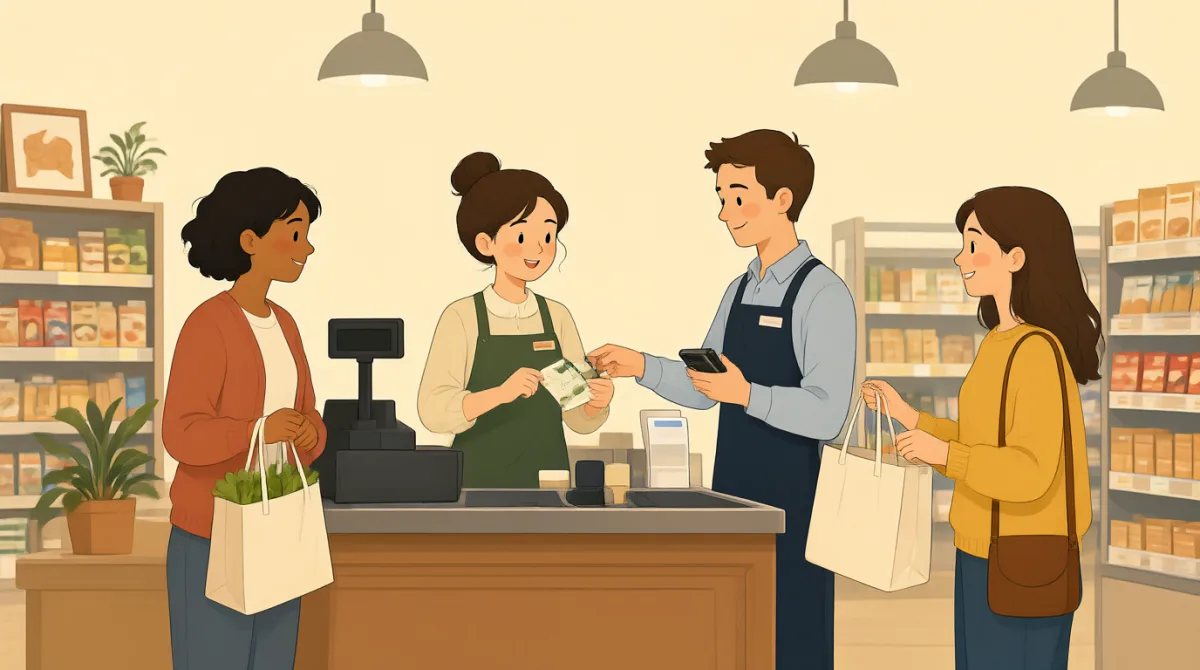

Hi there. Did you find everything you needed today?
नमस्ते। क्या आपको आज अपनी ज़रूरत की सारी चीज़ें मिल गईं?

Yes, thanks! Just these few items.
हाँ, धन्यवाद! बस ये कुछ चीज़ें।
Alright. That'll be $12.50. Will that be cash or card?
ठीक है। कुल 12.50 डॉलर हुए। नकद देंगे या कार्ड से?
Card, please. And do you have any paper bags? I forgot my reusable ones.
कार्ड से, कृपया। और क्या आपके पास कागज़ के थैले हैं? मैं अपने दोबारा इस्तेमाल होने वाले थैले लाना भूल गई।
No problem! We have paper bags for an extra 10 cents. Is that okay?
कोई बात नहीं! हमारे पास कागज़ के थैले हैं, जिनके लिए 10 सेंट अतिरिक्त लगेंगे। क्या यह ठीक है?
Yes, that's fine. Just one bag should be enough.
हाँ, ठीक है। एक थैला काफ़ी होगा।
Okay, just tap your card here when you're ready. And here's your bag.
ठीक है, जब आप तैयार हों तो अपना कार्ड यहाँ टैप कर दीजिए। और यह रहा आपका थैला।
Thanks! Have a great day.
धन्यवाद! आपका दिन अच्छा बीते।
You too! Come again soon.
आपका भी! फिर जल्दी आइएगा।
शब्दावली7
- neededज़रूरत थी
This word means required or necessary. In shopping, it's used to ask if customers got what they wanted, like 'Did you find everything you needed?' It's polite and common in service situations.
इसका मतलब है ऐसी चीज़ जिसकी ज़रूरत हो या जो आवश्यक हो। खरीदारी के दौरान दुकानदार यह पूछने के लिए इसका इस्तेमाल करते हैं कि ग्राहक को उनकी ज़रूरत की चीज़ें मिल गईं या नहीं, जैसे 'Did you find everything you needed?' (क्या आपको अपनी ज़रूरत की सारी चीज़ें मिल गईं?) ग्राहक सेवा में यह विनम्र और आम वाक्यांश है।
- itemsचीज़ें
This refers to things or products you buy. In stores, people say 'these items' to mean the products on the counter. It's a general word for goods in shopping contexts.
इसका मतलब है वे वस्तुएँ या सामान जो आप खरीदते हैं। दुकान में काउंटर पर रखे सामान के लिए लोग 'these items' कहते हैं। खरीदारी के संदर्भ में सामान के लिए यह एक आम शब्द है।
- cashनकद
Money in physical form, like bills and coins. At checkout, cashiers ask 'cash or card?' to know how you'll pay. It's a basic payment option everywhere.
नोटों और सिक्कों के रूप में मौजूद पैसा। बिलिंग के समय कैशियर पूछते हैं 'cash or card?' (नकद या कार्ड?), ताकि उन्हें पता चले कि आप भुगतान कैसे करेंगे। यह भुगतान का एक बुनियादी तरीका है।
- cardकार्ड
A payment card like credit or debit card. Used in 'cash or card?' to offer electronic payment. Common in modern shopping to avoid carrying cash.
भुगतान के लिए इस्तेमाल होने वाला कार्ड, जैसे क्रेडिट या डेबिट कार्ड। 'cash or card?' (नकद या कार्ड?) में कार्ड से इलेक्ट्रॉनिक भुगतान का विकल्प दिया जाता है। नकद साथ रखने से बचने के लिए आजकल खरीदारी में यह आम है।
- reusableदोबारा इस्तेमाल होने वाला
Something that can be used again, like eco-friendly bags. In the dialogue, 'reusable ones' means bring-your-own bags to reduce plastic waste. It's environmentally aware language.
ऐसी चीज़ जिसे फिर से इस्तेमाल किया जा सके, जैसे पर्यावरण के अनुकूल थैले। इस संवाद में 'reusable ones' का मतलब है अपने साथ लाए हुए थैले, ताकि प्लास्टिक का कचरा कम हो। यह पर्यावरण के प्रति जागरूकता दिखाने वाला शब्द है।
- extraअतिरिक्त
Additional or more than usual. Here, 'extra 10 cents' means an added cost for the bag. Useful for discussing fees in stores.
ज़रूरत से ज़्यादा या आम तौर पर जितना होता है, उससे अधिक। यहाँ 'extra 10 cents' का मतलब है थैले के लिए 10 सेंट का अतिरिक्त शुल्क। दुकानों में शुल्क की बात करते समय यह शब्द काम आता है।
- tapटैप करना
To lightly touch a card on a machine to pay without inserting it. In 'tap your card,' it's a quick contactless payment method popular in many countries.
बिना मशीन में डाले, भुगतान के लिए कार्ड को मशीन से हल्के से छुआना। 'tap your card' का मतलब है कार्ड को टैप करके भुगतान करना—यह तेज़ संपर्क-रहित भुगतान का तरीका कई देशों में लोकप्रिय है।
मुख्य वाक्य8
- 1
Did you find everything you needed today?
क्या आपको आज अपनी ज़रूरत की सारी चीज़ें मिल गईं?
This is a polite greeting question from cashiers to check customer satisfaction. It's useful at the start of checkout to build rapport. Grammar: Present perfect 'have you found' for recent actions, but here it's simple past in context.
यह कैशियर का विनम्र सवाल है, जिससे वे जानना चाहते हैं कि ग्राहक को खरीदारी में सब कुछ मिल गया या नहीं। बातचीत शुरू करने और ग्राहक से अच्छा तालमेल बनाने के लिए यह बिलिंग की शुरुआत में उपयोगी है। व्याकरण: हाल की गतिविधियों के लिए आम तौर पर Present perfect 'have you found' इस्तेमाल होता है, लेकिन इस संदर्भ में simple past का प्रयोग किया गया है।
- 2
That'll be $12.50.
कुल 12.50 डॉलर हुए।
A common way to tell the total cost. 'That'll be' is a contraction of 'that will be,' used informally in service. Essential for shopping; say it when giving prices to customers.
कुल कीमत बताने का यह आम तरीका है। 'That'll be' दरअसल 'that will be' का संक्षिप्त रूप है, जिसे सेवा-संबंधी बातचीत में अनौपचारिक रूप से इस्तेमाल किया जाता है। खरीदारी में यह बहुत काम का है; ग्राहक को कीमत बताते समय इसका इस्तेमाल करें।
- 3
Will that be cash or card?
नकद देंगे या कार्ड से?
Asks for payment method choice. 'Will that be' is future tense for polite offers. Very practical in retail; use it to confirm how someone pays.
इस सवाल से ग्राहक से भुगतान का तरीका पूछा जाता है। 'Will that be' भविष्य काल का विनम्र रूप है, जिसका इस्तेमाल विकल्प देने के लिए होता है। दुकानों में यह बहुत उपयोगी है; इससे आप पुष्टि कर सकते हैं कि कोई किस तरह भुगतान करेगा।
- 4
Do you have any paper bags?
क्या आपके पास कागज़ के थैले हैं?
Requests bags at checkout. 'Do you have any' is a question for availability of countable items. Useful when you need packaging; polite way to ask for help.
यह बिलिंग के समय थैले माँगने का तरीका है। 'Do you have any' गिनी जा सकने वाली चीज़ों की उपलब्धता पूछने के लिए इस्तेमाल होता है। सामान पैक करने के लिए कुछ चाहिए हो, तो मदद माँगने का यह विनम्र तरीका है।
- 5
No problem! We have paper bags for an extra 10 cents.
कोई बात नहीं! हमारे पास कागज़ के थैले हैं, जिनके लिए 10 सेंट अतिरिक्त लगेंगे।
Reassures and offers an option with cost. 'No problem' means it's easy to help. Good for customer service; explains fees clearly to avoid surprises.
इस वाक्य से ग्राहक को भरोसा दिलाया जाता है और कीमत के साथ एक विकल्प दिया जाता है। 'No problem' का मतलब है कि मदद करना आसान है। ग्राहक सेवा में यह उपयोगी है; इससे शुल्क साफ़-साफ़ बताया जा सकता है और ग्राहक को बाद में कोई आश्चर्य नहीं होता।
- 6
Just tap your card here when you're ready.
जब आप तैयार हों तो बस अपना कार्ड यहाँ टैप कर दीजिए।
Instructs on payment. 'Just' softens the command, 'when you're ready' is polite. Use in tech-savvy stores for guiding contactless payments.
यह भुगतान करने का तरीका बताता है। 'Just' निर्देश को थोड़ा नरम बनाता है, और 'when you're ready' इसे विनम्र बनाता है। संपर्क-रहित भुगतान की प्रक्रिया बताने के लिए आधुनिक दुकानों में इसका इस्तेमाल करें।
- 7
Thanks! Have a great day.
धन्यवाद! आपका दिन अच्छा बीते।
A friendly goodbye. Common after transactions. 'Have a great day' is idiomatic for well-wishes. Always use positive closers in service interactions.
यह दोस्ताना विदाई का तरीका है, जिसे लेन-देन के बाद अक्सर कहा जाता है। 'Have a great day' किसी के अच्छे दिन की कामना करने का मुहावरेदार तरीका है। ग्राहक सेवा की बातचीत का अंत हमेशा सकारात्मक अंदाज़ में करें।
- 8
You too! Come again soon.
आपका भी! फिर जल्दी आइएगा।
Responds to well-wishes and invites return. 'You too' mirrors the phrase. Encourages loyalty; standard in retail to end on a positive note.
यह शुभकामना का जवाब देता है और ग्राहक को फिर आने का न्योता देता है। 'You too' सामने वाले की कही बात उसी को लौटाकर कहता है। इससे ग्राहक को दोबारा आने के लिए प्रोत्साहन मिलता है; दुकानों में बातचीत को सकारात्मक ढंग से खत्म करने का यह आम तरीका है।