Using Shopping Cart and Basket
การใช้รถเข็นและตะกร้าช้อปปิ้ง
Getting a shopping cart or basket, navigating through the store, and organizing items while shopping
หยิบรถเข็นหรือตะกร้า เดินเลือกซื้อของในร้าน และจัดของระหว่างช้อปปิ้ง
บทสนทนา8
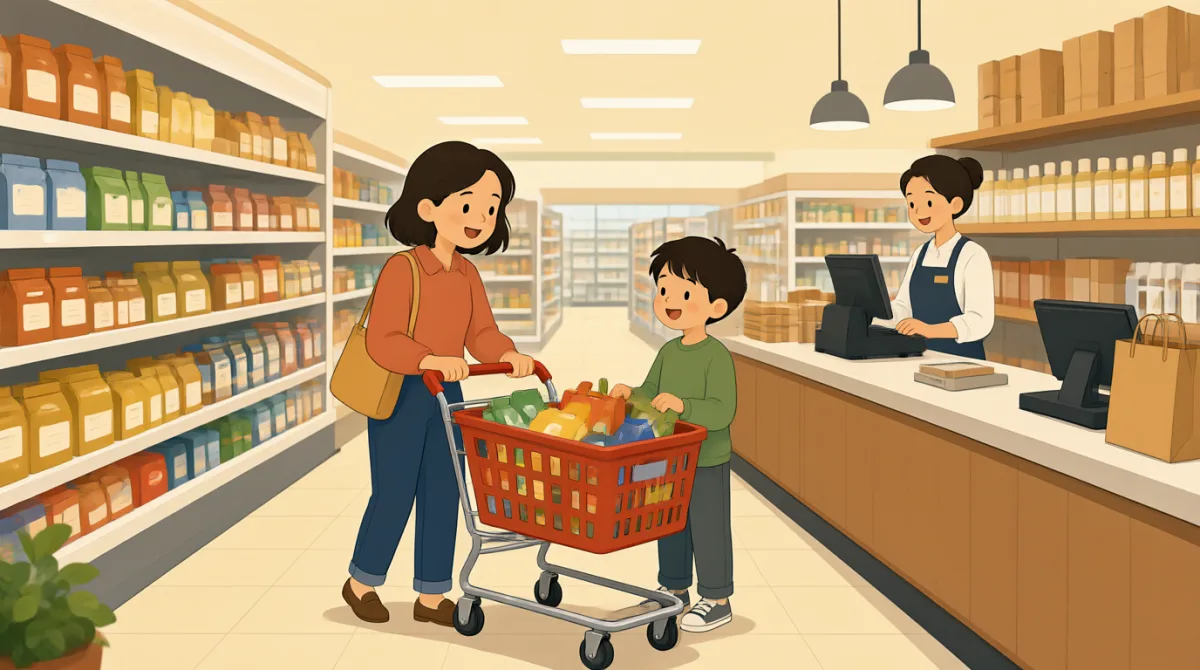

Okay, we're here. We definitely need a cart, we have quite a list today.
โอเค เรามาถึงแล้ว วันนี้เราต้องใช้รถเข็นแน่ ๆ รายการของที่ต้องซื้อยาวพอสมควรเลย

Good call. I'll grab one from over there. Do you want to start with produce or pantry items?
ดีเลย เดี๋ยวฉันไปหยิบรถเข็นตรงโน้นนะ อยากเริ่มจากผักผลไม้หรือของแห้งในครัวก่อนดี?
Produce first, so we don't crush anything. And then maybe we can grab a few baskets for smaller items later, if we split up.
เริ่มจากผักผลไม้ก่อน จะได้ไม่ทำอะไรช้ำ แล้วค่อยหยิบตะกร้ามาสักสองสามใบไว้ใส่ของชิ้นเล็ก ๆ ทีหลัง ถ้าเราแยกกันเดินซื้อ
Sounds like a plan. I'll get the cart and meet you by the entrance.
เอาตามนั้น เดี๋ยวฉันไปเอารถเข็นแล้วเจอกันตรงทางเข้านะ
Great! Oh, this cart is a bit wobbly. Maybe we should try another one.
ดีเลย! เอ๊ะ รถเข็นคันนี้ส่าย ๆ นะ เราลองคันอื่นกันดีกว่า
You're right. Let me swap it out. We don't want to lose our groceries mid-aisle!
จริงด้วย เดี๋ยวฉันเปลี่ยนคันให้ เราคงไม่อยากให้ของที่ซื้อหล่นกลางทางเดินหรอก!
Definitely not! Okay, this one feels much better. Let's make sure we put the heavier items at the bottom.
ไม่เอาแน่! โอเค คันนี้ดูดีกว่าเยอะเลย วางของหนักไว้ข้างล่างกันนะ
Agreed. And the delicate stuff on top. Ready to tackle this list?
เห็นด้วย แล้ววางของที่แตกหรือช้ำง่ายไว้ข้างบน พร้อมลุยรายการนี้หรือยัง?
คำศัพท์9
- cartรถเข็นช้อปปิ้ง
A shopping cart is a large metal basket on wheels used to carry items around a supermarket. It's essential for buying many things to avoid carrying them by hand.
รถเข็นช้อปปิ้งคือภาชนะขนาดใหญ่ที่มีล้อ ใช้ใส่ของและเข็นไปทั่วซูเปอร์มาร์เก็ต เหมาะมากเวลาซื้อของหลายอย่าง จะได้ไม่ต้องถือเอง
- produceผักผลไม้สด
Produce refers to fresh fruits and vegetables in the grocery store. It's a common term in American English for the fresh food section.
คำนี้หมายถึงผักและผลไม้สดที่ขายในร้านขายของชำ เป็นคำที่ใช้กันทั่วไปในภาษาอังกฤษแบบอเมริกันเพื่อเรียกโซนอาหารสด
- pantry itemsของแห้งในครัว
Pantry items are non-perishable foods like canned goods, pasta, and snacks stored in the kitchen pantry. They are staples for everyday cooking.
หมายถึงอาหารที่เก็บได้นาน เช่น อาหารกระป๋อง พาสต้า และขนม ซึ่งมักเก็บไว้ในตู้กับข้าว เป็นของพื้นฐานที่ใช้ทำอาหารในชีวิตประจำวัน
- basketตะกร้าช้อปปิ้ง
A shopping basket is a smaller handheld container for carrying a few items. Use it when you don't need a full cart for light shopping.
ตะกร้าช้อปปิ้งเป็นภาชนะขนาดเล็กที่ถือด้วยมือ ใช้ใส่ของไม่กี่ชิ้น เลือกใช้เมื่อซื้อของไม่มากจนต้องใช้รถเข็น
- wobblyส่ายไปมา, โคลงเคลง
Wobbly means unstable or shaky, like a cart that doesn't roll smoothly. It's useful for describing faulty equipment in stores.
คำนี้หมายถึงไม่มั่นคงหรือสั่นไหว เช่น รถเข็นที่เข็นแล้วไม่ลื่นไหล ใช้บรรยายอุปกรณ์ในร้านที่ชำรุดหรือใช้งานได้ไม่ดี
- swapสลับ, เปลี่ยน
To swap means to exchange one thing for another. In shopping, it often means trading a bad item for a better one, like changing carts.
หมายถึงเอาสิ่งหนึ่งไปแลกกับอีกสิ่งหนึ่ง เวลาไปซื้อของ มักใช้เมื่อเปลี่ยนของที่มีปัญหาเป็นของที่ดีกว่า เช่น เปลี่ยนรถเข็น
- groceriesของที่ซื้อจากร้านขายของชำ
Groceries are food and household items bought at a supermarket. It's a general term for what you purchase during shopping trips.
หมายถึงอาหารและของใช้ในบ้านที่ซื้อจากซูเปอร์มาร์เก็ต เป็นคำกว้าง ๆ สำหรับเรียกของที่เราซื้อเวลาไปซื้อของ
- delicateบอบบาง, ช้ำหรือเสียหายง่าย
Delicate means fragile or easily damaged, like eggs or bread. Place delicate items carefully to avoid breaking them.
หมายถึงแตกหักหรือเสียหายได้ง่าย เช่น ไข่หรือขนมปัง ควรวางของที่บอบบางอย่างระมัดระวังเพื่อไม่ให้เสียหาย
- tackleลงมือจัดการ
To tackle means to deal with or start working on a task energetically. Use it for approaching a big shopping list or challenge.
หมายถึงเริ่มทำหรือจัดการกับงานอย่างกระตือรือร้น ใช้ได้เมื่อเริ่มจัดการกับรายการซื้อของยาว ๆ หรืองานที่ท้าทาย
ประโยคสำคัญ8
- 1
We definitely need a cart, we have quite a list today.
เราต้องใช้รถเข็นแน่ ๆ วันนี้รายการของที่ต้องซื้อยาวพอสมควรเลย
This sentence uses 'definitely' for emphasis and 'quite a list' to mean a long shopping list. It's useful for suggesting tools based on the amount of shopping; practice it when planning a big trip.
ประโยคนี้ใช้ 'definitely' เพื่อเน้นย้ำ และใช้ 'quite a list' หมายถึงรายการซื้อของที่ยาวพอสมควร มีประโยชน์เวลาบอกว่าควรใช้อุปกรณ์อะไรให้เหมาะกับปริมาณของที่จะซื้อ ลองใช้ประโยคนี้ตอนวางแผนไปซื้อของครั้งใหญ่ดูนะ
- 2
Do you want to start with produce or pantry items?
อยากเริ่มจากผักผลไม้หรือของแห้งในครัวก่อนดี?
This is a question using 'or' to offer choices between two options. It's practical for organizing shopping routes; the structure helps in decision-making conversations.
นี่เป็นคำถามที่ใช้ 'or' เพื่อเสนอทางเลือกสองอย่าง มีประโยชน์เวลาวางแผนเส้นทางเดินซื้อของ และใช้รูปประโยคนี้เพื่อช่วยตัดสินใจในการสนทนาได้
- 3
Produce first, so we don't crush anything.
เริ่มจากผักผลไม้ก่อน จะได้ไม่ทำอะไรช้ำ
Here, 'so' introduces a reason clause explaining why to do something first. Useful for logical planning in shopping to prevent damage; note the causal grammar.
ในประโยคนี้ 'so' ใช้เชื่อมเหตุผลว่าทำไมควรทำสิ่งหนึ่งก่อน มีประโยชน์สำหรับวางแผนซื้อของอย่างเป็นเหตุเป็นผลเพื่อป้องกันของเสียหาย ลองสังเกตการใช้ประโยคบอกเหตุผลนี้นะ
- 4
This cart is a bit wobbly. Maybe we should try another one.
รถเข็นคันนี้ส่ายนิดหน่อย เราลองคันอื่นกันดีไหม?
This expresses a mild complaint with 'a bit' to soften it, and 'maybe' suggests a solution. Great for politely pointing out problems and proposing fixes in stores.
ประโยคนี้บ่นเบา ๆ โดยใช้ 'a bit' เพื่อให้ฟังนุ่มนวล และใช้ 'maybe' เพื่อเสนอทางแก้ เหมาะเวลาพูดถึงปัญหาและเสนอวิธีแก้ในร้านอย่างสุภาพ
- 5
Let me swap it out.
เดี๋ยวฉันเปลี่ยนคันให้
An offer to help using 'let me' for politeness, with 'swap out' as a phrasal verb meaning exchange. Use this when volunteering to fix a shopping issue quickly.
นี่เป็นการเสนอตัวช่วยอย่างสุภาพ โดยใช้ 'let me' และใช้กริยาวลี 'swap out' ซึ่งหมายถึงเปลี่ยนสิ่งหนึ่งเป็นอีกสิ่งหนึ่ง ใช้ประโยคนี้เมื่ออาสาแก้ปัญหาเรื่องซื้อของอย่างรวดเร็วได้เลย
- 6
We don't want to lose our groceries mid-aisle!
เราไม่อยากให้ของที่ซื้อหล่นกลางทางเดินหรอก!
This uses 'don't want to' for expressing avoidance of a bad outcome, with 'mid-aisle' meaning in the middle of a store walkway. It's exclamatory for emphasis on safety.
ประโยคนี้ใช้ 'don't want to' เพื่อบอกว่าไม่อยากให้เกิดผลลัพธ์ที่ไม่ดี ส่วน 'mid-aisle' หมายถึงตรงกลางทางเดินในร้าน ประโยคอุทานนี้ช่วยเน้นเรื่องความปลอดภัย
- 7
Let's make sure we put the heavier items at the bottom.
วางของหนักไว้ข้างล่างให้ดีนะ
Imperative with 'let's' for suggestions, and 'make sure' to ensure something happens. Practical for organizing carts; teaches conditional placement for stability.
ประโยคนี้ใช้ 'let's' เพื่อชวนหรือเสนอให้ทำบางอย่าง และใช้ 'make sure' เพื่อย้ำว่าต้องทำให้แน่ใจ มีประโยชน์เวลาจัดของในรถเข็น และช่วยสอนวิธีวางของให้รถเข็นมั่นคง
- 8
Ready to tackle this list?
พร้อมลุยรายการนี้หรือยัง?
A yes/no question with 'ready to' infinitive for preparedness, and 'tackle' for starting a task. Use it to motivate or check enthusiasm before beginning shopping.
นี่เป็นคำถามแบบตอบใช่หรือไม่ โดยใช้ 'ready to' ตามด้วยคำกริยาเพื่อถามว่าพร้อมหรือยัง และใช้ 'tackle' ในความหมายว่าเริ่มลงมือทำ ใช้ถามเพื่อเช็กความพร้อมหรือปลุกใจใครสักคนก่อนเริ่มซื้อของได้เลย