Checkout and Payment
結賬付款
Going through the checkout process, interacting with cashier, choosing payment method, and handling bags
進行結賬流程,與收銀員交流,選擇付款方式,處理購物袋
對話9
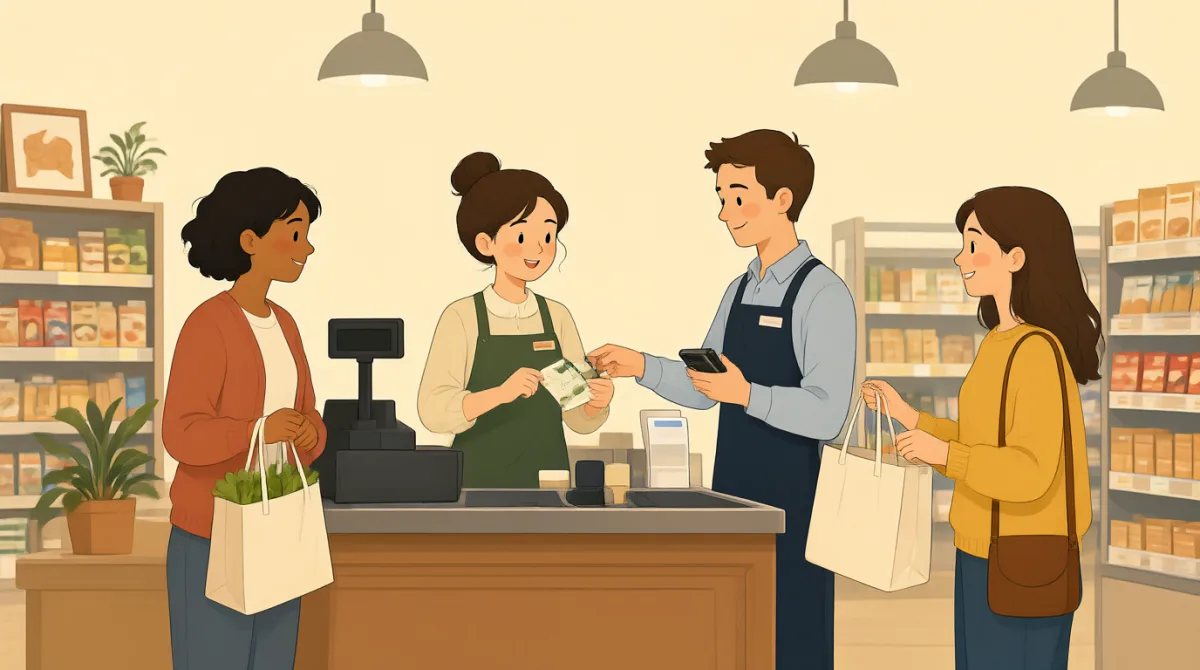

Hi there. Did you find everything you needed today?
你好。今天您找到所有需要的東西了嗎?

Yes, thanks! Just these few items.
是的,謝謝!就這幾樣東西。
Alright. That'll be $12.50. Will that be cash or card?
好的。總共12.50美元。現金還是刷卡?
Card, please. And do you have any paper bags? I forgot my reusable ones.
刷卡吧。你們有紙袋嗎?我忘了帶環保袋。
No problem! We have paper bags for an extra 10 cents. Is that okay?
沒問題!我們有紙袋,需額外支付10美分。行嗎?
Yes, that's fine. Just one bag should be enough.
好的,沒問題。一個袋子就夠了。
Okay, just tap your card here when you're ready. And here's your bag.
好的,準備好就可以在這裡刷卡了。這是您的購物袋。
Thanks! Have a great day.
謝謝!祝您有美好的一天。
You too! Come again soon.
您也是!歡迎下次光臨。
詞彙7
- needed需要的
This word means required or necessary. In shopping, it's used to ask if customers got what they wanted, like 'Did you find everything you needed?' It's polite and common in service situations.
這個詞表示必需的或必要的。在購物時,常用來詢問顧客是否找到了想要的東西,比如 'Did you find everything you needed?'(您找到需要的東西了嗎?)這是服務場合中禮貌又常見的說法。
- items商品
This refers to things or products you buy. In stores, people say 'these items' to mean the products on the counter. It's a general word for goods in shopping contexts.
這個詞指購買的東西或產品。在商店裡,人們會說 'these items'(這些商品)來指櫃檯上的東西。它是在購物場合泛指商品的常用詞。
- cash現金
Money in physical form, like bills and coins. At checkout, cashiers ask 'cash or card?' to know how you'll pay. It's a basic payment option everywhere.
指紙幣和硬幣等實體貨幣。結賬時,收銀員會問 'cash or card?'(現金還是刷卡?)來確認您要怎麼付款。這是各地都常見的基本付款方式。
- card銀行卡
A payment card like credit or debit card. Used in 'cash or card?' to offer electronic payment. Common in modern shopping to avoid carrying cash.
指信用卡或簽帳金融卡等支付卡。'cash or card?'(現金還是刷卡?)裡的 card 指電子支付方式。如今購物時常用銀行卡付款,不必隨身帶現金。
- reusable可重複使用的
Something that can be used again, like eco-friendly bags. In the dialogue, 'reusable ones' means bring-your-own bags to reduce plastic waste. It's environmentally aware language.
指可以再次使用的,比如環保袋。對話中的 'reusable ones' 指自帶的購物袋,可以減少塑膠垃圾。這個說法也體現了環保意識。
- extra額外的
Additional or more than usual. Here, 'extra 10 cents' means an added cost for the bag. Useful for discussing fees in stores.
表示附加的或比平常更多的。這裡的 'extra 10 cents'(額外收取10美分)指購物袋需要另付的費用。這個詞可以用來說明商店裡的額外收費。
- tap輕觸
To lightly touch a card on a machine to pay without inserting it. In 'tap your card,' it's a quick contactless payment method popular in many countries.
指把卡輕輕碰一下機器,就能付款,無須插卡。'tap your card' 指用卡輕觸機器付款,是許多國家常見的快捷非接觸式支付方式。
關鍵句8
- 1
Did you find everything you needed today?
您今天找到需要的東西了嗎?
This is a polite greeting question from cashiers to check customer satisfaction. It's useful at the start of checkout to build rapport. Grammar: Present perfect 'have you found' for recent actions, but here it's simple past in context.
收銀員常用這個禮貌的問候來確認顧客是否找到了想要的東西。結賬剛開始時這樣問很合適,也能拉近距離。語法上,'have you found' 用現在完成時表示近期的經歷,而這裡根據對話情境使用了一般過去時。
- 2
That'll be $12.50.
一共是12.50美元。
A common way to tell the total cost. 'That'll be' is a contraction of 'that will be,' used informally in service. Essential for shopping; say it when giving prices to customers.
這是告知顧客總價的常見說法。'That'll be' 是 'that will be' 的縮寫,在服務場合中常用,語氣比較隨和。購物時,收銀員可以用這句話告訴顧客價格。
- 3
Will that be cash or card?
您要付現金還是刷卡?
Asks for payment method choice. 'Will that be' is future tense for polite offers. Very practical in retail; use it to confirm how someone pays.
這句話是在詢問顧客選擇哪種付款方式。'Will that be' 用將來時來禮貌地詢問或提供選擇。在商店裡可以用它確認顧客打算如何付款。
- 4
Do you have any paper bags?
請問有紙袋嗎?
Requests bags at checkout. 'Do you have any' is a question for availability of countable items. Useful when you need packaging; polite way to ask for help.
這句話是在結賬時詢問有沒有購物袋。'Do you have any' 用來詢問某種可數物品是否有貨。需要包裝袋時可以這樣禮貌地尋求幫助。
- 5
No problem! We have paper bags for an extra 10 cents.
沒問題!紙袋需要額外支付10美分。
Reassures and offers an option with cost. 'No problem' means it's easy to help. Good for customer service; explains fees clearly to avoid surprises.
這句話先表示願意幫忙,再說明可選方案和費用。'No problem' 表示幫忙不麻煩。清楚說明費用能避免顧客意外,適合用於服務場合。
- 6
Just tap your card here when you're ready.
您準備好後,在這裡輕觸銀行卡就可以了。
Instructs on payment. 'Just' softens the command, 'when you're ready' is polite. Use in tech-savvy stores for guiding contactless payments.
這句話是在指導顧客付款。'Just' 讓指示聽起來更柔和,'when you're ready' 則顯得禮貌。在支援非接觸式付款的商店裡,可以用這句話引導顧客付款。
- 7
Thanks! Have a great day.
謝謝!祝您今天愉快。
A friendly goodbye. Common after transactions. 'Have a great day' is idiomatic for well-wishes. Always use positive closers in service interactions.
這是一種友好的道別方式,交易結束後很常用。'Have a great day' 是表達美好祝願的習慣說法。服務交流結束時,用積極的話語道別很合適。
- 8
You too! Come again soon.
您也是!歡迎下次光臨。
Responds to well-wishes and invites return. 'You too' mirrors the phrase. Encourages loyalty; standard in retail to end on a positive note.
這句話回應對方的祝福,並邀請對方再次光臨。'You too' 用來向對方表達同樣的祝願。這樣結束交流能讓顧客感受到熱情,也是零售服務中的常見說法。