Taking the Card and Cash
Zabieranie karty i gotówki
Emma takes her cash and card from the ATM. Grace reminds her to check that she has both.
Emma wyjmuje gotówkę i kartę z bankomatu. Grace przypomina jej, żeby sprawdziła, czy ma jedno i drugie.
Dialog7
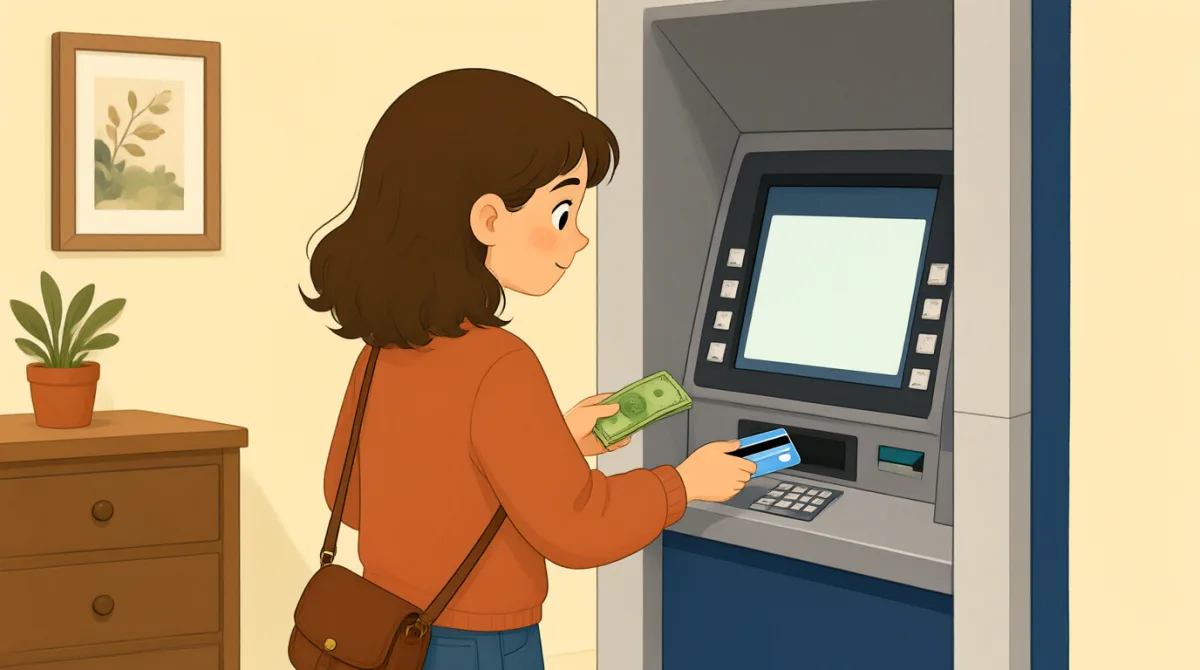

The screen says, “Take your card.”
Na ekranie jest napisane: „Take your card”.

Take your card from the slot first.
Najpierw wyjmij kartę ze szczeliny.
Okay. Now I hear the cash.
Dobrze. Teraz słyszę gotówkę.
Take the cash from the lower slot.
Wyjmij gotówkę z dolnej szczeliny.
I have my cash. Is that all?
Mam gotówkę. To wszystko?
Check your card and cash before you go.
Sprawdź kartę i gotówkę, zanim pójdziesz.
I have both. Thank you for your help!
Mam jedno i drugie. Dziękuję za pomoc!
Słownictwo8
- Take your cardWyjmij kartę
This means remove your card from the ATM. Use “Take your [thing]” to tell someone to pick something up.
To znaczy wyjąć kartę z bankomatu. Użyj „Take your [thing]”, żeby powiedzieć komuś, żeby coś wziął lub wyjął.
- from the slotze szczeliny
The slot is the narrow opening where the ATM gives you your card or cash. Use “from the slot” to say where to take something from.
Szczelina to wąski otwór, z którego bankomat wydaje kartę lub gotówkę. Użyj „from the slot”, żeby powiedzieć, skąd coś wyjąć.
- the cashgotówka
Cash means money in notes or coins. Here, it means the money the ATM gives Emma.
Cash oznacza pieniądze w banknotach lub monetach. W tym przypadku chodzi o pieniądze, które bankomat daje Emmie.
- lower slotdolna szczelina
The lower slot is the opening near the bottom of the ATM. Use “lower” to describe something that is below another thing.
Dolna szczelina to otwór znajdujący się w pobliżu dołu bankomatu. Użyj „lower”, żeby opisać coś, co znajduje się niżej niż inna rzecz.
- Is that all?To wszystko?
This is a way to ask if there is anything more to do or take. You can use it when you think a task may be finished.
To sposób, żeby zapytać, czy jest jeszcze coś do zrobienia lub zabrania. Możesz użyć tego pytania, gdy myślisz, że zadanie może być już zakończone.
- check your card and cashsprawdź kartę i gotówkę
This means make sure you have both your card and your money. Use “check your [things]” to remind someone to make sure they have them.
To znaczy upewnić się, że masz zarówno kartę, jak i pieniądze. Użyj „check your [things]”, żeby przypomnieć komuś, by upewnił się, że ma te rzeczy.
- I have both.Mam jedno i drugie.
This means Emma has her card and her cash. Use “I have both” when you have two things that someone mentioned.
To znaczy, że Emma ma kartę i gotówkę. Użyj „I have both”, gdy masz dwie rzeczy, o których ktoś wspomniał.
- Thank you for your help!Dziękuję za pomoc!
This is a polite way to thank someone who helped you. You can use it after someone gives you advice or assistance.
To uprzejmy sposób podziękowania komuś, kto ci pomógł. Możesz użyć tego zwrotu po tym, jak ktoś udzieli ci rady lub pomocy.
Kluczowe zdania8
- 1
The screen says, “Take your card.”
Na ekranie jest napisane: „Take your card”.
Use this sentence to report what a screen or sign tells you. You can replace “Take your card” with another short message.
Użyj tego zdania, żeby powiedzieć, co nakazuje ci ekran lub znak. Możesz zastąpić „Take your card” innym krótkim komunikatem.
- 2
Take your card from the slot first.
Najpierw wyjmij kartę ze szczeliny.
This is a simple instruction that tells someone what to do and where to do it. Use “Take your [thing] from [place] first” to give a first step.
To proste polecenie mówi komuś, co ma zrobić i gdzie. Użyj „Take your [thing] from [place] first”, żeby podać pierwszy krok.
- 3
Now I hear the cash.
Teraz słyszę gotówkę.
Use “Now I hear…” to say what sound you notice at this moment. You can replace “the cash” with another sound or thing you hear.
Użyj „Now I hear…”, żeby powiedzieć, jaki dźwięk zauważasz w tej chwili. Możesz zastąpić „the cash” innym dźwiękiem lub rzeczą, którą słyszysz.
- 4
Take the cash from the lower slot.
Wyjmij gotówkę z dolnej szczeliny.
This gives a clear instruction about what to take and where to find it. You can replace “the cash” and “the lower slot” with other items and places.
To jasne polecenie dotyczące tego, co wyjąć i gdzie to znaleźć. Możesz zastąpić „the cash” oraz „the lower slot” innymi rzeczami i miejscami.
- 5
I have my cash.
Mam gotówkę.
Use this sentence to say that you have your money. You can replace “my cash” with another thing you have.
Użyj tego zdania, żeby powiedzieć, że masz swoje pieniądze. Możesz zastąpić „my cash” inną rzeczą, którą masz.
- 6
Is that all?
To wszystko?
This short question checks whether there is anything more to do. Use it when you want to know if a task is complete.
To krótkie pytanie sprawdza, czy jest jeszcze coś do zrobienia. Użyj go, gdy chcesz wiedzieć, czy zadanie jest zakończone.
- 7
Check your card and cash before you go.
Sprawdź kartę i gotówkę, zanim pójdziesz.
This is a useful reminder to make sure you have important things before leaving. Replace “your card and cash” with other things you need to check.
To przydatne przypomnienie, żeby upewnić się przed wyjściem, że masz ważne rzeczy. Zastąp „your card and cash” innymi rzeczami, które musisz sprawdzić.
- 8
I have both.
Mam jedno i drugie.
Use this sentence to say that you have two things that were just mentioned. It is a short, natural answer when someone asks you to check for both.
Użyj tego zdania, żeby powiedzieć, że masz dwie rzeczy, o których właśnie była mowa. To krótka i naturalna odpowiedź, gdy ktoś prosi cię o sprawdzenie, czy masz obie rzeczy.