Realizing It Is the Wrong Stop
Orientacja, że to niewłaściwy przystanek
Emma gets off the train and sees that this is not her stop. She asks Jack if they are in the wrong place.
Emma wysiada z pociągu i zauważa, że to nie jej przystanek. Pyta Jacka, czy są w niewłaściwym miejscu.
Dialog6
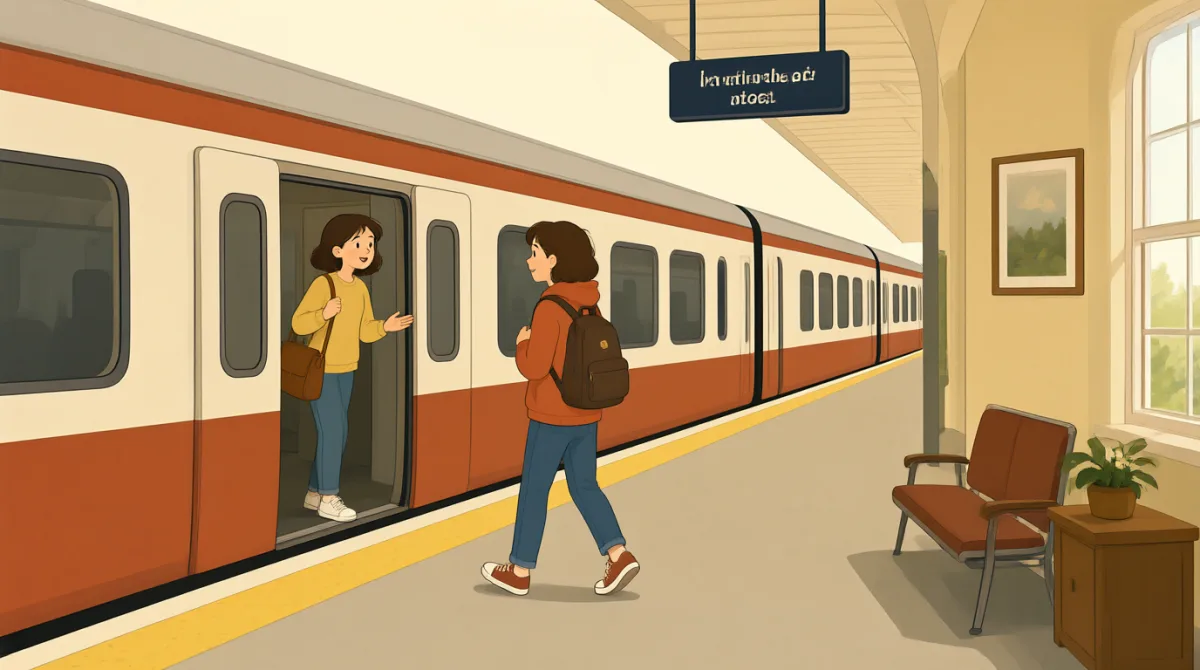

Jack, is this our stop?
Jack, to nasz przystanek?

I don't think so. This looks wrong.
Chyba nie. To wygląda nie tak.
Oh no. We got off at the wrong stop.
O nie. Wysiedliśmy na złym przystanku.
Let's check the station sign.
Sprawdźmy nazwę stacji na tablicy.
I don't see our stop on it.
Nie widzę tam naszego przystanku.
You're right. This isn't our stop.
Masz rację. To nie nasz przystanek.
Słownictwo7
- our stopnasz przystanek
This means the train station where we want to get off. Use it to check whether you are at the right station.
To przystanek kolejowy, na którym chcemy wysiąść. Możesz użyć tego wyrażenia, żeby sprawdzić, czy jesteś na właściwej stacji.
- I don't think so.Chyba nie.
Use this phrase to say that you think something is not true. It is a polite way to disagree or answer no.
Użyj tego wyrażenia, żeby powiedzieć, że sądzisz, iż coś nie jest prawdą. To uprzejmy sposób, by się nie zgodzić lub odpowiedzieć przecząco.
- looks wrongwygląda nie tak
This means something does not seem right. Use it when a place or thing seems different from what you expect.
To znaczy, że coś wydaje się nie w porządku. Użyj tego wyrażenia, gdy jakieś miejsce lub rzecz wydają się inne, niż się spodziewasz.
- got offwysiedliśmy
This means left a train or bus. Use it to say that you left public transport.
To znaczy, że opuściliśmy pociąg lub autobus. Użyj tego wyrażenia, mówiąc o wysiadaniu ze środka transportu publicznego.
- wrong stopzły przystanek
This means a train or bus stop that is not the one you want. You can say this when you leave at the wrong place.
To przystanek kolejowy lub autobusowy, na którym nie chcesz wysiąść. Możesz tak powiedzieć, gdy wysiądziesz w niewłaściwym miejscu.
- Let's check the station sign.Sprawdźmy nazwę stacji na tablicy.
Use this sentence to suggest looking at the sign for information. You can also say, “Let's check the map.”
Użyj tego zdania, żeby zaproponować sprawdzenie informacji na tablicy. Możesz też powiedzieć: „Sprawdźmy mapę”.
- You're right.Masz rację.
Use this phrase to agree with someone. It means that what they said is correct.
Użyj tego wyrażenia, żeby się z kimś zgodzić. Oznacza, że to, co ta osoba powiedziała, jest prawdą.
Kluczowe zdania8
- 1
Jack, is this our stop?
Jack, to nasz przystanek?
Use this question to check if you should get off here. Replace “our stop” with a place or station name when needed.
Użyj tego pytania, żeby sprawdzić, czy powinniście tutaj wysiąść. W razie potrzeby zastąp “our stop” nazwą miejsca lub stacji.
- 2
I don't think so.
Chyba nie.
This is a simple way to say you do not think something is true. You can use it to answer questions or politely disagree.
To prosty sposób, żeby powiedzieć, że nie sądzisz, iż coś jest prawdą. Możesz tak odpowiadać na pytania lub uprzejmie się nie zgadzać.
- 3
This looks wrong.
To wygląda nie tak.
Use this sentence when something does not seem correct. Replace “this” with a place or thing, such as “That sign looks wrong.”
Użyj tego zdania, gdy coś wydaje się nie w porządku. Zamiast “this” możesz użyć nazwy miejsca lub rzeczy, na przykład: “That sign looks wrong.”
- 4
We got off at the wrong stop.
Wysiedliśmy na złym przystanku.
Use this sentence to explain that you left the train or bus at the wrong place. You can replace “stop” with “station” or “bus stop.”
Użyj tego zdania, żeby wyjaśnić, że wysiedliście z pociągu lub autobusu w niewłaściwym miejscu. Zamiast “stop” możesz użyć “station” lub “bus stop.”
- 5
Let's check the station sign.
Sprawdźmy nazwę stacji na tablicy.
Use this sentence to suggest looking at a sign together. Replace “station sign” with another source of information, such as “the map.”
Użyj tego zdania, żeby zaproponować wspólne sprawdzenie informacji na tablicy. Zamiast “station sign” możesz podać inne źródło informacji, na przykład “the map.”
- 6
I don't see our stop on it.
Nie widzę tam naszego przystanku.
Use this sentence when you cannot find a place or name on a sign or map. Replace “our stop” with the information you are looking for.
Użyj tego zdania, gdy nie możesz znaleźć miejsca lub nazwy na tablicy albo mapie. Zamiast “our stop” wstaw informację, której szukasz.
- 7
You're right.
Masz rację.
Use this short phrase to agree with someone. You can follow it with more information, such as “You're right. This is the wrong station.”
Użyj tego krótkiego wyrażenia, żeby się z kimś zgodzić. Możesz dodać dalszą informację, na przykład: “You're right. This is the wrong station.”
- 8
This isn't our stop.
To nie nasz przystanek.
Use this sentence to say that you are not at the place where you need to get off. Replace “our stop” with another place, such as “our station.”
Użyj tego zdania, żeby powiedzieć, że nie jesteście w miejscu, w którym powinniście wysiąść. Zamiast “our stop” możesz podać inne miejsce, na przykład “our station.”