Having Lunch with New Coworkers
새 동료들과 점심 먹기
Emma has lunch with Leo and Mia. They chat about the office and share a few friendly tips for her first week.
에마는 레오, 미아와 점심을 먹어요. 사무실에 관해 이야기를 나누고, 첫 주를 잘 보내기 위한 친절한 팁도 몇 가지 알려 줘요.
대화8
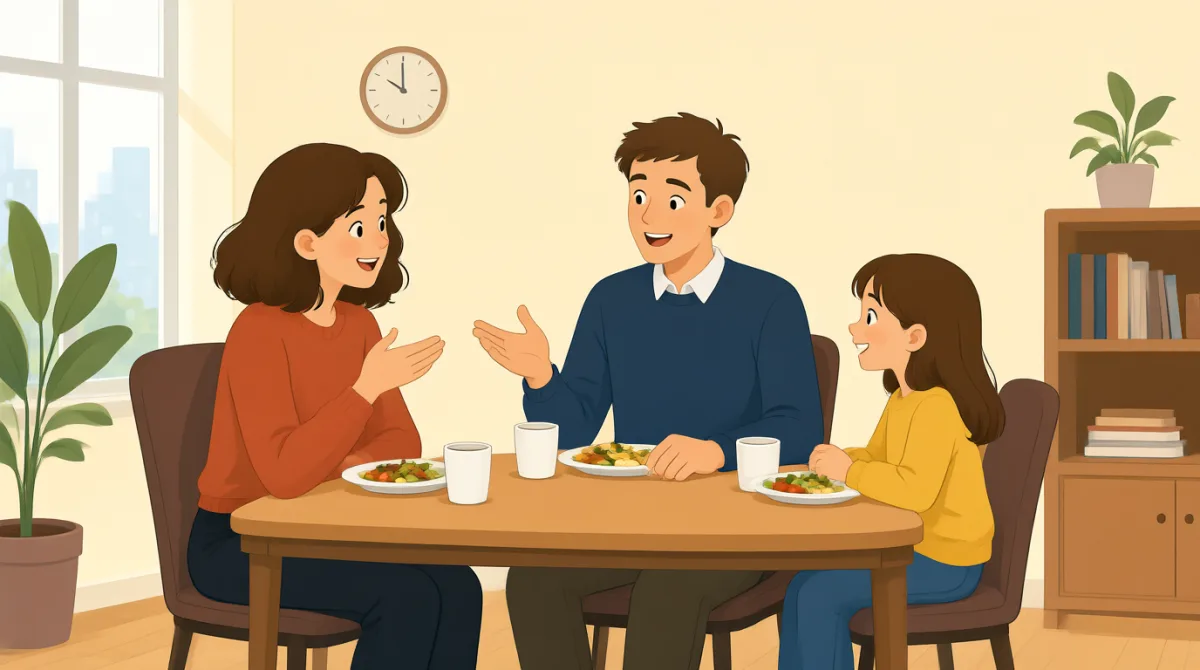

Thanks for having lunch with me. I’m still learning where everything is.
나랑 점심 먹어 줘서 고마워. 아직 어디에 뭐가 있는지 알아 가는 중이야.

Of course! The kitchen is just down the hall, next to the meeting room.
그럼! 주방은 복도 끝으로 조금만 가면 있어. 회의실 바로 옆이야.

How are you finding your first day so far?
첫날은 지금까지 어때?
It’s been good. Everyone is very friendly, and I’ve learned a lot.
좋아. 다들 정말 친절하고, 많이 배웠어.
A good tip: bring a water bottle. The cups run out sometimes.
좋은 팁 하나 알려 줄게. 물병을 챙겨 와. 컵이 가끔 다 떨어지거든.
Good to know! Is there a quiet place where I can eat?
좋은 정보네! 조용히 밥 먹을 만한 곳이 있어?
There’s a small table by the window. It’s usually quiet at noon.
창가에 작은 테이블이 있어. 정오쯤엔 보통 조용해.
And don’t worry if you forget something. We can help you out.
그리고 뭔가 깜빡해도 걱정하지 마. 우리가 도와줄게.
어휘7
- down the hall복도 끝으로
This means farther along the hallway. Use it to tell someone where a place is.
복도를 따라 더 안쪽에 있다는 뜻이에요. 장소가 어디 있는지 알려 줄 때 쓰면 좋아요.
- next to~ 옆에
This means beside or very close to something. Use it when giving simple directions.
무언가의 바로 옆이나 아주 가까이에 있다는 뜻이에요. 간단한 길 안내를 할 때 쓰면 좋아요.
- so far지금까지
This means up to now. You can use it to ask how something is going.
지금 이 순간까지라는 뜻이에요. 일이 어떻게 되어 가는지 물어볼 때 쓸 수 있어요.
- bring a water bottle물병을 챙겨 오다
This means to take a water bottle with you. Use it to give someone a friendly suggestion.
물병을 가지고 오라는 뜻이에요. 친근하게 조언할 때 쓸 수 있어요.
- run out다 떨어지다
This means there is none left. You can use it when food or supplies are used up.
남은 것이 하나도 없다는 뜻이에요. 음식이나 물품을 다 썼을 때 쓸 수 있어요.
- Good to know!좋은 정보네!
This is a friendly way to say that information is useful. You can say it after someone gives you a tip.
유용한 정보를 들었을 때 친근하게 하는 말이에요. 누군가 팁을 알려 준 뒤에 말할 수 있어요.
- help you out도와주다
This means to help someone with something. Use it to offer help in a friendly, informal way.
누군가가 어떤 일을 하는 데 도움을 준다는 뜻이에요. 친근하고 편한 말투로 도움을 제안할 때 써요.
핵심 문장7
- 1
Thanks for having lunch with me.
나랑 점심 먹어 줘서 고마워.
Use this to thank someone for sharing a meal with you. You can change “lunch” to another activity or meal.
함께 식사해 준 사람에게 고마움을 전할 때 쓰는 표현이에요. “lunch”를 다른 활동이나 식사로 바꿔 쓸 수 있어요.
- 2
The kitchen is just down the hall, next to the meeting room.
주방은 복도 끝으로 조금만 가면 있어. 회의실 바로 옆이야.
This sentence gives clear directions using two simple location phrases. Replace “the kitchen” and “the meeting room” with other places.
간단한 위치 표현 두 가지를 사용해 정확하게 길을 알려 주는 문장이에요. “the kitchen”과 “the meeting room”을 다른 장소로 바꿔 보세요.
- 3
How are you finding your first day so far?
첫날은 지금까지 어때?
Use this friendly question to ask how someone feels about a new experience. You can replace “your first day” with “your new job” or “the class.”
새로운 경험에 대해 어떻게 느끼는지 친근하게 물어볼 때 쓰는 질문이에요. “your first day” 대신 “your new job”이나 “the class”를 넣을 수 있어요.
- 4
It’s been good.
좋아.
This is a simple way to say that something has gone well up to now. You can use it to answer questions about your day or week.
지금까지 일이 잘되고 있다고 간단히 말하는 표현이에요. 하루나 한 주가 어땠는지 묻는 질문에 답할 때 쓸 수 있어요.
- 5
A good tip: bring a water bottle.
좋은 팁 하나 알려 줄게. 물병을 챙겨 와.
Use this pattern to give someone practical advice. Replace “bring a water bottle” with another helpful suggestion.
실용적인 조언을 할 때 쓰는 표현이에요. “bring a water bottle”을 다른 유용한 제안으로 바꿔 보세요.
- 6
Is there a quiet place where I can eat?
조용히 밥 먹을 만한 곳이 있어?
Use this question to ask where you can do something. You can replace “eat” with another activity, such as “work” or “sit.”
어디에서 어떤 일을 할 수 있는지 물어볼 때 쓰는 질문이에요. “eat”을 “work”나 “sit”처럼 다른 활동으로 바꿀 수 있어요.
- 7
We can help you out.
우리가 도와줄게.
Use this to offer help in a friendly way. Replace “you” with another person or group when needed.
친근하게 도움을 제안할 때 쓰는 표현이에요. 필요하면 “you”를 다른 사람이나 집단을 가리키는 말로 바꿔 보세요.