Offering a Seat to a Parent
부모에게 자리 양보하기
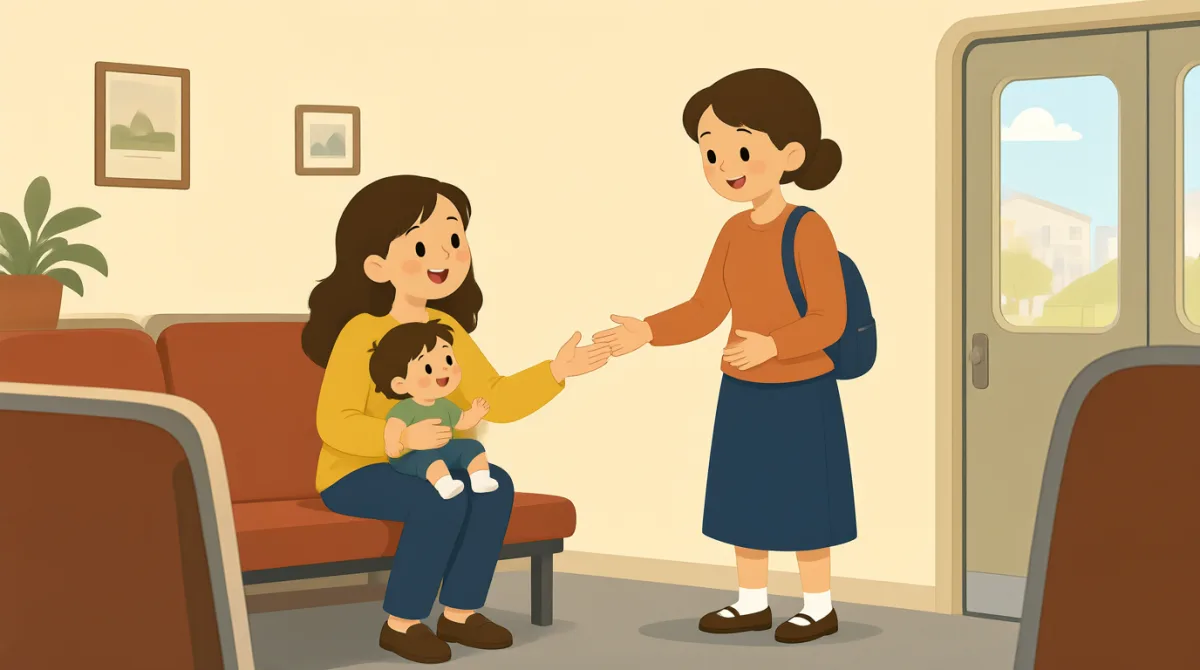
Emma offers her seat to Mia, who is holding her young child. Mia accepts and thanks her.
에마는 어린아이를 안고 있는 미아에게 자리를 양보해요. 미아는 고맙다고 말하며 자리를 받아요.
대화6

Would you like my seat?
제 자리 드릴까요?

Oh, thank you. That would be great.
아, 고마워요. 그러면 정말 좋겠어요.
Here, you can sit down.
여기 앉으세요.
Thanks. I’m holding my little child.
고마워요. 제가 어린아이를 안고 있어서요.
Of course. Please take my seat.
그럼요. 제 자리에 앉으세요.
That’s very kind of you.
정말 친절하시네요.
어휘7
- Would you like my seat?Would you like my seat?
Use this to politely offer your seat to someone. You can replace “my seat” with another thing you want to offer.
누군가에게 자리를 정중하게 권할 때 쓰는 표현이에요. “my seat” 대신 권하고 싶은 다른 것을 넣어도 돼요.
- That would be great.That would be great.
This is a friendly way to accept an offer. You can use it when something sounds helpful.
제안을 기분 좋게 받아들일 때 쓰는 표현이에요. 도움이 될 것 같을 때 사용할 수 있어요.
- sit downsit down
This means to move into a sitting position. You can say “You can sit down” to invite someone to sit.
앉는다는 뜻이에요. 누군가에게 앉으라고 권할 때 “You can sit down”이라고 말할 수 있어요.
- I’m holding my little child.I’m holding my little child.
This means the speaker has their young child in their arms. “I’m holding...” can also describe something else you have in your hands.
말하는 사람이 어린아이를 품에 안고 있다는 뜻이에요. “I’m holding...”은 손에 다른 물건을 들고 있을 때도 쓸 수 있어요.
- Of course.Of course.
This is a warm way to say yes or show that you are happy to help.
기꺼이 돕겠다는 마음을 담아 승낙할 때 쓰는 따뜻한 표현이에요.
- take my seattake my seat
This means to sit in the place where the speaker was sitting. You can use “take my...” to offer someone something you have.
말하는 사람이 앉아 있던 자리에 앉는다는 뜻이에요. “take my...”를 사용해 자신이 가진 것을 다른 사람에게 권할 수 있어요.
- That’s very kind of you.That’s very kind of you.
Say this to thank someone for being thoughtful or helpful.
상대가 배려해 주거나 도와준 것에 감사할 때 쓰는 표현이에요.
핵심 문장8
- 1
Would you like my seat?
제 자리 드릴까요?
Use this polite question to offer someone your seat. You can change “my seat” to something else, such as “my umbrella.”
자리를 권할 때 쓰는 정중한 질문이에요. “my seat”을 “my umbrella”처럼 다른 것으로 바꿔 말할 수도 있어요.
- 2
Oh, thank you.
아, 고마워요.
This is a simple, polite way to show that you are grateful. Use it when someone offers to help you.
고마운 마음을 간단하고 정중하게 전하는 표현이에요. 누군가 도움을 주겠다고 할 때 사용해 보세요.
- 3
That would be great.
그러면 정말 좋겠어요.
Use this to accept an offer in a friendly way. You can also say it when you agree with a helpful suggestion.
제안을 친근하게 받아들일 때 쓰는 표현이에요. 도움이 되는 제안에 동의할 때도 사용할 수 있어요.
- 4
Here, you can sit down.
여기 앉으세요.
This is a friendly way to invite someone to sit. You can use “Here” when you are showing them where to go.
누군가에게 친근하게 앉으라고 권하는 표현이에요. 앉을 곳을 가리켜 줄 때 “Here”를 쓸 수 있어요.
- 5
Thanks.
고마워요.
This is a short, common way to thank someone. Use it in everyday conversations when someone helps you.
누군가 도와줬을 때 일상 대화에서 흔히 쓰는 짧은 감사 표현이에요.
- 6
I’m holding my little child.
제가 어린아이를 안고 있어요.
Use “I’m holding...” to say that something is in your arms or hands right now. You can replace “my little child” with another thing.
“I’m holding...”은 지금 무언가를 품에 안거나 손에 들고 있다고 말할 때 써요. “my little child” 대신 다른 것을 넣을 수도 있어요.
- 7
Of course.
그럼요.
Use this to agree warmly or show that helping is no trouble. It is useful when someone asks for help or thanks you.
기꺼이 승낙하거나 도와주는 게 전혀 번거롭지 않다는 뜻을 전할 때 써요. 누군가 도움을 청하거나 고맙다고 할 때 유용해요.
- 8
That’s very kind of you.
정말 친절하시네요.
Use this sentence to thank someone for doing something thoughtful. You can say it after someone offers help or gives you something.
상대의 배려에 감사할 때 쓰는 표현이에요. 누군가 도움을 제안하거나 무언가를 건네준 뒤에 말할 수 있어요.