Saying No, Thank You
정중히 거절하기
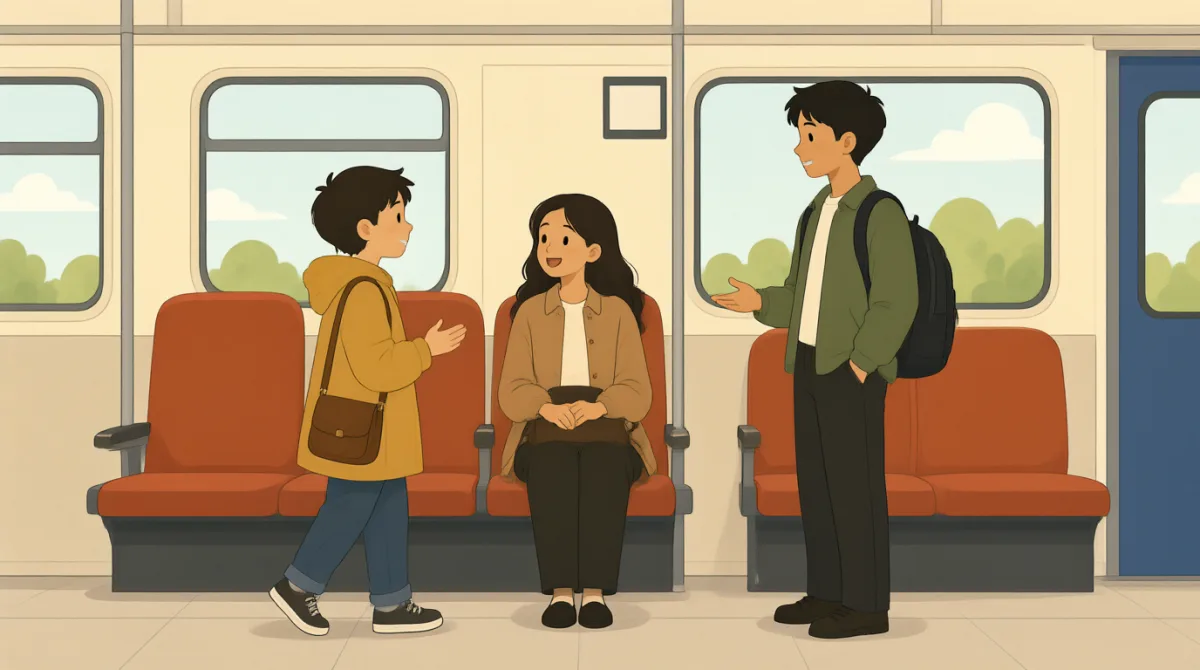
Mia offers David her seat at the next stop. He says no, thank you, because he is getting off soon.
미아는 다음 정류장에서 데이비드에게 자리를 권해요. 곧 내릴 예정인 데이비드는 괜찮다며 정중히 사양해요.
대화7

Would you like my seat, David?
데이비드 씨, 제 자리 앉으실래요?

No, thank you, Mia.
아니요, 괜찮아요, 미아 씨.
I’m getting off soon.
곧 내릴 거예요.
Are you sure?
정말 괜찮으세요?
Yes, my stop is next.
네, 다음 정류장에서 내려요.
Okay. Have a nice day!
알겠어요. 좋은 하루 보내세요!
Thank you. You too!
고마워요. 미아 씨도요!
어휘8
- Would you like my seat?제 자리 앉으실래요?
This is a polite way to offer someone your seat. You can use “Would you like my ___?” to offer something else.
상대방에게 자리를 권할 때 쓰는 정중한 표현이에요. 다른 것을 권하고 싶다면 “Would you like my ___?”에서 빈칸에 다른 말을 넣어 쓸 수 있어요.
- No, thank you.아니요, 괜찮아요.
This is a polite way to say no to an offer. You can use it when you do not need or want something.
제안을 정중하게 거절할 때 쓰는 표현이에요. 필요하지 않거나 원하지 않는 것을 권받았을 때 사용할 수 있어요.
- getting off내리다
On a bus, “getting off” means leaving the bus. You can say “I’m getting off” when your stop is coming.
버스에서 “getting off”는 버스에서 내린다는 뜻이에요. 내릴 정류장이 다가오면 “I’m getting off”라고 말할 수 있어요.
- soon곧
“Soon” means in a short time. You can use it to talk about something that will happen shortly.
“Soon”은 짧은 시간 안에라는 뜻이에요. 머지않아 일어날 일을 말할 때 쓸 수 있어요.
- Are you sure?정말 괜찮으세요?
This is a way to check if someone feels certain. You can say it after someone says no or makes a choice.
상대방이 확실한지 확인할 때 쓰는 표현이에요. 상대가 거절하거나 선택을 한 뒤에 물어볼 수 있어요.
- my stop is next다음 정류장에서 내려요
This means the bus will reach your stop after the current one. You can say it to explain why you are getting ready to leave.
현재 정류장 다음에 버스가 내릴 정류장에 도착한다는 뜻이에요. 곧 내릴 준비를 하는 이유를 설명할 때 쓸 수 있어요.
- Have a nice day!좋은 하루 보내세요!
This is a friendly way to say goodbye. You can use it when you leave someone.
친근하게 작별 인사를 하는 표현이에요. 자리를 떠날 때 상대방에게 할 수 있어요.
- You too!미아 씨도요!
This means you wish the same thing to the other person. You can say it after someone says “Have a nice day!”
상대방에게도 같은 바람을 전한다는 뜻이에요. 누군가 “Have a nice day!”라고 말했을 때 답할 수 있어요.
핵심 문장8
- 1
Would you like my seat, David?
데이비드 씨, 제 자리 앉으실래요?
Use this polite question to offer someone your seat. You can replace “my seat” with another thing you want to offer.
상대방에게 자리를 권할 때 쓰는 정중한 질문이에요. 권하고 싶은 다른 것으로 “my seat”을 바꿔 말할 수 있어요.
- 2
No, thank you, Mia.
아니요, 괜찮아요, 미아 씨.
This is a polite way to refuse an offer. Say “No, thank you” when you do not want something.
제안을 정중하게 거절하는 표현이에요. 원하지 않는 것을 권받았을 때 “No, thank you”라고 말해 보세요.
- 3
I’m getting off soon.
곧 내릴 거예요.
Use this sentence to explain that you will leave the bus shortly. You can also use “I’m getting off soon” in other situations where you are leaving a vehicle.
버스에서 곧 내릴 예정이라는 것을 설명할 때 쓰는 문장이에요. 다른 상황에서도 차량에서 곧 내릴 때 “I’m getting off soon”이라고 말할 수 있어요.
- 4
Are you sure?
정말 괜찮으세요?
Use this short question to check that someone really means what they said. It is useful when you want to offer help again.
상대방이 한 말을 정말로 그렇게 생각하는지 확인할 때 쓰는 짧은 질문이에요. 도움을 다시 한번 제안하고 싶을 때 유용해요.
- 5
Yes, my stop is next.
네, 다음 정류장에서 내려요.
This sentence explains that your bus stop is coming up. You can use “My stop is next” to tell someone why you are getting ready to leave.
버스가 곧 내릴 정류장에 도착한다는 것을 설명하는 문장이에요. 내릴 준비를 하는 이유를 말할 때 “My stop is next”라고 할 수 있어요.
- 6
Okay.
알겠어요.
Use this simple word to show that you understand or accept what someone said. It works in many everyday conversations.
상대방의 말을 이해하거나 받아들였다는 뜻을 전할 때 쓰는 간단한 표현이에요. 일상적인 대화에서 다양하게 쓸 수 있어요.
- 7
Have a nice day!
좋은 하루 보내세요!
This is a friendly way to say goodbye. You can use it when ending a conversation during the day.
친근하게 작별 인사를 하는 표현이에요. 낮에 대화를 마무리할 때 쓸 수 있어요.
- 8
Thank you. You too!
고마워요. 미아 씨도요!
Use “Thank you” to show appreciation, and “You too” to return a kind wish. It is a natural response to “Have a nice day!”
“Thank you”로 고마움을 전하고, “You too”로 상대방의 좋은 바람에 화답해요. “Have a nice day!”라는 말에 자연스럽게 답할 수 있는 표현이에요.