Offering Your Seat to an Older Man
연세 드신 남성에게 자리를 양보하기
Emma sees David standing on the bus and offers him her seat. He thanks her and sits down.
에마는 버스에 서 있는 데이비드를 보고 자리를 양보합니다. 데이비드는 고맙다고 말하고 자리에 앉습니다.
대화6
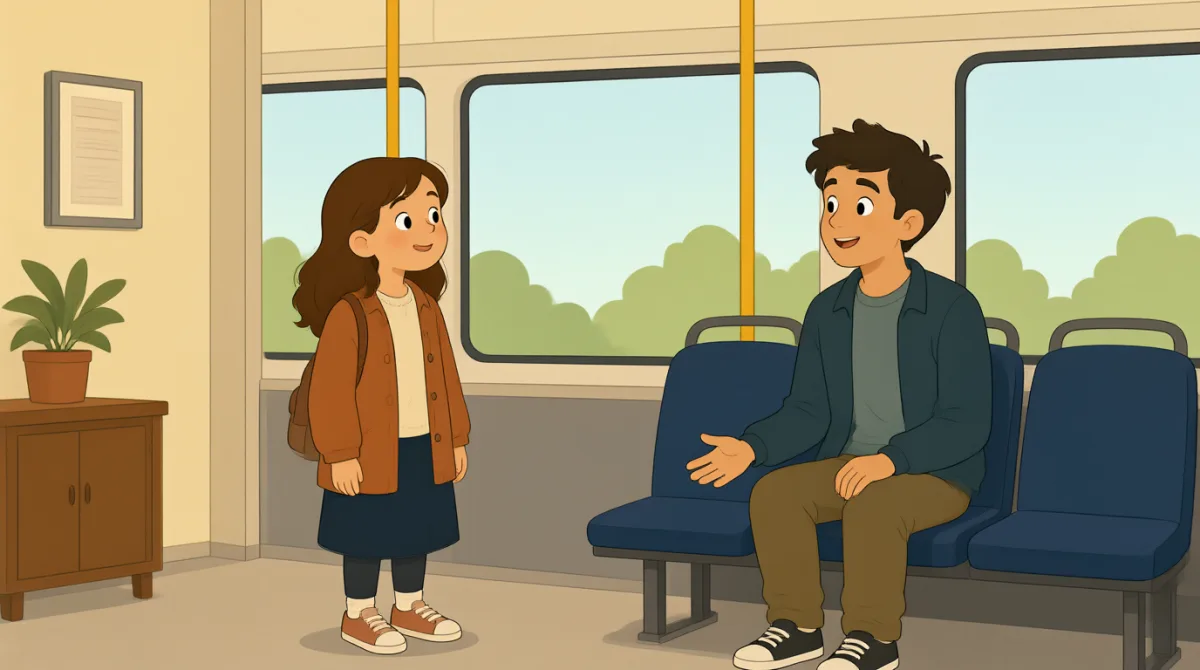

Excuse me, would you like my seat?
실례합니다. 제 자리에 앉으시겠어요?

Oh, thank you. That is very kind.
아, 감사합니다. 정말 친절하시네요.
Please, sit here.
여기 앉으세요.
Thank you. The bus is quite full today.
감사합니다. 오늘 버스가 꽤 붐비네요.
You’re welcome. Are you comfortable?
천만에요. 편안하세요?
Yes, thank you. This is much better.
네, 감사합니다. 훨씬 낫네요.
어휘8
- Excuse me실례합니다
Use this polite phrase to get someone's attention before you speak.
말을 시작하기 전에 상대방의 주의를 끌 때 쓰는 공손한 표현이에요.
- would you like my seat?제 자리에 앉으시겠어요?
Use this question to offer your seat to someone. You can change “my seat” to another thing you want to offer.
누군가에게 자리를 양보할 때 쓰는 질문이에요. “my seat”을 자신이 권하고 싶은 다른 것으로 바꿔 말할 수도 있어요.
- That is very kind.정말 친절하시네요.
Say this to show that you think someone’s action is nice and helpful.
상대방의 행동이 다정하고 도움이 된다고 생각할 때 하는 말이에요.
- Please, sit here.여기 앉으세요.
Use this polite sentence to invite someone to take a seat. You can change “here” to another place.
누군가에게 자리에 앉으라고 권할 때 쓰는 공손한 문장이에요. “here”를 다른 장소로 바꿔 말할 수 있어요.
- quite full꽤 붐비는
This means there are many people on the bus, so there is not much space.
버스에 사람이 많아서 공간이 별로 없다는 뜻이에요.
- You’re welcome.천만에요.
Say this after someone thanks you. It is a friendly reply.
누군가가 고맙다고 했을 때 하는 친근한 대답이에요.
- Are you comfortable?편안하세요?
Use this question to check if someone feels okay in their seat or position.
상대방이 자리에 앉거나 어떤 자세를 취했을 때 괜찮은지 확인하는 질문이에요.
- much better훨씬 나은
Use this phrase to say that something feels a lot better than before.
어떤 것이 전보다 훨씬 좋아졌다고 말할 때 쓰는 표현이에요.
핵심 문장8
- 1
Excuse me, would you like my seat?
실례합니다. 제 자리에 앉으시겠어요?
Use this polite question to offer your seat. You can replace “my seat” with something else you can offer.
자리를 양보할 때 쓰는 공손한 질문이에요. “my seat”을 자신이 권할 수 있는 다른 것으로 바꿔도 돼요.
- 2
Oh, thank you.
아, 감사합니다.
This is a simple, friendly way to accept help or show that you appreciate something.
도움을 받아들이거나 고마움을 표현할 때 쓰는 간단하고 친근한 말이에요.
- 3
That is very kind.
정말 친절하시네요.
Use this sentence to tell someone that their action is thoughtful. You can say it after they help you.
상대방의 행동이 사려 깊다고 말할 때 쓰는 문장이에요. 도움을 받은 뒤에 이렇게 말할 수 있어요.
- 4
Please, sit here.
여기 앉으세요.
Use this polite sentence to invite someone to sit in a place. You can change “here” to “there” or name a seat.
누군가에게 어느 자리에 앉으라고 권할 때 쓰는 공손한 문장이에요. “here”를 “there”로 바꾸거나 좌석을 구체적으로 말할 수 있어요.
- 5
The bus is quite full today.
오늘 버스가 꽤 붐비네요.
Use this sentence to describe a bus with many people on it. You can replace “bus” with another place or thing.
사람이 많이 탄 버스를 묘사할 때 쓰는 문장이에요. “bus”를 다른 장소나 대상으로 바꿔 말할 수 있어요.
- 6
You’re welcome.
천만에요.
This is a common reply when someone says thank you. It sounds polite and friendly.
누군가가 고맙다고 말했을 때 흔히 하는 대답이에요. 공손하면서도 친근하게 들려요.
- 7
Are you comfortable?
편안하세요?
Use this question to check if someone feels okay. You can also ask it about a chair or a room.
상대방이 괜찮은지 확인할 때 쓰는 질문이에요. 의자나 방이 편한지 물을 때도 쓸 수 있어요.
- 8
This is much better.
훨씬 낫네요.
Use this sentence to say that something is a lot better now. You can use it after a change or improvement.
무언가가 지금 훨씬 좋아졌다고 말할 때 쓰는 문장이에요. 변화나 개선이 있은 뒤에 쓸 수 있어요.