Offering Your Seat to an Older Man
年配の男性に席を譲る
Emma sees David standing on the bus and offers him her seat. He thanks her and sits down.
エマはバスの中で立っているデイビッドに気づき、席を譲ります。彼はお礼を言って座ります。
会話6
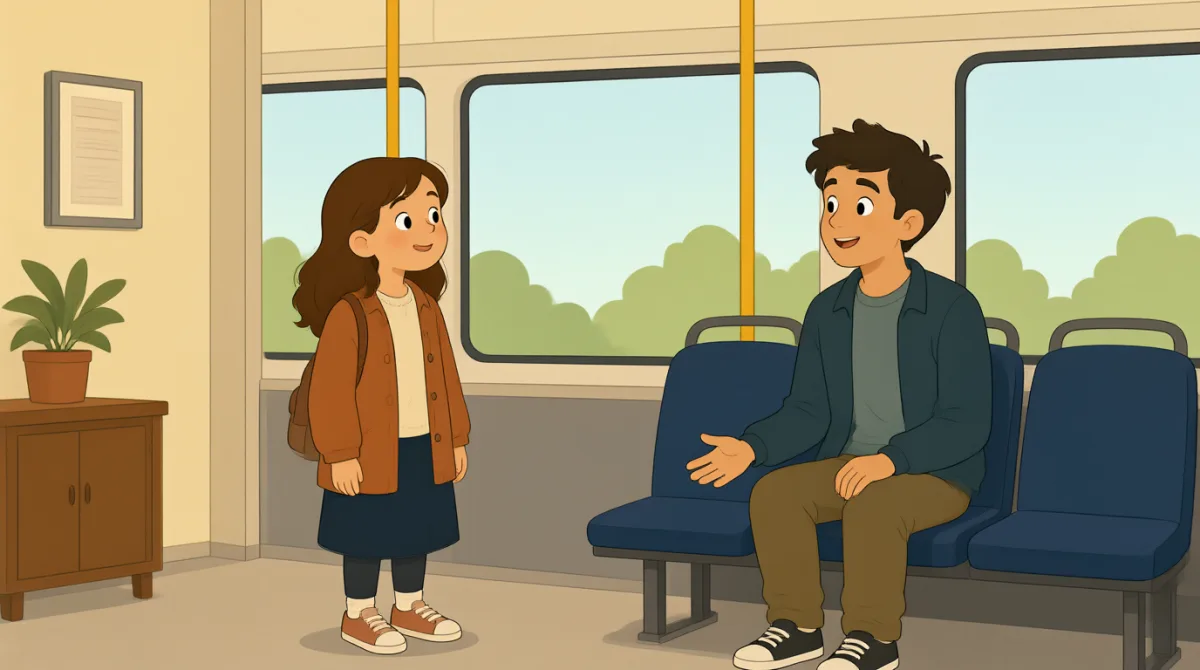

Excuse me, would you like my seat?
すみません、よろしければ私の席に座りませんか?

Oh, thank you. That is very kind.
ああ、ありがとうございます。ご親切にどうも。
Please, sit here.
どうぞ、ここにお座りください。
Thank you. The bus is quite full today.
ありがとうございます。今日はバスがかなり混んでいますね。
You’re welcome. Are you comfortable?
どういたしまして。座り心地はいかがですか?
Yes, thank you. This is much better.
はい、ありがとうございます。ずっと楽になりました。
語彙8
- Excuse meすみません
Use this polite phrase to get someone's attention before you speak.
話しかける前に相手の注意を引きたいときに使う、丁寧な表現です。
- would you like my seat?私の席はいかがですか?
Use this question to offer your seat to someone. You can change “my seat” to another thing you want to offer.
相手に席を譲るときに使う質問です。「my seat」を、譲りたい別のものに変えることもできます。
- That is very kind.ご親切にどうも
Say this to show that you think someone’s action is nice and helpful.
相手の行動が親切で助かると思ったときに、感謝を伝える表現です。
- Please, sit here.どうぞ、ここにお座りください
Use this polite sentence to invite someone to take a seat. You can change “here” to another place.
相手に座るよう勧める丁寧な表現です。「here」を別の場所に変えることもできます。
- quite fullかなり混んでいる
This means there are many people on the bus, so there is not much space.
バスにたくさん人が乗っていて、あまり空きがないという意味です。
- You’re welcome.どういたしまして
Say this after someone thanks you. It is a friendly reply.
お礼を言われたときに返す表現です。親しみのある返事です。
- Are you comfortable?座り心地はいかがですか?
Use this question to check if someone feels okay in their seat or position.
座席や姿勢が楽かどうかを相手に尋ねるときに使う質問です。
- much betterずっと楽
Use this phrase to say that something feels a lot better than before.
前よりもずっと快適だと伝えるときに使う表現です。
重要な文8
- 1
Excuse me, would you like my seat?
すみません、よろしければ私の席に座りませんか?
Use this polite question to offer your seat. You can replace “my seat” with something else you can offer.
席を譲るときに使う丁寧な質問です。「my seat」を、相手に差し出せる別のものに置き換えられます。
- 2
Oh, thank you.
ああ、ありがとうございます。
This is a simple, friendly way to accept help or show that you appreciate something.
助けを受け入れたり、何かに感謝したりするときの、シンプルで親しみやすい言い方です。
- 3
That is very kind.
ご親切にどうも。
Use this sentence to tell someone that their action is thoughtful. You can say it after they help you.
相手の行動が思いやりのあるものだと伝える表現です。助けてもらったあとにも使えます。
- 4
Please, sit here.
どうぞ、ここにお座りください。
Use this polite sentence to invite someone to sit in a place. You can change “here” to “there” or name a seat.
相手に座る場所を勧める丁寧な表現です。「here」を「there」に変えたり、座席を具体的に示したりできます。
- 5
The bus is quite full today.
今日はバスがかなり混んでいますね。
Use this sentence to describe a bus with many people on it. You can replace “bus” with another place or thing.
乗客が多いバスの様子を説明する文です。「bus」を別の場所や物に置き換えることもできます。
- 6
You’re welcome.
どういたしまして。
This is a common reply when someone says thank you. It sounds polite and friendly.
誰かにお礼を言われたときによく使う返事です。丁寧で親しみやすい印象になります。
- 7
Are you comfortable?
座り心地はいかがですか?
Use this question to check if someone feels okay. You can also ask it about a chair or a room.
相手が快適に感じているかを確かめる質問です。椅子や部屋の具合を尋ねるときにも使えます。
- 8
This is much better.
ずっと楽になりました。
Use this sentence to say that something is a lot better now. You can use it after a change or improvement.
今は以前よりずっとよくなったと伝える文です。何かが変わったり改善したりしたあとに使えます。