I Can't Find My Keys
열쇠를 못 찾겠어
Emma cannot find her keys before she leaves home. She asks Mia for help.
에마는 집을 나서기 전에 열쇠를 찾지 못해. 미아에게 도와달라고 해.
대화8
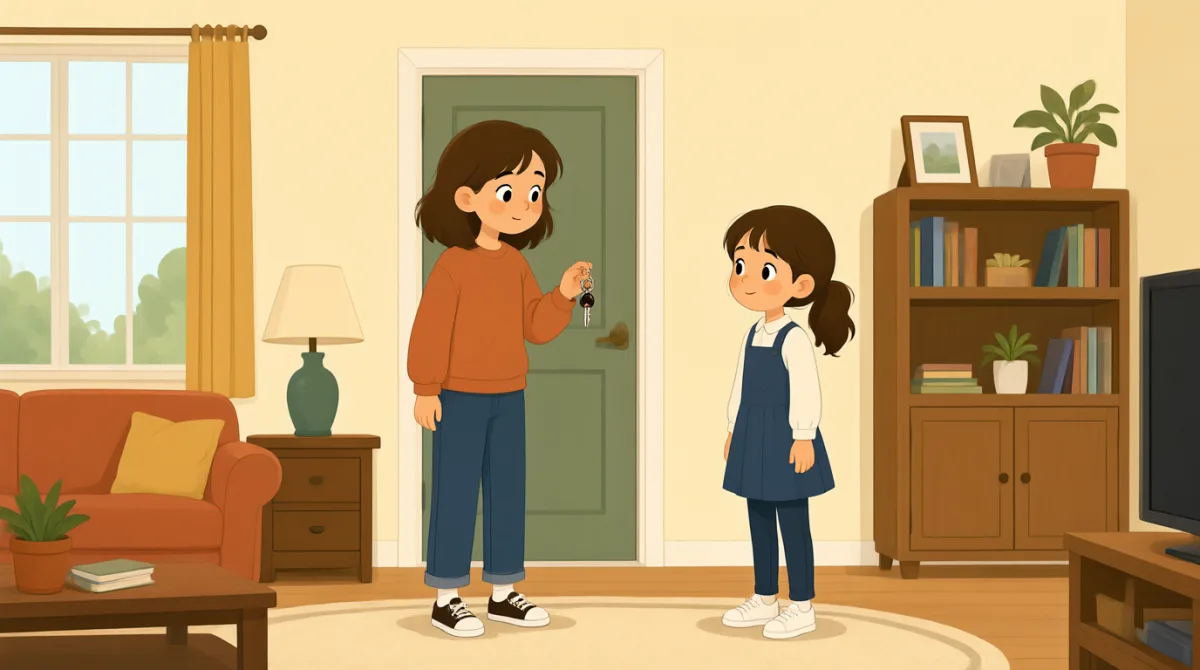

Mia, have you seen my keys?
미아, 내 열쇠 봤어?

No. Where did you last see them?
아니. 마지막으로 어디서 봤어?
I don't know. I can't find them.
모르겠어. 열쇠를 못 찾겠어.
Are they on the table?
탁자 위에 있어?
No, they're not there.
아니, 거기 없어.
Look under your bag.
네 가방 밑을 봐.
Okay. I don't see them.
알았어. 안 보여.
Let's look next to the door.
문 옆을 찾아보자.
어휘6
- have you seen my keys?have you seen my keys?
Ask if someone has seen something you cannot find. You can replace “my keys” with another item.
찾을 수 없는 물건을 누가 봤는지 물어볼 때 써요. “my keys” 대신 다른 물건을 넣어 말할 수 있어요.
- Where did you last see them?Where did you last see them?
Ask about the last place someone saw something. Use “it” for one thing and “them” for more than one.
누군가가 물건을 마지막으로 본 장소를 물어볼 때 써요. 하나를 말할 때는 “them” 대신 “it”을 써요.
- I can't find them.I can't find them.
Say this when you do not know where something is. Use “it” instead of “them” for one thing.
물건이 어디 있는지 모를 때 이렇게 말해요. 하나를 말할 때는 “them” 대신 “it”을 써요.
- on the tableon the table
This phrase tells where something is. Use “on” for something resting on a surface.
물건이 어디 있는지 알려주는 표현이에요. 표면 위에 놓여 있을 때 “on”을 써요.
- under your bagunder your bag
This phrase tells someone where to look. Use “under” for a place below something.
어디를 찾아보라고 알려주는 표현이에요. 어떤 물건의 아래쪽을 말할 때 “under”를 써요.
- next to the doornext to the door
This phrase means beside the door. Use “next to” to say one thing is near another.
문 옆이라는 뜻이에요. 한 물건이 다른 물건 가까이에 있다고 말할 때 “next to”를 써요.
핵심 문장8
- 1
Mia, have you seen my keys?
미아, 내 열쇠 봤어?
Use this question when you cannot find something. Replace “my keys” with the item you are looking for.
무언가를 찾지 못했을 때 이렇게 물어봐요. 찾고 있는 물건에 맞게 “my keys”를 바꿔 말할 수 있어요.
- 2
Where did you last see them?
마지막으로 어디서 봤어?
Ask this to find out where someone saw something most recently. Change “them” to “it” for one thing.
누군가가 어떤 것을 가장 최근에 어디서 봤는지 알아보려고 물을 때 써요. 하나를 말할 때는 “them”을 “it”으로 바꿔요.
- 3
I don't know.
모르겠어.
Use this short sentence when you do not have an answer. It works in many everyday situations.
답을 모를 때 쓰는 짧은 문장이에요. 일상에서 여러 상황에 두루 쓸 수 있어요.
- 4
I can't find them.
열쇠를 못 찾겠어.
Use this to say that something is missing. Replace “them” with “it” when you mean one thing.
무언가가 없어졌다고 말할 때 써요. 하나를 말할 때는 “them” 대신 “it”을 써요.
- 5
Are they on the table?
탁자 위에 있어?
Use this question to check if things are on a surface. Replace “they” with “it” for one thing.
물건이 어떤 표면 위에 있는지 확인할 때 쓰는 질문이에요. 하나를 말할 때는 “they” 대신 “it”을 써요.
- 6
Look under your bag.
네 가방 밑을 봐.
Use this simple instruction to tell someone where to search. Replace “your bag” with another object.
어디를 찾아보라고 간단히 말할 때 써요. “your bag” 대신 다른 물건을 넣어 말할 수 있어요.
- 7
I don't see them.
안 보여.
Use this to say that something is not visible to you. Replace “them” with “it” for one thing.
어떤 것이 눈에 보이지 않는다고 말할 때 써요. 하나를 말할 때는 “them” 대신 “it”을 써요.
- 8
Let's look next to the door.
문 옆을 찾아보자.
Use “Let's” to suggest doing something together. Replace “next to the door” with another place to search.
“Let's”는 함께 무언가를 하자고 제안할 때 써요. 찾을 다른 장소를 말하려면 “next to the door”를 바꿔 보세요.