Is It Under the Sofa?
소파 밑에 있을까?
Mia asks if the keys are under the sofa. Emma looks and finds nothing there.
미아가 열쇠가 소파 밑에 있는지 물어봐요. 에마가 살펴보지만 아무것도 없어요.
대화7
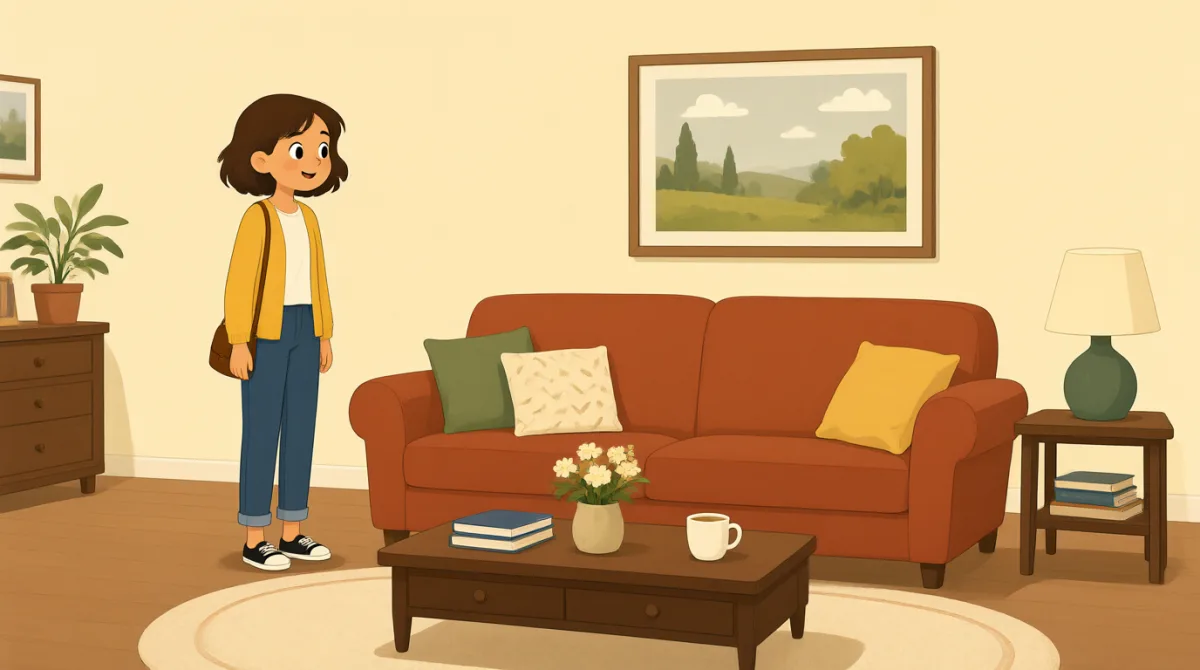

Is it under the sofa?
소파 밑에 있어?

Let me look. I don't see them.
내가 찾아볼게. 안 보여.
Look on the floor, too.
바닥도 살펴봐.
No, they aren't on the floor.
아니, 바닥에는 없어.
Maybe they're next to the sofa.
소파 옆에 있을지도 몰라.
No. They're not here either.
아니. 여기도 없어.
Let's check by the front door.
현관문 옆을 확인해 보자.
어휘6
- under the sofaunder the sofa: 소파 밑에
This means below the sofa. Use it to say where you think something is.
소파 아래를 뜻해요. 물건이 어디에 있을 것 같은지 말할 때 써요.
- Let me look.Let me look.: 내가 찾아볼게.
This means “I will check.” Use it when you want to search for something.
“Let me look.”은 “내가 확인해 볼게”라는 뜻이에요. 무언가를 찾아보고 싶을 때 써요.
- on the flooron the floor: 바닥에
This means on the ground inside a room. Use it to say where something is.
방 안의 바닥에 있다는 뜻이에요. 물건이 어디에 있는지 말할 때 써요.
- next to the sofanext to the sofa: 소파 옆에
This means beside the sofa. Use it to describe where something may be.
소파 바로 옆을 뜻해요. 물건이 어디에 있을지 말할 때 써요.
- eithereither: ~도
Here, “either” means “also” in a negative sentence. Use it when saying something is not in another place, too.
여기서 “either”는 부정문에서 “~도”라는 뜻이에요. 다른 장소에도 없다고 말할 때 써요.
- front doorfront door: 현관문
This is the main door at the front of a home. Use it when talking about the entrance.
집 앞쪽에 있는 주 출입문을 뜻해요. 집의 입구를 말할 때 써요.
핵심 문장8
- 1
Is it under the sofa?
소파 밑에 있어?
This is a useful way to ask if one thing is in a certain place. Change “under the sofa” to ask about another location.
어떤 물건이 특정한 장소에 있는지 물을 때 유용한 표현이에요. 다른 장소에 관해 물으려면 “under the sofa”를 바꿔 보세요.
- 2
Let me look.
내가 찾아볼게.
Use this short sentence when you are going to check or search for something. You can also say it before looking for a person or an object.
무언가를 확인하거나 찾아보려고 할 때 쓰는 짧은 문장이에요. 사람이나 물건을 찾기 전에 말할 수도 있어요.
- 3
I don't see them.
안 보여.
Use this to say that you cannot find or see something. “Them” refers to more than one person or thing.
무언가가 보이지 않거나 찾을 수 없다고 말할 때 써요. “them”은 둘 이상의 사람이나 물건을 가리켜요.
- 4
Look on the floor, too.
바닥도 살펴봐.
This is a simple way to ask someone to check another place. You can replace “on the floor” with a different location.
상대방에게 다른 장소도 확인해 달라고 간단히 부탁하는 표현이에요. “on the floor”를 다른 장소로 바꿔 쓸 수 있어요.
- 5
No, they aren't on the floor.
아니, 바닥에는 없어.
Use this sentence to say that several things are not in a place. Replace “on the floor” with another location.
여러 물건이 어떤 장소에 없다고 말할 때 써요. “on the floor”를 다른 장소로 바꿔 보세요.
- 6
Maybe they're next to the sofa.
소파 옆에 있을지도 몰라.
Use “Maybe” to say where something could be when you are not sure. Change the location to suggest another place.
확실하지 않을 때 무언가가 어디에 있을지 말하려면 “Maybe”를 써요. 다른 장소를 넣어 다른 곳을 제안할 수 있어요.
- 7
No. They're not here either.
아니. 여기도 없어.
Use this to say that something is not in this place, just as it was not in another place. “Either” is common in negative sentences.
다른 장소에도 없었던 것처럼 이곳에도 없다고 말할 때 써요. “Either”는 부정문에서 자주 쓰여요.
- 8
Let's check by the front door.
현관문 옆을 확인해 보자.
Use “Let's check” to suggest looking somewhere together. Replace “by the front door” with another place.
함께 어딘가를 살펴보자고 제안할 때 “Let's check”를 써요. “by the front door”를 다른 장소로 바꿔 보세요.