I Can't Find My Keys
我找不到鑰匙
Emma cannot find her keys before she leaves home. She asks Mia for help.
艾瑪出門前找不到鑰匙。她請米婭幫忙。
對話8
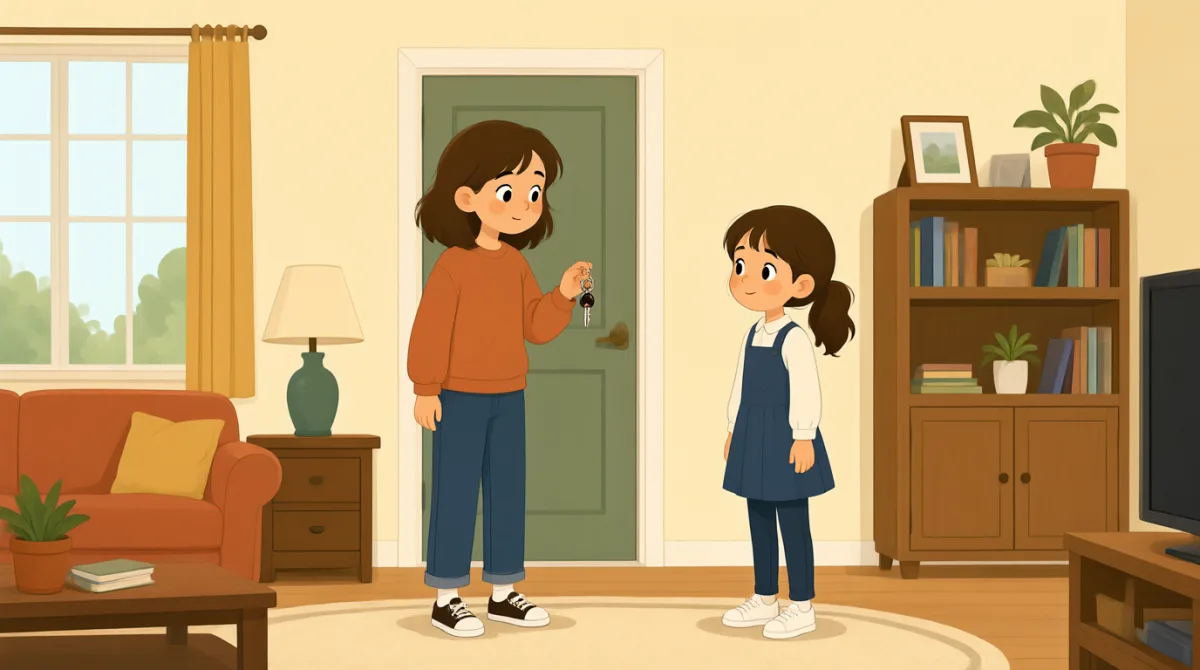

Mia, have you seen my keys?
米婭,你看到我的鑰匙了嗎?

No. Where did you last see them?
沒有。你最後一次是在哪兒看到它們的?
I don't know. I can't find them.
我不知道。我找不到它們了。
Are they on the table?
它們在桌子上嗎?
No, they're not there.
不,它們不在那兒。
Look under your bag.
看看你的包下面。
Okay. I don't see them.
好吧。我沒看到它們。
Let's look next to the door.
我們去門旁邊找找吧。
詞彙6
- have you seen my keys?你看到我的鑰匙了嗎?
Ask if someone has seen something you cannot find. You can replace “my keys” with another item.
找不到東西時,可以這樣問別人有沒有見過。你也可以把“my keys”換成其他物品。
- Where did you last see them?你最後一次是在哪兒看到它們的?
Ask about the last place someone saw something. Use “it” for one thing and “them” for more than one.
詢問某人最後一次在哪裡看到某樣東西。一個東西用“it”,多個東西用“them”。
- I can't find them.我找不到它們了。
Say this when you do not know where something is. Use “it” instead of “them” for one thing.
不知道某樣東西在哪兒時,可以這樣說。指一個東西時,用“it”代替“them”。
- on the table在桌子上
This phrase tells where something is. Use “on” for something resting on a surface.
這個短語用來說明某樣東西的位置。東西放在某個表面上時,用“on”。
- under your bag在你的包下面
This phrase tells someone where to look. Use “under” for a place below something.
這個短語用來告訴別人該在哪裡找。某個地方在一樣東西的下方時,用“under”。
- next to the door在門旁邊
This phrase means beside the door. Use “next to” to say one thing is near another.
這個短語表示在門邊上。用“next to”來表示一樣東西在另一件東西旁邊。
關鍵句8
- 1
Mia, have you seen my keys?
米婭,你看到我的鑰匙了嗎?
Use this question when you cannot find something. Replace “my keys” with the item you are looking for.
找不到東西時,可以這樣問。把“my keys”換成你正在找的物品。
- 2
Where did you last see them?
你最後一次是在哪兒看到它們的?
Ask this to find out where someone saw something most recently. Change “them” to “it” for one thing.
這樣問可以瞭解某人最近一次在哪裡看到某樣東西。指一個東西時,把“them”換成“it”。
- 3
I don't know.
我不知道。
Use this short sentence when you do not have an answer. It works in many everyday situations.
不知道答案時,可以用這句簡短的話。日常生活中的很多場合都適用。
- 4
I can't find them.
我找不到它們了。
Use this to say that something is missing. Replace “them” with “it” when you mean one thing.
這樣說表示有東西不見了。指一個東西時,把“them”換成“it”。
- 5
Are they on the table?
它們在桌子上嗎?
Use this question to check if things are on a surface. Replace “they” with “it” for one thing.
可以用這個問句確認東西是否在某個表面上。指一個東西時,把“they”換成“it”。
- 6
Look under your bag.
看看你的包下面。
Use this simple instruction to tell someone where to search. Replace “your bag” with another object.
可以用這句簡單的指示告訴別人去哪裡找。把“your bag”換成其他物品即可。
- 7
I don't see them.
我沒看到它們。
Use this to say that something is not visible to you. Replace “them” with “it” for one thing.
看不到某樣東西時,可以這樣說。指一個東西時,把“them”換成“it”。
- 8
Let's look next to the door.
我們去門旁邊找找吧。
Use “Let's” to suggest doing something together. Replace “next to the door” with another place to search.
用“Let's”來提議一起做某件事。把“next to the door”換成其他要找的地方。