I Can't Find My Keys
لا أستطيع العثور على مفاتيحي
Emma cannot find her keys before she leaves home. She asks Mia for help.
لا تستطيع إيما العثور على مفاتيحها قبل مغادرة المنزل، فتطلب المساعدة من ميا.
حوار8
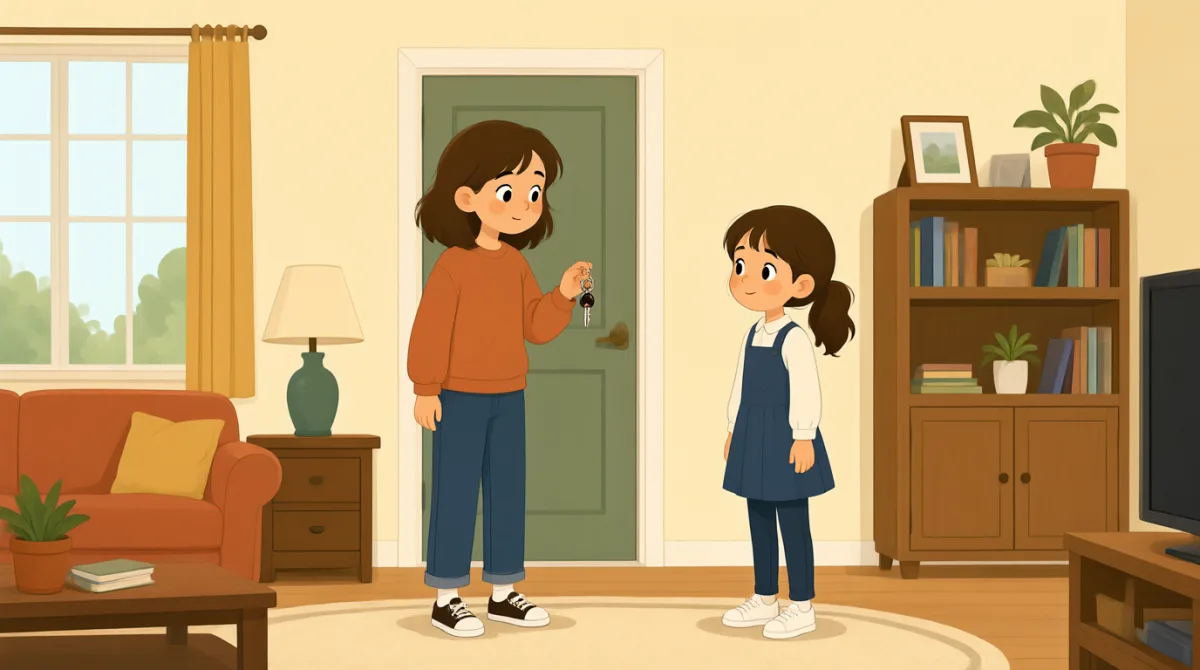

Mia, have you seen my keys?
ميا، هل رأيتِ مفاتيحي؟

No. Where did you last see them?
لا. أين رأيتِها آخر مرة؟
I don't know. I can't find them.
لا أعرف. لا أستطيع العثور عليها.
Are they on the table?
هل هي على الطاولة؟
No, they're not there.
لا، ليست هناك.
Look under your bag.
انظري تحت حقيبتك.
Okay. I don't see them.
حسنًا. لا أراها.
Let's look next to the door.
لنبحث بجانب الباب.
المفردات6
- have you seen my keys?هل رأيت مفاتيحي؟
Ask if someone has seen something you cannot find. You can replace “my keys” with another item.
استخدمي هذا السؤال لتسألي إن كان أحد قد رأى شيئًا لا تستطيعين العثور عليه. يمكنك استبدال “my keys” بغرض آخر.
- Where did you last see them?أين رأيتَها آخر مرة؟
Ask about the last place someone saw something. Use “it” for one thing and “them” for more than one.
اسألي عن آخر مكان رأى فيه شخص شيئًا. استخدمي “it” لشيء واحد و“them” لأكثر من شيء.
- I can't find them.لا أستطيع العثور عليها.
Say this when you do not know where something is. Use “it” instead of “them” for one thing.
قولي ذلك عندما لا تعرفين أين يوجد شيء ما. استخدمي “it” بدلًا من “them” عند الحديث عن شيء واحد.
- on the tableعلى الطاولة
This phrase tells where something is. Use “on” for something resting on a surface.
توضح هذه العبارة مكان شيء ما. استخدمي “on” لشيء يستقر على سطح.
- under your bagتحت حقيبتك
This phrase tells someone where to look. Use “under” for a place below something.
تدل هذه العبارة على المكان الذي ينبغي لشخص أن يبحث فيه. استخدمي “under” لمكان يقع أسفل شيء ما.
- next to the doorبجانب الباب
This phrase means beside the door. Use “next to” to say one thing is near another.
تعني هذه العبارة بمحاذاة الباب. استخدمي “next to” لتقولي إن شيئًا قريب من شيء آخر.
الجمل الأساسية8
- 1
Mia, have you seen my keys?
ميا، هل رأيتِ مفاتيحي؟
Use this question when you cannot find something. Replace “my keys” with the item you are looking for.
استخدمي هذا السؤال عندما لا تستطيعين العثور على شيء. استبدلي “my keys” بالغرض الذي تبحثين عنه.
- 2
Where did you last see them?
أين رأيتِها آخر مرة؟
Ask this to find out where someone saw something most recently. Change “them” to “it” for one thing.
اطرحي هذا السؤال لمعرفة المكان الذي رأى فيه شخص شيئًا مؤخرًا. غيّري “them” إلى “it” عند الحديث عن شيء واحد.
- 3
I don't know.
لا أعرف.
Use this short sentence when you do not have an answer. It works in many everyday situations.
استخدمي هذه الجملة القصيرة عندما لا تعرفين الإجابة. وهي مناسبة لكثير من المواقف اليومية.
- 4
I can't find them.
لا أستطيع العثور عليها.
Use this to say that something is missing. Replace “them” with “it” when you mean one thing.
استخدمي هذه العبارة لتقولي إن شيئًا مفقود. استبدلي “them” بـ“it” عندما تقصدين شيئًا واحدًا.
- 5
Are they on the table?
هل هي على الطاولة؟
Use this question to check if things are on a surface. Replace “they” with “it” for one thing.
استخدمي هذا السؤال للتحقق مما إذا كانت الأشياء على سطح. استبدلي “they” بـ“it” عند الحديث عن شيء واحد.
- 6
Look under your bag.
انظري تحت حقيبتك.
Use this simple instruction to tell someone where to search. Replace “your bag” with another object.
استخدمي هذا التوجيه البسيط لتخبري شخصًا أين يبحث. استبدلي “your bag” بغرض آخر.
- 7
I don't see them.
لا أراها.
Use this to say that something is not visible to you. Replace “them” with “it” for one thing.
استخدمي هذه العبارة لتقولي إنك لا تستطيعين رؤية شيء ما. استبدلي “them” بـ“it” عند الحديث عن شيء واحد.
- 8
Let's look next to the door.
لنبحث بجانب الباب.
Use “Let's” to suggest doing something together. Replace “next to the door” with another place to search.
استخدمي “Let's” لاقتراح القيام بشيء معًا. استبدلي “next to the door” بمكان آخر للبحث.