I Can't Find My Keys
Nie mogę znaleźć kluczy
Emma cannot find her keys before she leaves home. She asks Mia for help.
Emma nie może znaleźć kluczy przed wyjściem z domu. Prosi Mię o pomoc.
Dialog8
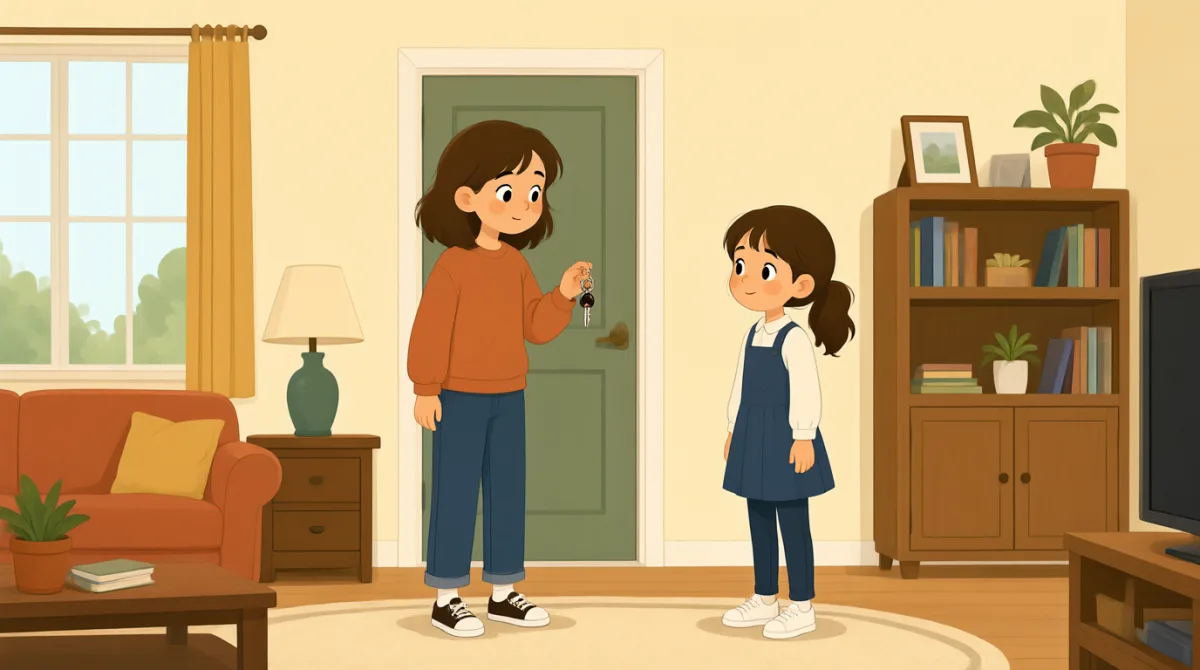

Mia, have you seen my keys?
Mia, widziałaś moje klucze?

No. Where did you last see them?
Nie. Gdzie ostatnio je widziałaś?
I don't know. I can't find them.
Nie wiem. Nie mogę ich znaleźć.
Are they on the table?
Leżą na stole?
No, they're not there.
Nie, nie ma ich tam.
Look under your bag.
Zajrzyj pod swoją torbę.
Okay. I don't see them.
Dobra. Nie widzę ich.
Let's look next to the door.
Poszukajmy obok drzwi.
Słownictwo6
- have you seen my keys?widziałaś moje klucze?
Ask if someone has seen something you cannot find. You can replace “my keys” with another item.
Zapytaj w ten sposób, czy ktoś widział coś, czego nie możesz znaleźć. Zamiast “my keys” możesz podać inną rzecz.
- Where did you last see them?Gdzie ostatnio je widziałaś?
Ask about the last place someone saw something. Use “it” for one thing and “them” for more than one.
Zapytaj o ostatnie miejsce, w którym ktoś coś widział. Użyj “it” w odniesieniu do jednej rzeczy, a “them” — do więcej niż jednej.
- I can't find them.Nie mogę ich znaleźć.
Say this when you do not know where something is. Use “it” instead of “them” for one thing.
Powiedz tak, gdy nie wiesz, gdzie coś jest. W odniesieniu do jednej rzeczy użyj “it” zamiast “them”.
- on the tablena stole
This phrase tells where something is. Use “on” for something resting on a surface.
To wyrażenie mówi, gdzie coś się znajduje. Użyj “on”, gdy coś leży na powierzchni.
- under your bagpod twoją torbą
This phrase tells someone where to look. Use “under” for a place below something.
To wyrażenie podpowiada komuś, gdzie szukać. Użyj “under”, gdy coś znajduje się poniżej czegoś innego.
- next to the doorobok drzwi
This phrase means beside the door. Use “next to” to say one thing is near another.
To wyrażenie oznacza, że coś znajduje się przy drzwiach. Użyj “next to”, by powiedzieć, że jedna rzecz jest blisko drugiej.
Kluczowe zdania8
- 1
Mia, have you seen my keys?
Mia, widziałaś moje klucze?
Use this question when you cannot find something. Replace “my keys” with the item you are looking for.
Zadaj to pytanie, gdy nie możesz czegoś znaleźć. Zamiast “my keys” podaj rzecz, której szukasz.
- 2
Where did you last see them?
Gdzie ostatnio je widziałaś?
Ask this to find out where someone saw something most recently. Change “them” to “it” for one thing.
Zapytaj tak, by dowiedzieć się, gdzie ktoś ostatnio coś widział. Zmień “them” na “it”, gdy chodzi o jedną rzecz.
- 3
I don't know.
Nie wiem.
Use this short sentence when you do not have an answer. It works in many everyday situations.
Użyj tego krótkiego zdania, gdy nie znasz odpowiedzi. Przydaje się w wielu codziennych sytuacjach.
- 4
I can't find them.
Nie mogę ich znaleźć.
Use this to say that something is missing. Replace “them” with “it” when you mean one thing.
Powiedz tak, że czegoś nie możesz znaleźć. Zmień “them” na “it”, gdy chodzi o jedną rzecz.
- 5
Are they on the table?
Leżą na stole?
Use this question to check if things are on a surface. Replace “they” with “it” for one thing.
Zadaj to pytanie, by sprawdzić, czy rzeczy znajdują się na jakiejś powierzchni. Zmień “they” na “it”, gdy chodzi o jedną rzecz.
- 6
Look under your bag.
Zajrzyj pod swoją torbę.
Use this simple instruction to tell someone where to search. Replace “your bag” with another object.
Użyj tego prostego polecenia, by powiedzieć komuś, gdzie szukać. Zamiast “your bag” podaj inny przedmiot.
- 7
I don't see them.
Nie widzę ich.
Use this to say that something is not visible to you. Replace “them” with “it” for one thing.
Użyj tego zdania, by powiedzieć, że czegoś nie widzisz. Zmień “them” na “it”, gdy chodzi o jedną rzecz.
- 8
Let's look next to the door.
Poszukajmy obok drzwi.
Use “Let's” to suggest doing something together. Replace “next to the door” with another place to search.
Użyj “Let's”, by zaproponować wspólne działanie. Zamiast “next to the door” podaj inne miejsce, w którym można poszukać.