I Can't Find My Keys
کلیدهایم را پیدا نمیکنم
Emma cannot find her keys before she leaves home. She asks Mia for help.
اِما پیش از بیرون رفتن از خانه نمیتواند کلیدهایش را پیدا کند. او از میا کمک میخواهد.
گفتوگو8
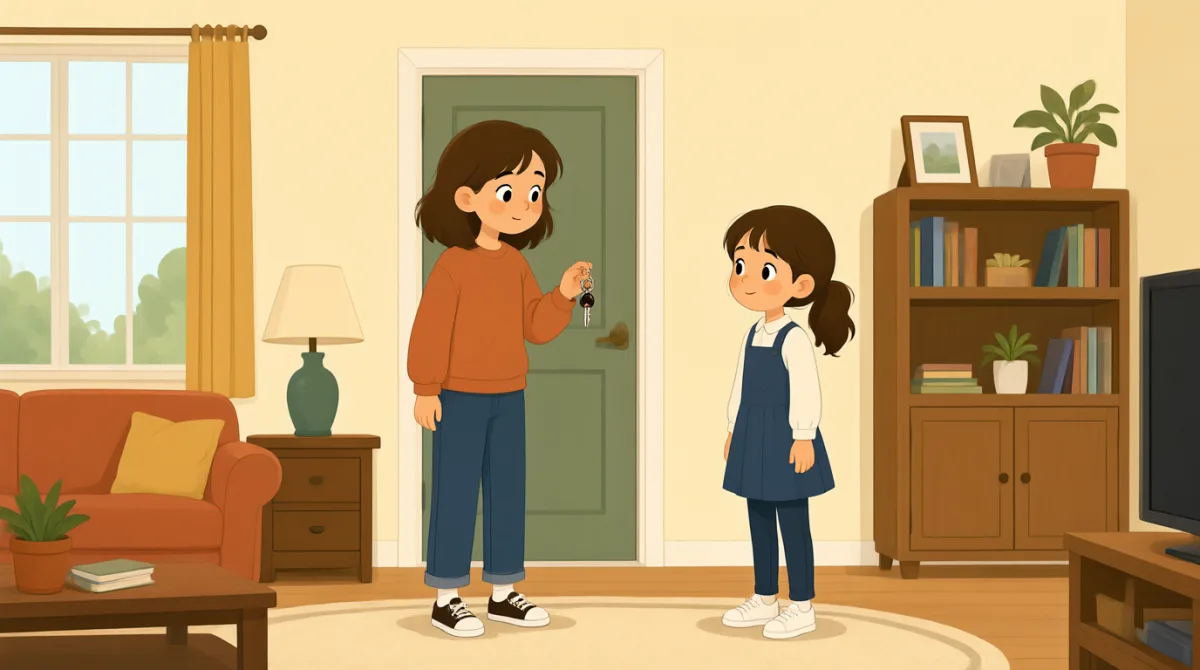

Mia, have you seen my keys?
میا، کلیدهایم را ندیدهای؟

No. Where did you last see them?
نه. آخرین بار کجا دیدیشان؟
I don't know. I can't find them.
نمیدانم. نمیتوانم پیدایشان کنم.
Are they on the table?
روی میز هستند؟
No, they're not there.
نه، آنجا نیستند.
Look under your bag.
زیر کیفت را نگاه کن.
Okay. I don't see them.
باشه. نمیبینمشان.
Let's look next to the door.
بیا کنار در را نگاه کنیم.
واژگان6
- have you seen my keys?کلیدهایم را ندیدهای؟
Ask if someone has seen something you cannot find. You can replace “my keys” with another item.
وقتی چیزی را پیدا نمیکنی، با این عبارت میپرسی آیا کسی آن را دیده است یا نه. میتوانی بهجای “my keys” (کلیدهایم) نام چیز دیگری را بگذاری.
- Where did you last see them?آخرین بار کجا دیدیشان؟
Ask about the last place someone saw something. Use “it” for one thing and “them” for more than one.
با این پرسش دربارهٔ آخرین جایی که کسی چیزی را دیده است سؤال میکنی. برای یک چیز از “it” و برای چند چیز از “them” استفاده کن.
- I can't find them.نمیتوانم پیدایشان کنم.
Say this when you do not know where something is. Use “it” instead of “them” for one thing.
وقتی نمیدانی چیزی کجاست، این را میگویی. برای یک چیز بهجای “them” از “it” استفاده کن.
- on the tableروی میز
This phrase tells where something is. Use “on” for something resting on a surface.
این عبارت میگوید چیزی کجاست. برای چیزی که روی سطحی قرار دارد، از “on” استفاده کن.
- under your bagزیر کیفت
This phrase tells someone where to look. Use “under” for a place below something.
این عبارت به کسی میگوید کجا را بگردد. برای جایی پایینتر از یک چیز، از “under” استفاده کن.
- next to the doorکنار در
This phrase means beside the door. Use “next to” to say one thing is near another.
این عبارت یعنی در کنار در. از “next to” استفاده کن تا بگویی چیزی نزدیک چیز دیگری است.
جملات کلیدی8
- 1
Mia, have you seen my keys?
میا، کلیدهایم را ندیدهای؟
Use this question when you cannot find something. Replace “my keys” with the item you are looking for.
وقتی چیزی را پیدا نمیکنی، این سؤال را بپرس. بهجای “my keys” (کلیدهایم)، چیزی را که دنبالش میگردی بگذار.
- 2
Where did you last see them?
آخرین بار کجا دیدیشان؟
Ask this to find out where someone saw something most recently. Change “them” to “it” for one thing.
این را بپرس تا بفهمی کسی چیزی را آخرین بار کجا دیده است. برای یک چیز، “them” را به “it” تغییر بده.
- 3
I don't know.
نمیدانم.
Use this short sentence when you do not have an answer. It works in many everyday situations.
وقتی جوابی نداری، از این جملهٔ کوتاه استفاده کن. این جمله در موقعیتهای روزمرهٔ زیادی به کار میآید.
- 4
I can't find them.
نمیتوانم پیدایشان کنم.
Use this to say that something is missing. Replace “them” with “it” when you mean one thing.
از این جمله برای گفتن اینکه چیزی گم شده است استفاده کن. وقتی منظورت یک چیز است، “them” را با “it” جایگزین کن.
- 5
Are they on the table?
روی میز هستند؟
Use this question to check if things are on a surface. Replace “they” with “it” for one thing.
این سؤال را بپرس تا مطمئن شوی چیزها روی سطحی هستند یا نه. برای یک چیز، “they” را با “it” جایگزین کن.
- 6
Look under your bag.
زیر کیفت را نگاه کن.
Use this simple instruction to tell someone where to search. Replace “your bag” with another object.
از این دستور ساده استفاده کن تا به کسی بگویی کجا را بگردد. میتوانی بهجای “your bag” (کیفت)، نام چیز دیگری را بگذاری.
- 7
I don't see them.
نمیبینمشان.
Use this to say that something is not visible to you. Replace “them” with “it” for one thing.
از این جمله برای گفتن اینکه چیزی را نمیبینی استفاده کن. برای یک چیز، “them” را با “it” جایگزین کن.
- 8
Let's look next to the door.
بیا کنار در را نگاه کنیم.
Use “Let's” to suggest doing something together. Replace “next to the door” with another place to search.
از “Let's” برای پیشنهاد انجام کاری با هم استفاده کن. میتوانی بهجای “next to the door” (کنار در)، جای دیگری را برای گشتن بگذاری.