I Can't Find My Keys
मुझे अपनी चाबियाँ नहीं मिल रहीं
Emma cannot find her keys before she leaves home. She asks Mia for help.
घर से निकलने से पहले एमा को अपनी चाबियाँ नहीं मिलतीं। वह मदद के लिए मिया से पूछती है।
संवाद8
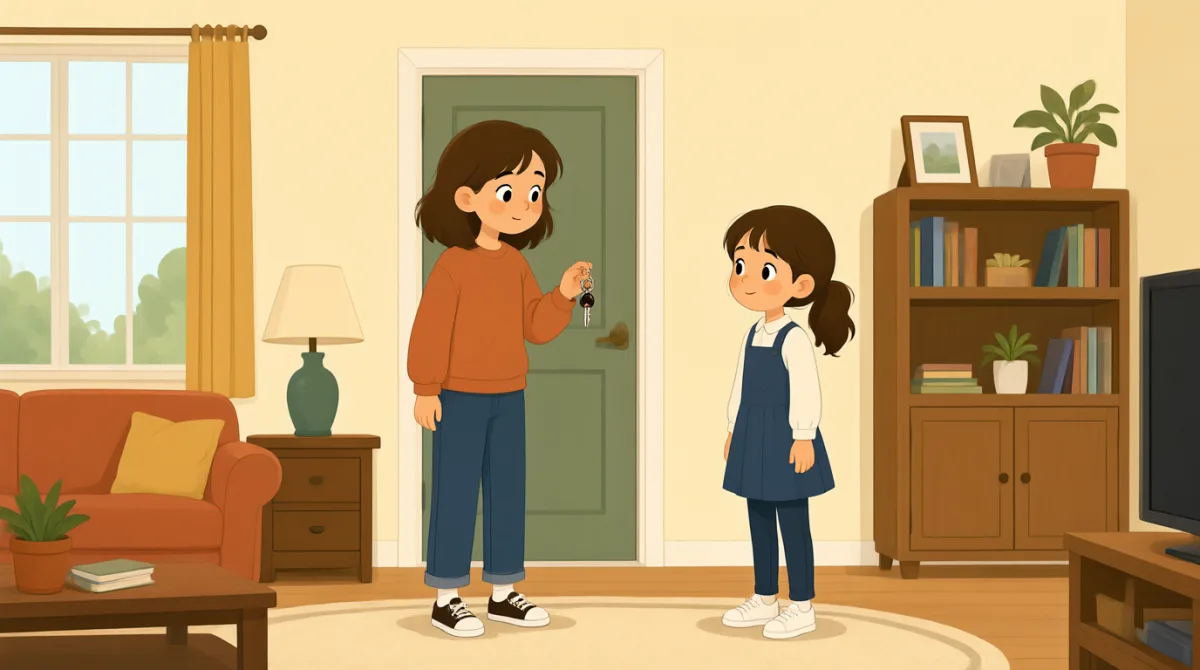

Mia, have you seen my keys?
मिया, क्या तुमने मेरी चाबियाँ देखी हैं?

No. Where did you last see them?
नहीं। तुमने उन्हें आख़िरी बार कहाँ देखा था?
I don't know. I can't find them.
मुझे नहीं पता। मुझे वे नहीं मिल रहीं।
Are they on the table?
क्या वे मेज़ पर हैं?
No, they're not there.
नहीं, वे वहाँ नहीं हैं।
Look under your bag.
अपने बैग के नीचे देखो।
Okay. I don't see them.
ठीक है। मुझे वे नहीं दिख रहीं।
Let's look next to the door.
चलो दरवाज़े के पास देखते हैं।
शब्दावली6
- have you seen my keys?क्या तुमने मेरी चाबियाँ देखी हैं?
Ask if someone has seen something you cannot find. You can replace “my keys” with another item.
जब आपको कोई चीज़ नहीं मिल रही हो, तो पूछें कि क्या किसी ने उसे देखा है। “my keys” की जगह किसी दूसरी चीज़ का नाम रख सकते हैं।
- Where did you last see them?तुमने उन्हें आख़िरी बार कहाँ देखा था?
Ask about the last place someone saw something. Use “it” for one thing and “them” for more than one.
पूछें कि किसी ने कोई चीज़ आख़िरी बार कहाँ देखी थी। एक चीज़ के लिए “it” और एक से ज़्यादा चीज़ों के लिए “them” इस्तेमाल करें।
- I can't find them.मुझे वे नहीं मिल रहीं।
Say this when you do not know where something is. Use “it” instead of “them” for one thing.
जब आपको पता न हो कि कोई चीज़ कहाँ है, तब यह कहें। एक चीज़ के लिए “them” की जगह “it” इस्तेमाल करें।
- on the tableमेज़ पर
This phrase tells where something is. Use “on” for something resting on a surface.
यह वाक्यांश बताता है कि कोई चीज़ कहाँ है। किसी सतह पर रखी चीज़ के लिए “on” इस्तेमाल करें।
- under your bagतुम्हारे बैग के नीचे
This phrase tells someone where to look. Use “under” for a place below something.
यह वाक्यांश किसी को बताता है कि कहाँ देखना है। किसी चीज़ के नीचे की जगह के लिए “under” इस्तेमाल करें।
- next to the doorदरवाज़े के पास
This phrase means beside the door. Use “next to” to say one thing is near another.
इस वाक्यांश का मतलब है दरवाज़े के बगल में। यह बताने के लिए कि एक चीज़ दूसरी चीज़ के पास है, “next to” इस्तेमाल करें।
मुख्य वाक्य8
- 1
Mia, have you seen my keys?
मिया, क्या तुमने मेरी चाबियाँ देखी हैं?
Use this question when you cannot find something. Replace “my keys” with the item you are looking for.
जब आपको कोई चीज़ नहीं मिल रही हो, तो यह सवाल पूछें। जिस चीज़ को आप ढूँढ़ रहे हैं, उसके नाम से “my keys” की जगह लें।
- 2
Where did you last see them?
तुमने उन्हें आख़िरी बार कहाँ देखा था?
Ask this to find out where someone saw something most recently. Change “them” to “it” for one thing.
यह जानने के लिए यह सवाल पूछें कि किसी ने कोई चीज़ हाल ही में कहाँ देखी थी। एक चीज़ के लिए “them” की जगह “it” करें।
- 3
I don't know.
मुझे नहीं पता।
Use this short sentence when you do not have an answer. It works in many everyday situations.
जब आपके पास कोई जवाब न हो, तो यह छोटा-सा वाक्य कहें। रोज़मर्रा की कई स्थितियों में यह काम आता है।
- 4
I can't find them.
मुझे वे नहीं मिल रहीं।
Use this to say that something is missing. Replace “them” with “it” when you mean one thing.
यह कहने के लिए इसका इस्तेमाल करें कि कोई चीज़ गायब है। एक चीज़ की बात हो, तो “them” की जगह “it” रखें।
- 5
Are they on the table?
क्या वे मेज़ पर हैं?
Use this question to check if things are on a surface. Replace “they” with “it” for one thing.
यह सवाल पूछकर पता करें कि क्या चीज़ें किसी सतह पर हैं। एक चीज़ के लिए “they” की जगह “it” रखें।
- 6
Look under your bag.
अपने बैग के नीचे देखो।
Use this simple instruction to tell someone where to search. Replace “your bag” with another object.
किसी को यह बताने के लिए कि कहाँ ढूँढ़ना है, इस आसान निर्देश का इस्तेमाल करें। “your bag” की जगह किसी दूसरी चीज़ का नाम रख सकते हैं।
- 7
I don't see them.
मुझे वे नहीं दिख रहीं।
Use this to say that something is not visible to you. Replace “them” with “it” for one thing.
यह कहने के लिए इसका इस्तेमाल करें कि आपको कोई चीज़ दिखाई नहीं दे रही। एक चीज़ के लिए “them” की जगह “it” रखें।
- 8
Let's look next to the door.
चलो दरवाज़े के पास देखते हैं।
Use “Let's” to suggest doing something together. Replace “next to the door” with another place to search.
साथ मिलकर कुछ करने का सुझाव देने के लिए “Let's” इस्तेमाल करें। खोजने की किसी दूसरी जगह का नाम देकर “next to the door” की जगह रख सकते हैं।