Explaining Treatment Honestly
治療について正直に説明する
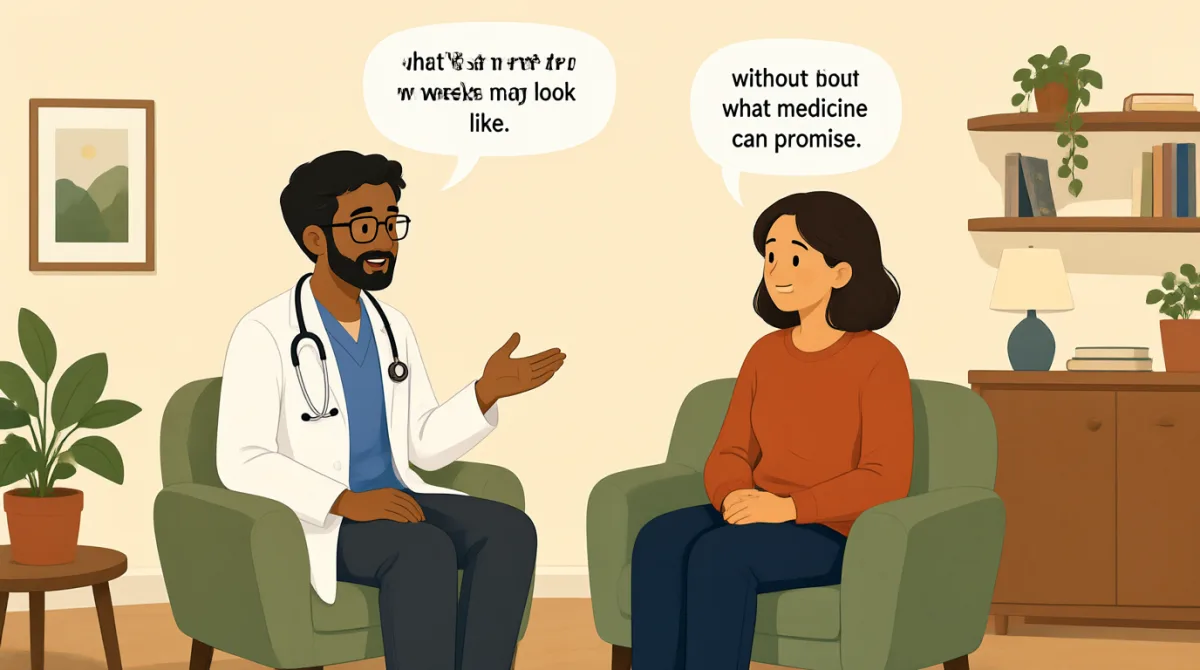
Dr. Patel explains the available treatment options, their likely benefits, and the uncertainties involved. Jack asks what the next few weeks may look like, and she answers without overstating what medicine can promise.
パテル医師が、選択できる治療法と期待できる効果、そして不確実な点について説明します。ジャックは今後数週間がどのようなものになりそうか尋ね、医療でできることを誇張せずに答えます。
会話11

Based on the scans and biopsy, the cancer has spread beyond the original site. I’m sorry; I know that’s a lot to hear. Would it help if I walked you through the options?
検査画像と生検の結果から、がんは最初にできた場所を越えて広がっています。申し訳ありません。聞くのがつらい話だと思います。選択肢について、一つずつ説明しましょうか?

Yes. I need to know what can actually be done, not just what sounds hopeful. And what are the chances treatment will work?
はい。希望が持てそうな話だけじゃなくて、実際に何ができるのか知りたいです。治療が効く可能性はどのくらいありますか?
That’s a fair question. We can start systemic treatment to slow the cancer and, in some cases, shrink it. The evidence suggests it may help, but it can’t tell us exactly how you’ll respond.
もっともな質問です。全身に作用する治療を始めて、がんの進行を遅らせたり、場合によっては小さくしたりできます。効果が期待できることは研究結果から示されていますが、あなたにどのような反応が出るかまでは正確には分かりません。
When you say “slow it,” are we talking about buying a little time, or could I realistically get back to something like my normal life?
「進行を遅らせる」というのは、少し時間を稼げるということですか?それとも、現実的に、以前のような生活に戻れる可能性もありますか?
It could be either, and it’s too early to predict which. Some people have a meaningful response and feel well for a time; others have limited benefit or difficult side effects. I don’t want to promise more than we know.
どちらの可能性もありますが、どちらになるかを予測するにはまだ早すぎます。治療にしっかり反応して、しばらく元気に過ごせる人もいますし、効果が限られたり、副作用がつらかったりする人もいます。分かっている以上のことをお約束したくありません。
What would the treatment involve day to day? I’m trying to picture the next few weeks, and whether I’d be able to keep working.
治療を受けると、日々の生活はどうなりますか?これから数週間のことや、仕事を続けられるかをイメージしようとしています。
We’d begin with a treatment-planning visit, then give medication in cycles, with blood tests and check-ins between them. The first few weeks are partly about seeing how your body tolerates it; we can adjust the plan if needed.
まず治療計画を立てる診察を受け、その後、一定の間隔で薬を投与します。その合間に血液検査や診察があります。最初の数週間は、体が治療にどの程度耐えられるかを見る期間でもあります。必要なら計画を調整できます。
So there isn’t a reliable way to know whether I’ll be too sick to work until we start? I need to make practical decisions, but I don’t want to overreact.
つまり、治療を始めてみないと、仕事ができないほど具合が悪くなるかどうかは分からないんですね?現実的な判断をしたいんですが、必要以上に心配したくもありません。
That’s right; people’s experiences vary. We can discuss flexible hours or time away from work, and I can provide documentation. Let’s also review which symptoms should prompt you to call us promptly.
そのとおりです。治療の影響は人によって違います。勤務時間を調整したり、仕事を休んだりできるか相談できますし、必要な書類もお出しできます。どんな症状が出たらすぐに連絡してほしいかも確認しておきましょう。
I’d like to understand the side effects and what happens if the first treatment doesn’t help. I don’t need every answer today, but I need to know there’s a plan.
副作用と、最初の治療が効かなかった場合にどうなるのかを知りたいです。今日すべての答えが必要なわけではありませんが、計画があることは知っておきたいです。
Absolutely. We’ll go through the common and serious side effects before you decide, and we’ll reassess after the first cycles. If it isn’t helping, we’ll talk through other approaches. You don’t have to make the decision this minute.
もちろんです。決める前に、よくある副作用と重大な副作用について一緒に確認しましょう。最初の数回の治療のあとに、効果を改めて評価します。効果がなければ、ほかの方法について話し合いましょう。今すぐ決めなくても大丈夫です。
語彙8
- systemic treatment全身療法
Treatment that works throughout the body rather than only at one specific site. Here, it refers to medication intended to slow or shrink the cancer.
特定の部位だけでなく、全身に作用する治療のことです。ここでは、がんの進行を遅らせたり、小さくしたりすることを目的とした薬物療法を指しています。
- meaningful response意味のある反応
A noticeable and worthwhile improvement in how a disease responds to treatment. The phrase does not guarantee that the treatment will work for everyone.
病気が治療に反応し、目に見える有益な変化があることです。この表現は、治療が誰にでも効くと保証するものではありません。
- tolerates it耐えられる
Is able to cope with a treatment and its effects. You can use “tolerate” to discuss how someone manages medication, a procedure, or another difficult experience.
治療やその影響に対処できる、という意味です。薬や処置、その他の大変な経験にどう対処できるかを話すときに、“tolerate”(耐える、受け入れる)を使えます。
- cycles治療のサイクル
Repeated periods of treatment, often followed by time to recover or have check-ins. “Medication in cycles” describes a treatment schedule rather than taking medicine continuously.
治療を繰り返し行う期間のことで、その後に回復期間や経過確認の診察が入ることもよくあります。“Medication in cycles”は、薬をずっと続けて服用するのではなく、一定のサイクルに沿って投与することを表します。
- people’s experiences vary治療の経過には個人差がある
People may have different results or reactions in the same situation. This is a tactful way to explain why you cannot predict exactly what will happen to one person.
同じ状況でも、結果や反応は人によって異なることがあります。一人ひとりに何が起きるかを正確に予測できない理由を、配慮しながら説明する表現です。
- prompt you to call us promptlyすぐに連絡する必要があると思わせる
Make you call without delay. “Prompt someone to” means to give them a reason to take a particular action.
ためらわずに電話する必要を感じさせる、という意味です。“Prompt someone to”は、ある行動を取る理由を相手に与えることを表します。
- reassess再評価する
Consider something again, often after gathering new information. Here, the doctor means they will review whether the treatment is helping after the first cycles.
新しい情報を得たあとなどに、もう一度検討することです。ここでは、最初の数回の治療のあとに、治療が効いているかを確認するという意味です。
- talk through一つずつ話し合う
Discuss something carefully, often by considering the options one by one. It can be used when helping someone understand a decision or plan.
選択肢を一つずつ検討するなど、何かについて丁寧に話し合うことです。相手が決断や計画を理解できるよう手助けするときにも使えます。
重要な文8
- 1
That’s a fair question.
もっともな質問です。
A concise way to acknowledge that someone’s concern is reasonable before answering. Use it in professional or personal conversations to show you are taking the question seriously.
相手の心配や疑問がもっともだと認めてから答える、簡潔な表現です。専門的な場面でも個人的な会話でも、質問を真剣に受け止めていると伝えるために使えます。
- 2
The evidence suggests it may help, but it can’t tell us exactly how you’ll respond.
研究結果から、効果が期待できることは示されていますが、あなたにどのような反応が出るかまでは正確には分かりません。
This sentence communicates what is known while clearly stating what remains uncertain. Use “the evidence suggests…” to express a cautious conclusion without presenting it as a guarantee.
分かっていることを伝えながら、まだ不確かな点もはっきり示す文です。“the evidence suggests…”(研究結果から〜が示されています)を使うと、確実だと言い切らずに慎重な結論を表せます。
- 3
I don’t want to promise more than we know.
分かっている以上のことをお約束したくありません。
A direct, compassionate way to avoid giving false reassurance. You can adapt the structure to other situations where you need to be honest about uncertainty.
根拠のない安心を与えないようにする、率直で思いやりのある表現です。不確かなことについて正直に話す必要がある場面では、この形を応用できます。
- 4
The first few weeks are partly about seeing how your body tolerates it; we can adjust the plan if needed.
最初の数週間は、体が治療にどの程度耐えられるかを見る期間でもあります。必要なら計画を調整できます。
This explains both what to expect and how the plan may change based on new information. Use “we can adjust the plan if needed” to offer reassurance without promising a particular outcome.
何が起こるかだけでなく、新しい情報に応じて計画が変わる可能性も説明しています。“we can adjust the plan if needed”(必要なら計画を調整できます)を使うと、特定の結果を約束せずに安心感を与えられます。
- 5
We can discuss flexible hours or time away from work, and I can provide documentation.
勤務時間を調整したり、仕事を休んだりできるか相談できますし、必要な書類もお出しできます。
This offers practical support in a clear, specific way. The structure “We can discuss X, and I can provide Y” is useful when proposing options and assistance.
具体的で分かりやすい形で、実際的なサポートを申し出る表現です。“We can discuss X, and I can provide Y”(Xについて相談できますし、Yを用意できます)という形は、選択肢や支援を提案するときに便利です。
- 6
I’d like to understand the side effects and what happens if the first treatment doesn’t help.
副作用と、最初の治療が効かなかった場合にどうなるのかを知りたいです。
A useful way to ask about both risks and next steps before making a decision. You can adapt “I’d like to understand…” to raise concerns calmly and directly.
決める前に、リスクと次の段階の両方について尋ねるのに役立つ表現です。“I’d like to understand…”(〜について知りたいです)は、心配なことを落ち着いて率直に伝えるときに応用できます。
- 7
If it isn’t helping, we’ll talk through other approaches.
効果がなければ、ほかの方法について話し合いましょう。
This describes a next step without claiming to know the outcome in advance. Use “If [condition], we’ll talk through…” to explain a plan that depends on how things develop.
結果を先に決めつけずに、次の段階を説明する表現です。“If [condition], we’ll talk through…”(もし[条件]なら、〜について話し合いましょう)を使うと、状況の変化に応じた計画を伝えられます。
- 8
You don’t have to make the decision this minute.
今すぐ決めなくても大丈夫です。
A reassuring way to give someone time to consider an important choice. “You don’t have to…” can gently remove pressure without taking away the person’s control.
大切な選択を考える時間を相手に与える、安心感のある表現です。“You don’t have to…”(〜しなくても大丈夫です)を使うと、相手自身が決める権利を保ちながら、そっとプレッシャーを和らげられます。