Explaining Treatment Honestly
Explicar el tratamiento con honestidad
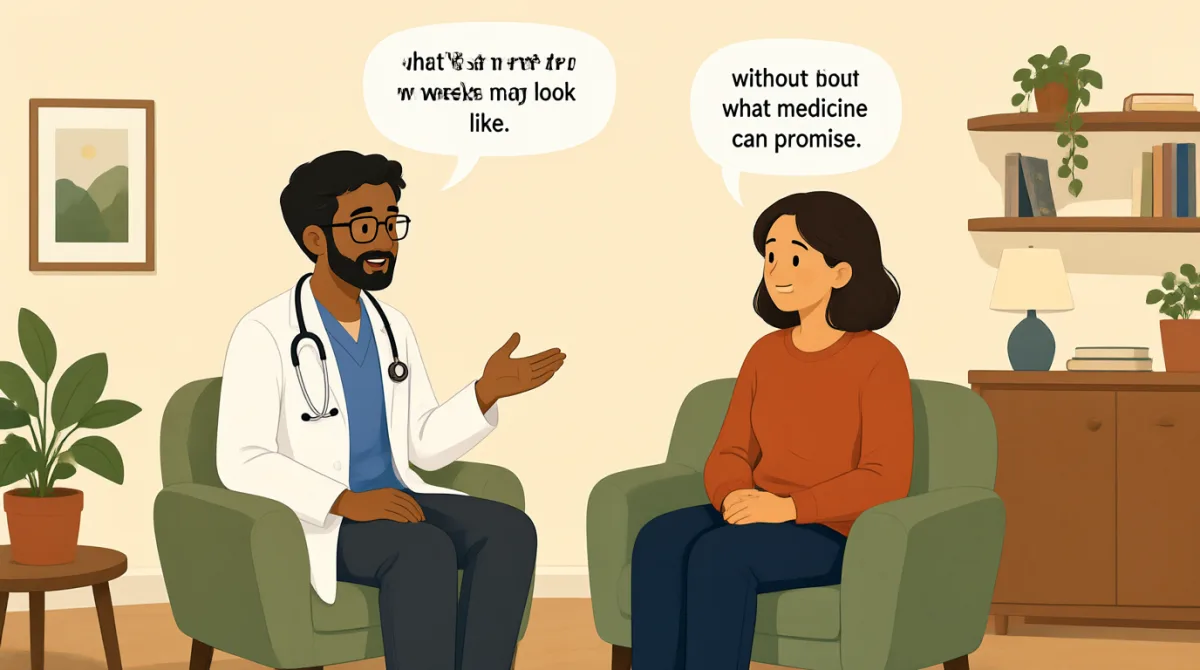
Dr. Patel explains the available treatment options, their likely benefits, and the uncertainties involved. Jack asks what the next few weeks may look like, and she answers without overstating what medicine can promise.
La doctora Patel explica las opciones de tratamiento disponibles, sus posibles beneficios y las incertidumbres. Jack pregunta cómo podrían ser las próximas semanas, y ella responde sin prometer más de lo que la medicina puede ofrecer.
Diálogo11

Based on the scans and biopsy, the cancer has spread beyond the original site. I’m sorry; I know that’s a lot to hear. Would it help if I walked you through the options?
Según las pruebas de imagen y la biopsia, el cáncer se ha extendido más allá del sitio original. Lo siento; sé que es mucho que asimilar. ¿Le ayudaría que le explicara las opciones?

Yes. I need to know what can actually be done, not just what sounds hopeful. And what are the chances treatment will work?
Sí. Necesito saber qué se puede hacer de verdad, no solo qué suena esperanzador. ¿Y qué probabilidades hay de que el tratamiento funcione?
That’s a fair question. We can start systemic treatment to slow the cancer and, in some cases, shrink it. The evidence suggests it may help, but it can’t tell us exactly how you’ll respond.
Es una pregunta muy razonable. Podemos empezar un tratamiento sistémico para frenar el cáncer y, en algunos casos, reducirlo. Los datos indican que podría ayudar, pero no pueden decirnos exactamente cómo responderá usted.
When you say “slow it,” are we talking about buying a little time, or could I realistically get back to something like my normal life?
Cuando dice «frenarlo», ¿hablamos de ganar un poco de tiempo o podría volver de forma realista a algo parecido a mi vida normal?
It could be either, and it’s too early to predict which. Some people have a meaningful response and feel well for a time; others have limited benefit or difficult side effects. I don’t want to promise more than we know.
Podría pasar cualquiera de las dos cosas, y es demasiado pronto para predecir cuál. Algunas personas responden de manera significativa y se sienten bien durante un tiempo; otras obtienen un beneficio limitado o tienen efectos secundarios difíciles. No quiero prometer más de lo que sabemos.
What would the treatment involve day to day? I’m trying to picture the next few weeks, and whether I’d be able to keep working.
¿En qué consistiría el tratamiento en el día a día? Intento imaginar cómo serán las próximas semanas y si podré seguir trabajando.
We’d begin with a treatment-planning visit, then give medication in cycles, with blood tests and check-ins between them. The first few weeks are partly about seeing how your body tolerates it; we can adjust the plan if needed.
Empezaríamos con una consulta para planificar el tratamiento y después le administraríamos la medicación por ciclos, con análisis de sangre y controles entre ellos. Las primeras semanas sirven, en parte, para ver cómo tolera el tratamiento; podemos ajustar el plan si hace falta.
So there isn’t a reliable way to know whether I’ll be too sick to work until we start? I need to make practical decisions, but I don’t want to overreact.
Entonces, ¿no hay forma fiable de saber si estaré demasiado enfermo para trabajar hasta que empecemos? Tengo que tomar decisiones prácticas, pero no quiero exagerar.
That’s right; people’s experiences vary. We can discuss flexible hours or time away from work, and I can provide documentation. Let’s also review which symptoms should prompt you to call us promptly.
Así es; cada persona lo vive de manera distinta. Podemos hablar de horarios flexibles o de tomarse un tiempo fuera del trabajo, y puedo proporcionarle documentación. También repasemos qué síntomas deberían llevarle a llamarnos cuanto antes.
I’d like to understand the side effects and what happens if the first treatment doesn’t help. I don’t need every answer today, but I need to know there’s a plan.
Me gustaría entender los efectos secundarios y qué pasa si el primer tratamiento no funciona. No necesito todas las respuestas hoy, pero necesito saber que hay un plan.
Absolutely. We’ll go through the common and serious side effects before you decide, and we’ll reassess after the first cycles. If it isn’t helping, we’ll talk through other approaches. You don’t have to make the decision this minute.
Por supuesto. Antes de que decida, repasaremos los efectos secundarios frecuentes y los graves, y volveremos a evaluar la situación después de los primeros ciclos. Si no está ayudando, hablaremos de otras opciones. No tiene que tomar la decisión ahora mismo.
Vocabulario8
- systemic treatmenttratamiento sistémico
Treatment that works throughout the body rather than only at one specific site. Here, it refers to medication intended to slow or shrink the cancer.
Tratamiento que actúa en todo el cuerpo, no solo en una zona concreta. Aquí se refiere a una medicación destinada a frenar el cáncer o reducirlo.
- meaningful responserespuesta significativa
A noticeable and worthwhile improvement in how a disease responds to treatment. The phrase does not guarantee that the treatment will work for everyone.
Mejora apreciable y valiosa en la respuesta de una enfermedad al tratamiento. La expresión no garantiza que el tratamiento funcione para todo el mundo.
- tolerates ittolerates it
Is able to cope with a treatment and its effects. You can use “tolerate” to discuss how someone manages medication, a procedure, or another difficult experience.
Puede sobrellevar un tratamiento y sus efectos. Puedes usar “tolerate” para hablar de cómo alguien lleva una medicación, un procedimiento u otra experiencia difícil.
- cyclesciclos
Repeated periods of treatment, often followed by time to recover or have check-ins. “Medication in cycles” describes a treatment schedule rather than taking medicine continuously.
Periodos repetidos de tratamiento, a menudo seguidos de tiempo para recuperarse o acudir a controles. “Medication in cycles” describe un calendario de tratamiento, no tomar medicamentos de forma continua.
- people’s experiences varycada persona lo vive de manera distinta
People may have different results or reactions in the same situation. This is a tactful way to explain why you cannot predict exactly what will happen to one person.
Las personas pueden tener resultados o reacciones diferentes ante una misma situación. Es una forma considerada de explicar por qué no se puede predecir exactamente qué le ocurrirá a una persona.
- prompt you to call us promptlyllevarle a llamarnos cuanto antes
Make you call without delay. “Prompt someone to” means to give them a reason to take a particular action.
Hacer que alguien llame sin demora. “Prompt someone to” significa darle un motivo para realizar una acción concreta.
- reassessvolver a evaluar
Consider something again, often after gathering new information. Here, the doctor means they will review whether the treatment is helping after the first cycles.
Considerar algo de nuevo, a menudo después de obtener información nueva. Aquí, la doctora quiere decir que revisarán si el tratamiento está ayudando después de los primeros ciclos.
- talk throughhablar detenidamente de
Discuss something carefully, often by considering the options one by one. It can be used when helping someone understand a decision or plan.
Hablar de algo con atención, a menudo considerando las opciones una por una. Puede usarse para ayudar a alguien a entender una decisión o un plan.
Frases clave8
- 1
That’s a fair question.
Es una pregunta muy razonable.
A concise way to acknowledge that someone’s concern is reasonable before answering. Use it in professional or personal conversations to show you are taking the question seriously.
Una forma concisa de reconocer que la inquietud de alguien es razonable antes de responder. Úsala en conversaciones profesionales o personales para mostrar que te tomas la pregunta en serio.
- 2
The evidence suggests it may help, but it can’t tell us exactly how you’ll respond.
Los datos indican que podría ayudar, pero no pueden decirnos exactamente cómo responderá usted.
This sentence communicates what is known while clearly stating what remains uncertain. Use “the evidence suggests…” to express a cautious conclusion without presenting it as a guarantee.
Esta frase comunica lo que se sabe y deja claro qué sigue siendo incierto. Usa “the evidence suggests…” para expresar una conclusión prudente, sin presentarla como una garantía.
- 3
I don’t want to promise more than we know.
No quiero prometer más de lo que sabemos.
A direct, compassionate way to avoid giving false reassurance. You can adapt the structure to other situations where you need to be honest about uncertainty.
Una forma directa y compasiva de evitar dar falsas esperanzas. Puedes adaptar esta estructura a otras situaciones en las que necesites ser sincero sobre la incertidumbre.
- 4
The first few weeks are partly about seeing how your body tolerates it; we can adjust the plan if needed.
Las primeras semanas sirven, en parte, para ver cómo tolera el tratamiento; podemos ajustar el plan si hace falta.
This explains both what to expect and how the plan may change based on new information. Use “we can adjust the plan if needed” to offer reassurance without promising a particular outcome.
Esta frase explica qué esperar y cómo puede cambiar el plan según la nueva información. Usa “we can adjust the plan if needed” para tranquilizar sin prometer un resultado concreto.
- 5
We can discuss flexible hours or time away from work, and I can provide documentation.
Podemos hablar de horarios flexibles o de tomarse un tiempo fuera del trabajo, y puedo proporcionarle documentación.
This offers practical support in a clear, specific way. The structure “We can discuss X, and I can provide Y” is useful when proposing options and assistance.
Esta frase ofrece apoyo práctico de forma clara y concreta. La estructura “We can discuss X, and I can provide Y” es útil al proponer opciones y ofrecer ayuda.
- 6
I’d like to understand the side effects and what happens if the first treatment doesn’t help.
Me gustaría entender los efectos secundarios y qué pasa si el primer tratamiento no funciona.
A useful way to ask about both risks and next steps before making a decision. You can adapt “I’d like to understand…” to raise concerns calmly and directly.
Una forma útil de preguntar tanto por los riesgos como por los pasos siguientes antes de tomar una decisión. Puedes adaptar “I’d like to understand…” para plantear tus inquietudes con calma y claridad.
- 7
If it isn’t helping, we’ll talk through other approaches.
Si no está ayudando, hablaremos de otras opciones.
This describes a next step without claiming to know the outcome in advance. Use “If [condition], we’ll talk through…” to explain a plan that depends on how things develop.
Esta frase describe el siguiente paso sin afirmar que se conoce de antemano el resultado. Usa “If [condition], we’ll talk through…” para explicar un plan que depende de cómo evolucionen las cosas.
- 8
You don’t have to make the decision this minute.
No tiene que tomar la decisión ahora mismo.
A reassuring way to give someone time to consider an important choice. “You don’t have to…” can gently remove pressure without taking away the person’s control.
Una forma tranquilizadora de darle a alguien tiempo para pensar en una decisión importante. “You don’t have to…” puede aliviar la presión con delicadeza sin quitarle a la persona el control.