Explaining Treatment Honestly
坦诚说明治疗方案
Dr. Patel explains the available treatment options, their likely benefits, and the uncertainties involved. Jack asks what the next few weeks may look like, and she answers without overstating what medicine can promise.
Patel 医生介绍可选的治疗方案、可能的益处以及其中的不确定性。Jack 询问接下来几周可能会是什么情况,她在不夸大医学所能保证的结果的前提下作出回答。
对话11
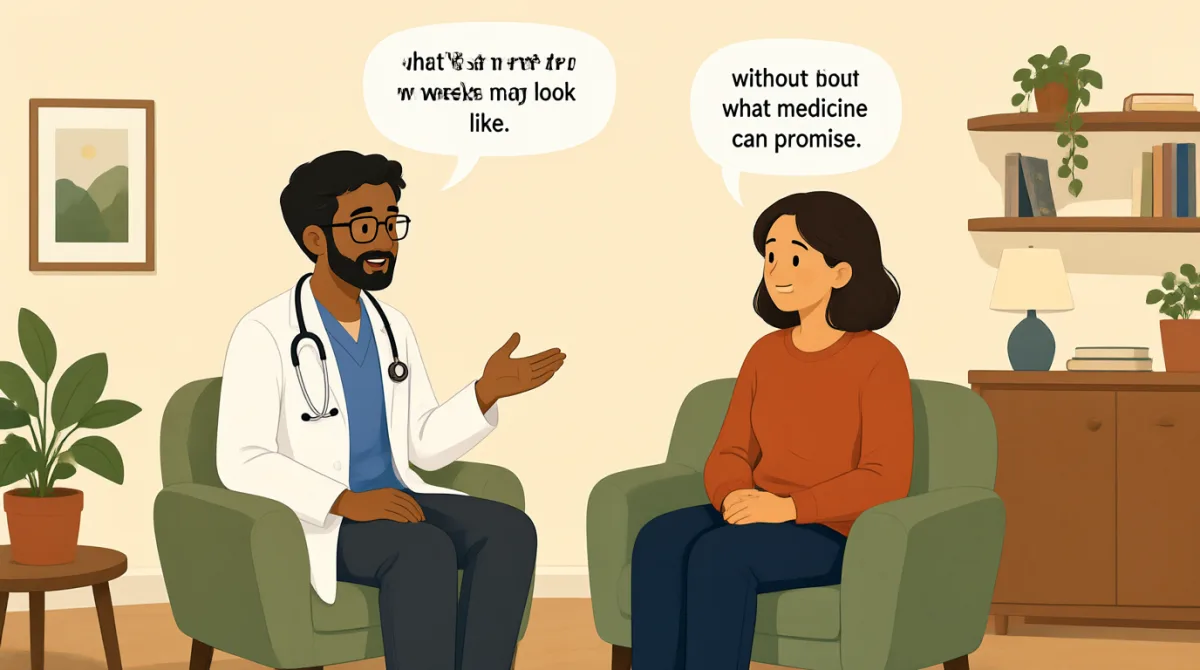

Based on the scans and biopsy, the cancer has spread beyond the original site. I’m sorry; I know that’s a lot to hear. Would it help if I walked you through the options?
根据影像检查和活检结果,癌症已经扩散到原发部位以外。我很抱歉,这些消息一定很难接受。你希望我为你详细说明有哪些治疗方案吗?

Yes. I need to know what can actually be done, not just what sounds hopeful. And what are the chances treatment will work?
好。我想知道实际能采取哪些措施,而不只是听起来有希望的说法。治疗有效的可能性有多大?
That’s a fair question. We can start systemic treatment to slow the cancer and, in some cases, shrink it. The evidence suggests it may help, but it can’t tell us exactly how you’ll respond.
这个问题问得很实在。我们可以先进行全身治疗,以减缓癌症的发展;有些情况下,肿瘤也会缩小。现有证据表明治疗可能有帮助,但无法准确预测你个人的反应。
When you say “slow it,” are we talking about buying a little time, or could I realistically get back to something like my normal life?
你说“减缓发展”,是指能争取一点时间,还是说我确实有可能恢复到接近正常的生活状态?
It could be either, and it’s too early to predict which. Some people have a meaningful response and feel well for a time; others have limited benefit or difficult side effects. I don’t want to promise more than we know.
两种情况都有可能,现在还太早,无法预测你会属于哪一种。有些人治疗反应明显,也能在一段时间里感觉不错;另一些人获益有限,或会经历较难受的副作用。我不想承诺超出我们已知范围的结果。
What would the treatment involve day to day? I’m trying to picture the next few weeks, and whether I’d be able to keep working.
治疗在日常生活中具体会是什么样?我想了解接下来几周大概会怎样,也想知道自己能不能继续工作。
We’d begin with a treatment-planning visit, then give medication in cycles, with blood tests and check-ins between them. The first few weeks are partly about seeing how your body tolerates it; we can adjust the plan if needed.
我们会先安排一次治疗规划就诊,之后按周期用药,并在周期之间做血液检查和随访。最初几周也会用来观察你的身体耐受情况;如有需要,我们可以调整方案。
So there isn’t a reliable way to know whether I’ll be too sick to work until we start? I need to make practical decisions, but I don’t want to overreact.
也就是说,开始治疗前没法可靠地判断我会不会病得无法工作?我得做些实际安排,但也不想反应过度。
That’s right; people’s experiences vary. We can discuss flexible hours or time away from work, and I can provide documentation. Let’s also review which symptoms should prompt you to call us promptly.
是的,每个人的经历都不一样。我们可以讨论弹性工作时间或暂时休假,我也可以为你提供相关证明。另外,我们还可以一起确认出现哪些症状时,你应该尽快联系我们。
I’d like to understand the side effects and what happens if the first treatment doesn’t help. I don’t need every answer today, but I need to know there’s a plan.
我想了解副作用,也想知道如果第一次治疗没有效果,接下来会怎么办。我不要求今天得到所有答案,但我需要知道我们有后续计划。
Absolutely. We’ll go through the common and serious side effects before you decide, and we’ll reassess after the first cycles. If it isn’t helping, we’ll talk through other approaches. You don’t have to make the decision this minute.
当然。在你做决定之前,我们会说明常见和严重的副作用,并在最初几个治疗周期后重新评估。如果治疗没有效果,我们会一起讨论其他方案。你不必现在立刻做决定。
词汇8
- systemic treatment全身治疗
Treatment that works throughout the body rather than only at one specific site. Here, it refers to medication intended to slow or shrink the cancer.
指作用于全身,而非只针对某个特定部位的治疗。这里指的是旨在减缓癌症发展或使肿瘤缩小的药物治疗。
- meaningful response明显疗效
A noticeable and worthwhile improvement in how a disease responds to treatment. The phrase does not guarantee that the treatment will work for everyone.
指疾病对治疗产生了明显且有实际意义的改善。这个说法并不意味着治疗对每个人都有效。
- tolerates it耐受治疗
Is able to cope with a treatment and its effects. You can use “tolerate” to discuss how someone manages medication, a procedure, or another difficult experience.
指能够承受并应对治疗及其影响。谈到某人如何应对药物、治疗操作或其他困难经历时,可以用“tolerate”。
- cycles治疗周期
Repeated periods of treatment, often followed by time to recover or have check-ins. “Medication in cycles” describes a treatment schedule rather than taking medicine continuously.
指反复进行的治疗阶段,通常每个阶段之后会留出恢复时间或安排复诊。“Medication in cycles”描述的是一种治疗安排,而不是持续不断地服药。
- people’s experiences vary每个人的经历都不一样
People may have different results or reactions in the same situation. This is a tactful way to explain why you cannot predict exactly what will happen to one person.
指人们在相同情况下可能会有不同的结果或反应。这是一种委婉的说法,用来解释为什么无法准确预测某个人会遇到什么情况。
- prompt you to call us promptly促使你尽快联系我们
Make you call without delay. “Prompt someone to” means to give them a reason to take a particular action.
指让你毫不迟疑地采取行动。“Prompt someone to”表示促使某人采取某个特定行动。
- reassess重新评估
Consider something again, often after gathering new information. Here, the doctor means they will review whether the treatment is helping after the first cycles.
指在获得新信息后重新考虑某件事。这里医生的意思是,在最初几个治疗周期后,他们会重新评估治疗是否有效。
- talk through详细讨论
Discuss something carefully, often by considering the options one by one. It can be used when helping someone understand a decision or plan.
指仔细讨论某件事,通常会逐一考虑各种选择。帮助别人理解某个决定或计划时,可以使用这个短语。
重点句子8
- 1
That’s a fair question.
这个问题问得很实在。
A concise way to acknowledge that someone’s concern is reasonable before answering. Use it in professional or personal conversations to show you are taking the question seriously.
这是一种简洁的说法,先肯定对方的担忧很合理,再作出回答。在专业或日常对话中使用它,可以让对方知道你认真看待这个问题。
- 2
The evidence suggests it may help, but it can’t tell us exactly how you’ll respond.
现有证据表明治疗可能有帮助,但无法准确预测你个人的反应。
This sentence communicates what is known while clearly stating what remains uncertain. Use “the evidence suggests…” to express a cautious conclusion without presenting it as a guarantee.
这句话说明了目前已知的信息,同时明确指出仍存在不确定性。使用“the evidence suggests…”可以谨慎地表达结论,而不把它说成保证。
- 3
I don’t want to promise more than we know.
我不想承诺超出我们已知范围的结果。
A direct, compassionate way to avoid giving false reassurance. You can adapt the structure to other situations where you need to be honest about uncertainty.
这是一种直接而体贴的说法,可以避免给对方不切实际的安慰。在需要坦诚说明不确定性时,也可以套用这个句型来表达。
- 4
The first few weeks are partly about seeing how your body tolerates it; we can adjust the plan if needed.
最初几周也会用来观察你的身体耐受情况;如有需要,我们可以调整方案。
This explains both what to expect and how the plan may change based on new information. Use “we can adjust the plan if needed” to offer reassurance without promising a particular outcome.
这句话既说明了可能会经历什么,也解释了计划如何根据新信息作出调整。使用“we can adjust the plan if needed”可以在不保证特定结果的前提下给予对方支持。
- 5
We can discuss flexible hours or time away from work, and I can provide documentation.
我们可以讨论弹性工作时间或暂时休假,我也可以为你提供相关证明。
This offers practical support in a clear, specific way. The structure “We can discuss X, and I can provide Y” is useful when proposing options and assistance.
这句话清楚而具体地提出了实际帮助。“We can discuss X, and I can provide Y”这个句型适合用来提出可选方案并说明能提供的支持。
- 6
I’d like to understand the side effects and what happens if the first treatment doesn’t help.
我想了解副作用,也想知道如果第一次治疗没有效果,接下来会怎么办。
A useful way to ask about both risks and next steps before making a decision. You can adapt “I’d like to understand…” to raise concerns calmly and directly.
这是在作决定前询问风险和后续安排的一种实用说法。你可以用“I’d like to understand…”来冷静、直接地表达自己的担忧。
- 7
If it isn’t helping, we’ll talk through other approaches.
如果治疗没有效果,我们会一起讨论其他方案。
This describes a next step without claiming to know the outcome in advance. Use “If [condition], we’ll talk through…” to explain a plan that depends on how things develop.
这句话说明了接下来可以采取的步骤,但没有预先断定结果。使用“If [condition], we’ll talk through…”可以说明计划会根据情况的发展作出调整。
- 8
You don’t have to make the decision this minute.
你不必现在立刻做决定。
A reassuring way to give someone time to consider an important choice. “You don’t have to…” can gently remove pressure without taking away the person’s control.
这是一种安慰对方、让对方有时间考虑重要选择的说法。“You don’t have to…”可以温和地减轻压力,同时保留对方自己作决定的权利。