Explaining Treatment Honestly
การอธิบายการรักษาอย่างตรงไปตรงมา
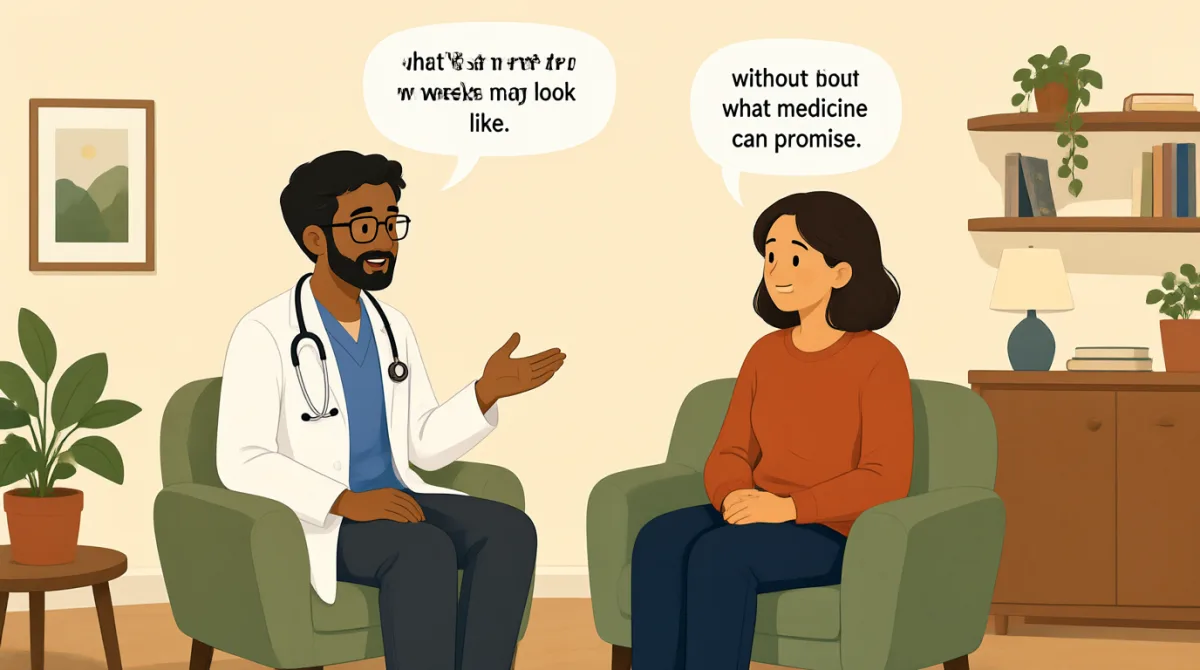
Dr. Patel explains the available treatment options, their likely benefits, and the uncertainties involved. Jack asks what the next few weeks may look like, and she answers without overstating what medicine can promise.
คุณหมอ Patel อธิบายทางเลือกในการรักษาที่มี ประโยชน์ที่คาดว่าจะได้รับ และความไม่แน่นอนต่าง ๆ Jack ถามว่าในช่วงสองสามสัปดาห์ข้างหน้าอาจเป็นอย่างไร และคุณหมอตอบโดยไม่กล่าวเกินจริงถึงสิ่งที่การแพทย์รับประกันได้
บทสนทนา11

Based on the scans and biopsy, the cancer has spread beyond the original site. I’m sorry; I know that’s a lot to hear. Would it help if I walked you through the options?
จากผลสแกนและการตรวจชิ้นเนื้อ มะเร็งได้แพร่กระจายออกไปนอกบริเวณเดิมแล้วค่ะ หมอเสียใจด้วยนะคะ หมอรู้ว่านี่เป็นเรื่องที่รับฟังได้ยาก ถ้าหมออธิบายทางเลือกต่าง ๆ ให้ฟังทีละอย่าง จะช่วยได้ไหมคะ

Yes. I need to know what can actually be done, not just what sounds hopeful. And what are the chances treatment will work?
ครับ ผมอยากรู้ว่าเราทำอะไรได้จริงบ้าง ไม่ใช่แค่สิ่งที่ฟังดูมีความหวัง แล้วโอกาสที่การรักษาจะได้ผลมีมากแค่ไหนครับ
That’s a fair question. We can start systemic treatment to slow the cancer and, in some cases, shrink it. The evidence suggests it may help, but it can’t tell us exactly how you’ll respond.
เป็นคำถามที่สมเหตุสมผลค่ะ เราสามารถเริ่มการรักษาแบบทั่วร่างกายเพื่อชะลอมะเร็ง และในบางกรณีอาจทำให้ก้อนมะเร็งเล็กลงได้ หลักฐานที่มีบ่งชี้ว่าการรักษาอาจช่วยได้ แต่ไม่สามารถบอกได้แน่ชัดว่าร่างกายของคุณจะตอบสนองอย่างไรค่ะ
When you say “slow it,” are we talking about buying a little time, or could I realistically get back to something like my normal life?
ที่คุณหมอบอกว่า “ชะลอ” นี่หมายถึงแค่ช่วยยืดเวลาออกไปได้เล็กน้อย หรือผมมีโอกาสกลับไปใช้ชีวิตใกล้เคียงปกติได้จริง ๆ ครับ
It could be either, and it’s too early to predict which. Some people have a meaningful response and feel well for a time; others have limited benefit or difficult side effects. I don’t want to promise more than we know.
เป็นไปได้ทั้งสองอย่างค่ะ และตอนนี้ยังเร็วเกินไปที่จะคาดเดาว่าจะเป็นแบบไหน บางคนตอบสนองต่อการรักษาได้ดีอย่างมีนัยสำคัญและรู้สึกสบายดีอยู่ระยะหนึ่ง ขณะที่บางคนได้ประโยชน์จากการรักษาเพียงเล็กน้อยหรือมีผลข้างเคียงที่รับมือได้ยาก หมอไม่อยากรับปากเกินกว่าที่เรารู้ค่ะ
What would the treatment involve day to day? I’m trying to picture the next few weeks, and whether I’d be able to keep working.
ในแต่ละวันผมจะต้องได้รับการรักษาอย่างไรบ้างครับ ผมพยายามนึกภาพช่วงสองสามสัปดาห์ข้างหน้า แล้วก็สงสัยว่าจะยังทำงานต่อได้หรือเปล่า
We’d begin with a treatment-planning visit, then give medication in cycles, with blood tests and check-ins between them. The first few weeks are partly about seeing how your body tolerates it; we can adjust the plan if needed.
เราจะเริ่มด้วยการมาพบเพื่อวางแผนการรักษา จากนั้นจะให้ยาเป็นรอบ ๆ โดยมีการตรวจเลือดและติดตามอาการระหว่างแต่ละรอบ ช่วงสองสามสัปดาห์แรกส่วนหนึ่งคือการดูว่าร่างกายของคุณทนต่อการรักษาได้อย่างไร หากจำเป็น เราสามารถปรับแผนได้ค่ะ
So there isn’t a reliable way to know whether I’ll be too sick to work until we start? I need to make practical decisions, but I don’t want to overreact.
ถ้าอย่างนั้น ก็ไม่มีทางที่เชื่อถือได้ว่าจะรู้ว่าผมจะป่วยจนทำงานไม่ไหวหรือเปล่า จนกว่าจะเริ่มรักษาใช่ไหมครับ ผมต้องตัดสินใจเรื่องต่าง ๆ ในทางปฏิบัติ แต่ก็ไม่อยากกังวลเกินเหตุ
That’s right; people’s experiences vary. We can discuss flexible hours or time away from work, and I can provide documentation. Let’s also review which symptoms should prompt you to call us promptly.
ใช่ค่ะ ประสบการณ์ของแต่ละคนแตกต่างกัน เราสามารถพูดคุยเรื่องการทำงานเป็นเวลาที่ยืดหยุ่นหรือการหยุดงานชั่วคราวได้ และหมอสามารถออกเอกสารให้ได้ เรามาทบทวนกันด้วยนะคะว่าอาการใดควรทำให้คุณโทรหาเราโดยเร็ว
I’d like to understand the side effects and what happens if the first treatment doesn’t help. I don’t need every answer today, but I need to know there’s a plan.
ผมอยากเข้าใจเรื่องผลข้างเคียงและรู้ว่าถ้าการรักษาครั้งแรกไม่ช่วยจะเกิดอะไรขึ้น ผมไม่จำเป็นต้องได้คำตอบทุกอย่างวันนี้ แต่ผมต้องรู้ว่ามีแผนรองรับครับ
Absolutely. We’ll go through the common and serious side effects before you decide, and we’ll reassess after the first cycles. If it isn’t helping, we’ll talk through other approaches. You don’t have to make the decision this minute.
ได้แน่นอนค่ะ ก่อนที่คุณจะตัดสินใจ เราจะอธิบายผลข้างเคียงที่พบบ่อยและผลข้างเคียงรุนแรงให้ฟัง แล้วจะประเมินกันใหม่หลังจากผ่านไปหนึ่งหรือสองรอบแรก หากการรักษาไม่ช่วย เราจะพูดคุยถึงแนวทางอื่น ๆ กัน คุณไม่จำเป็นต้องตัดสินใจภายในนาทีนี้ค่ะ
คำศัพท์8
- systemic treatmentการรักษาแบบทั่วร่างกาย
Treatment that works throughout the body rather than only at one specific site. Here, it refers to medication intended to slow or shrink the cancer.
การรักษาที่ออกฤทธิ์ทั่วทั้งร่างกาย ไม่ใช่เฉพาะบริเวณใดบริเวณหนึ่ง ในที่นี้หมายถึงยาที่มีจุดประสงค์เพื่อชะลอหรือทำให้มะเร็งมีขนาดเล็กลง
- meaningful responseการตอบสนองอย่างมีนัยสำคัญ
A noticeable and worthwhile improvement in how a disease responds to treatment. The phrase does not guarantee that the treatment will work for everyone.
การที่โรคตอบสนองต่อการรักษาดีขึ้นอย่างเห็นได้ชัดและคุ้มค่า วลีนี้ไม่ได้รับประกันว่าการรักษาจะได้ผลกับทุกคน
- tolerates itทนต่อการรักษาได้
Is able to cope with a treatment and its effects. You can use “tolerate” to discuss how someone manages medication, a procedure, or another difficult experience.
สามารถรับมือกับการรักษาและผลของการรักษาได้ คุณสามารถใช้ “tolerate” เพื่อพูดถึงการที่ใครคนหนึ่งรับมือกับยา หัตถการ หรือประสบการณ์ที่ยากลำบากอื่น ๆ ได้อย่างไร
- cyclesรอบการรักษา
Repeated periods of treatment, often followed by time to recover or have check-ins. “Medication in cycles” describes a treatment schedule rather than taking medicine continuously.
ช่วงเวลาของการรักษาที่ทำซ้ำเป็นระยะ ๆ ซึ่งมักตามด้วยช่วงพักฟื้นหรือการนัดติดตามอาการ “Medication in cycles” อธิบายตารางการรักษา ไม่ใช่การรับประทานยาอย่างต่อเนื่อง
- people’s experiences varyประสบการณ์ของแต่ละคนแตกต่างกัน
People may have different results or reactions in the same situation. This is a tactful way to explain why you cannot predict exactly what will happen to one person.
ผู้คนอาจมีผลลัพธ์หรือปฏิกิริยาที่แตกต่างกัน แม้อยู่ในสถานการณ์เดียวกัน นี่เป็นวิธีพูดอย่างนุ่มนวลเพื่ออธิบายว่าทำไมเราจึงไม่สามารถคาดเดาได้แน่ชัดว่าจะเกิดอะไรขึ้นกับคนคนหนึ่ง
- prompt you to call us promptlyทำให้คุณโทรหาเราโดยเร็ว
Make you call without delay. “Prompt someone to” means to give them a reason to take a particular action.
ทำให้คุณโทรหาเราโดยไม่ชักช้า “Prompt someone to” หมายถึงการให้เหตุผลแก่ใครบางคนในการดำเนินการอย่างใดอย่างหนึ่ง
- reassessประเมินใหม่
Consider something again, often after gathering new information. Here, the doctor means they will review whether the treatment is helping after the first cycles.
พิจารณาบางสิ่งอีกครั้ง ซึ่งมักทำหลังจากรวบรวมข้อมูลใหม่ ในที่นี้ หมายถึงแพทย์จะทบทวนว่าการรักษาช่วยได้หรือไม่หลังจากผ่านรอบแรก ๆ
- talk throughพูดคุยอย่างละเอียด
Discuss something carefully, often by considering the options one by one. It can be used when helping someone understand a decision or plan.
พูดคุยเกี่ยวกับบางสิ่งอย่างรอบคอบ โดยมักพิจารณาทางเลือกทีละอย่าง สามารถใช้เมื่อช่วยให้ใครสักคนเข้าใจการตัดสินใจหรือแผนงาน
ประโยคสำคัญ8
- 1
That’s a fair question.
เป็นคำถามที่สมเหตุสมผลค่ะ
A concise way to acknowledge that someone’s concern is reasonable before answering. Use it in professional or personal conversations to show you are taking the question seriously.
เป็นวิธีกระชับในการยอมรับว่าความกังวลของอีกฝ่ายมีเหตุผล ก่อนที่จะตอบคำถาม ใช้ได้ทั้งในการสนทนาส่วนตัวและการสนทนาแบบมืออาชีพ เพื่อแสดงว่าคุณให้ความสำคัญกับคำถามนั้น
- 2
The evidence suggests it may help, but it can’t tell us exactly how you’ll respond.
หลักฐานที่มีบ่งชี้ว่าการรักษาอาจช่วยได้ แต่ไม่สามารถบอกได้แน่ชัดว่าร่างกายของคุณจะตอบสนองอย่างไรค่ะ
This sentence communicates what is known while clearly stating what remains uncertain. Use “the evidence suggests…” to express a cautious conclusion without presenting it as a guarantee.
ประโยคนี้สื่อสารสิ่งที่เรารู้ พร้อมระบุอย่างชัดเจนว่ายังมีเรื่องใดไม่แน่นอน ใช้ “the evidence suggests…” เพื่อแสดงข้อสรุปอย่างระมัดระวัง โดยไม่ทำให้ฟังเหมือนเป็นการรับประกัน
- 3
I don’t want to promise more than we know.
หมอไม่อยากรับปากเกินกว่าที่เรารู้ค่ะ
A direct, compassionate way to avoid giving false reassurance. You can adapt the structure to other situations where you need to be honest about uncertainty.
เป็นวิธีพูดที่ตรงไปตรงมาและเห็นอกเห็นใจ เพื่อหลีกเลี่ยงการให้ความมั่นใจที่ไม่เป็นความจริง คุณสามารถปรับโครงสร้างนี้ใช้ในสถานการณ์อื่น ๆ ที่ต้องพูดอย่างซื่อสัตย์เกี่ยวกับความไม่แน่นอนได้
- 4
The first few weeks are partly about seeing how your body tolerates it; we can adjust the plan if needed.
ช่วงสองสามสัปดาห์แรกส่วนหนึ่งคือการดูว่าร่างกายของคุณทนต่อการรักษาได้อย่างไร หากจำเป็น เราสามารถปรับแผนได้ค่ะ
This explains both what to expect and how the plan may change based on new information. Use “we can adjust the plan if needed” to offer reassurance without promising a particular outcome.
ประโยคนี้อธิบายทั้งสิ่งที่ควรคาดหวังและวิธีที่แผนอาจเปลี่ยนแปลงตามข้อมูลใหม่ ใช้ “we can adjust the plan if needed” เพื่อให้ความมั่นใจโดยไม่รับปากว่าจะเกิดผลลัพธ์แบบใดแบบหนึ่ง
- 5
We can discuss flexible hours or time away from work, and I can provide documentation.
เราสามารถพูดคุยเรื่องการทำงานเป็นเวลาที่ยืดหยุ่นหรือการหยุดงานชั่วคราวได้ และหมอสามารถออกเอกสารให้ได้ค่ะ
This offers practical support in a clear, specific way. The structure “We can discuss X, and I can provide Y” is useful when proposing options and assistance.
ประโยคนี้เสนอความช่วยเหลือในทางปฏิบัติอย่างชัดเจนและเฉพาะเจาะจง โครงสร้าง “We can discuss X, and I can provide Y” มีประโยชน์เมื่อเสนอทางเลือกและความช่วยเหลือ
- 6
I’d like to understand the side effects and what happens if the first treatment doesn’t help.
ผมอยากเข้าใจเรื่องผลข้างเคียงและรู้ว่าถ้าการรักษาครั้งแรกไม่ช่วยจะเกิดอะไรขึ้นครับ
A useful way to ask about both risks and next steps before making a decision. You can adapt “I’d like to understand…” to raise concerns calmly and directly.
เป็นวิธีที่มีประโยชน์ในการถามทั้งเรื่องความเสี่ยงและขั้นตอนต่อไปก่อนตัดสินใจ คุณสามารถปรับใช้ “I’d like to understand…” เพื่อยกประเด็นที่กังวลอย่างสงบและตรงไปตรงมา
- 7
If it isn’t helping, we’ll talk through other approaches.
หากการรักษาไม่ช่วย เราจะพูดคุยถึงแนวทางอื่น ๆ กันค่ะ
This describes a next step without claiming to know the outcome in advance. Use “If [condition], we’ll talk through…” to explain a plan that depends on how things develop.
ประโยคนี้อธิบายขั้นตอนต่อไปโดยไม่อ้างว่ารู้ผลลัพธ์ล่วงหน้า ใช้ “If [condition], we’ll talk through…” เพื่ออธิบายแผนที่ขึ้นอยู่กับสถานการณ์ว่าจะพัฒนาไปอย่างไร
- 8
You don’t have to make the decision this minute.
คุณไม่จำเป็นต้องตัดสินใจภายในนาทีนี้ค่ะ
A reassuring way to give someone time to consider an important choice. “You don’t have to…” can gently remove pressure without taking away the person’s control.
เป็นวิธีพูดอย่างให้ความมั่นใจเพื่อให้ใครสักคนมีเวลาพิจารณาทางเลือกสำคัญ “You don’t have to…” สามารถช่วยลดแรงกดดันอย่างนุ่มนวล โดยยังคงให้อีกฝ่ายเป็นผู้ควบคุมการตัดสินใจของตนเอง